


Wildfires consuming 42,000 hectares west of Bordeaux have shut France's most critical defense and aerospace facilities, disrupting Airbus, Thales, Dassault, Safran, MBDA and ArianeGroup.
Wildfires consuming 42,000 hectares west of Bordeaux have shut France's most critical defense and aerospace facilities, disrupting Airbus, Thales, Dassault, Safran, MBDA and ArianeGroup.
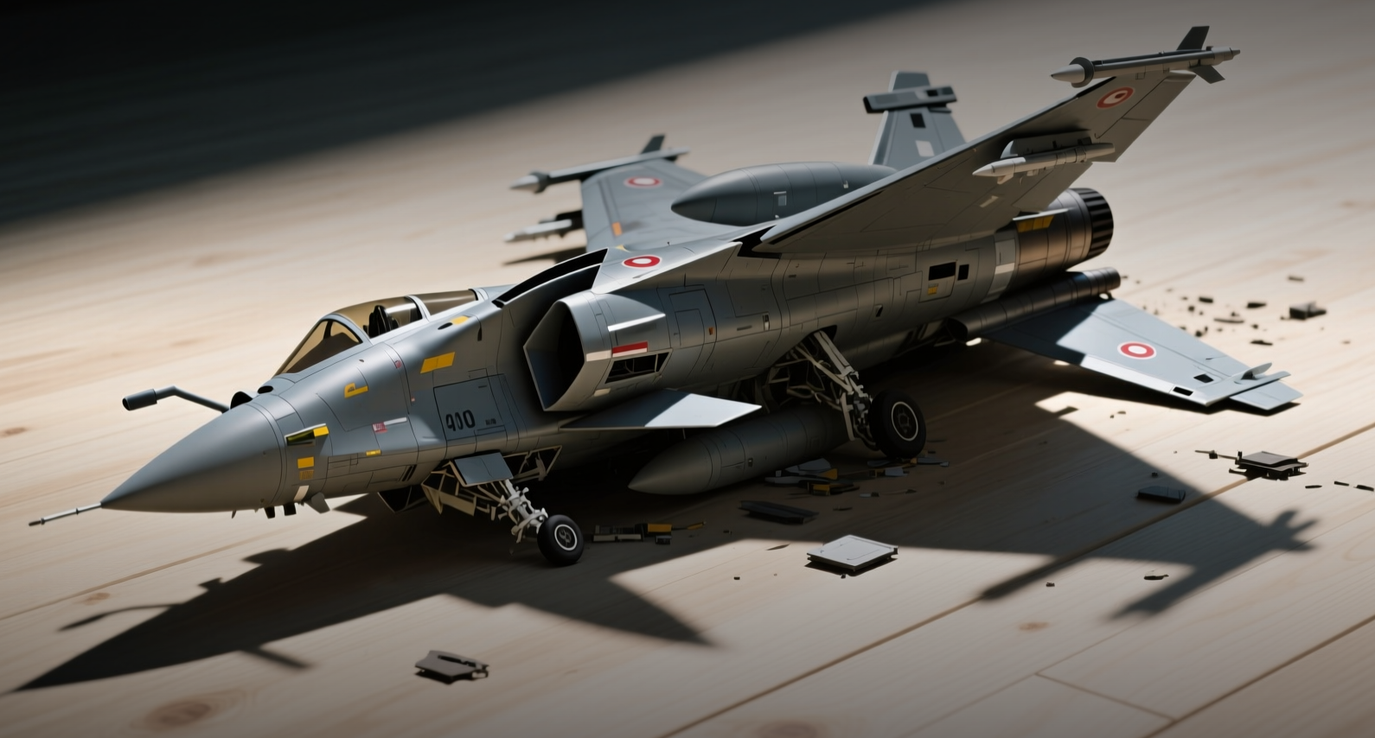
Wildfires burning through pine forests west of Bordeaux have shut at least 13 defense and aerospace sites, putting roughly 200,000 jobs at risk and threatening production of France's M51 nuclear missile and Rafale fighter jet.
"The reason this cluster exists is quite simple: it's historical," said retired Gen. Jean-Marc Laurent, a defense and aerospace expert at Sciences Po Bordeaux.
The Bordeaux-Gironde Chamber of Commerce and Industry reported 40,000 businesses are directly or indirectly affected, while the French Economy Ministry calculated approximately 130,000 workers cannot perform their jobs. More than 220,000 people have been evacuated since the fire began, with 60,000 allowed to return as of Wednesday afternoon.
The closures threaten the backbone of France's sea-based nuclear deterrence and its premier combat aircraft export program, with potential delivery delays valued in the billions of euros. The government has declared emergency assistance for affected companies in Gironde, Landes and the Var, with an Economy Ministry meeting scheduled Thursday.
The fire perimeter stretches 150 miles, with 3,300 firefighters, 1,500 military personnel and 24 aircraft deployed. Interior Minister Laurent Nuñez said the battle remained "complicated" even as favorable weather stabilized the blaze Wednesday night. "A slight improvement does not mean we are lowering our guard," he said.
Thales has closed three sites, including its Mérignac campus where it makes electronic systems for Rafale fighters and military helicopters. Safran shut four facilities employing about 500 people. Airbus closed two sites in Salaunes and Mérignac producing cockpit seat structures, fuselage sections, nose cones and wing flaps for commercial aircraft, plus components for Dassault and Bombardier business jets and ATR turboprops.
The most consequential threat targets the Issac district of Saint-Médard-en-Jalles, where ArianeGroup integrates solid propellant motors for the M51 submarine-launched ballistic missile. Deployed aboard Triomphant-class submarines, the three-stage missile carries multiple independently targetable reentry vehicles over a range exceeding 8,000 kilometers. Satellite telemetry showed active fire lines burning less than nine kilometers from Dassault's Martignas facility, which handles wing assembly for Rafale jets and Falcon business jets. Dassault relocated sensitive equipment to Air Base 106 in Mérignac as a precaution.
The French Atomic Energy Commission's military research center CESTA also shut down as the fire front approached. MBDA closed its Roxel propulsion plant, a joint venture with Safran that manufactures solid rocket motors for tactical missiles used by allied forces globally.
Airbus Chief Executive Guillaume Faury said it was critical that firefighters keep the blazes from reaching major industrial sites. "Not only ours, but ones of others," he told analysts Wednesday.
The fires follow France's devastating 2022 wildfire season, which prompted stricter vegetation-clearing rules around buildings and industrial installations in fire-prone areas. Thibault Laconde, founder of climate risk consulting firm Callendar, found that about a quarter of France's more than 300 hazardous industrial sites located next to forests already face significant wildfire risk. Under a midrange climate scenario, that could rise to about 75 percent by 2050, with sites facing dangerous fire conditions for at least 10 days each year.
"These sites are so strategic that they will be defended with every available means," Laconde said. "The question is what can no longer be defended elsewhere."
The economic toll extends beyond defense. The chamber president characterized the situation as a "mini-Covid" and an economic disaster for companies already strained by the prevailing environment. Tourism enterprises that generate up to 80 percent of annual revenue during summer months face serious challenges, with 38 campsites cleared and four damaged by flames. Approximately 4,000 vacationers were evacuated from lodgings in Lacanau on Tuesday.
RTE, France's transmission system operator, deactivated certain power lines and electrical substations to enable firefighters to operate safely, coordinating with Enedis to minimize disruption. No transmission-network outages had been documented as of Wednesday afternoon.
The last comparable disruption to French defense production occurred during the 2022 wildfires, which burned 21,000 hectares in Gironde and forced similar precautionary closures, though on a smaller scale. The current blaze has already doubled that footprint, and with temperatures and winds expected to rise, the containment perimeter remains vulnerable to re-ignition.
This article is for informational purposes only and does not constitute investment advice.
