
Key Takeaways: A cargo vessel was struck by a projectile in the Strait of Hormuz late Monday, hours after the US-Iran truce expired without renewal, pushing Brent crude above $89 a barrel.
Key Takeaways: A cargo vessel was struck by a projectile in the Strait of Hormuz late Monday, hours after the US-Iran truce expired without renewal, pushing Brent crude above $89 a barrel.
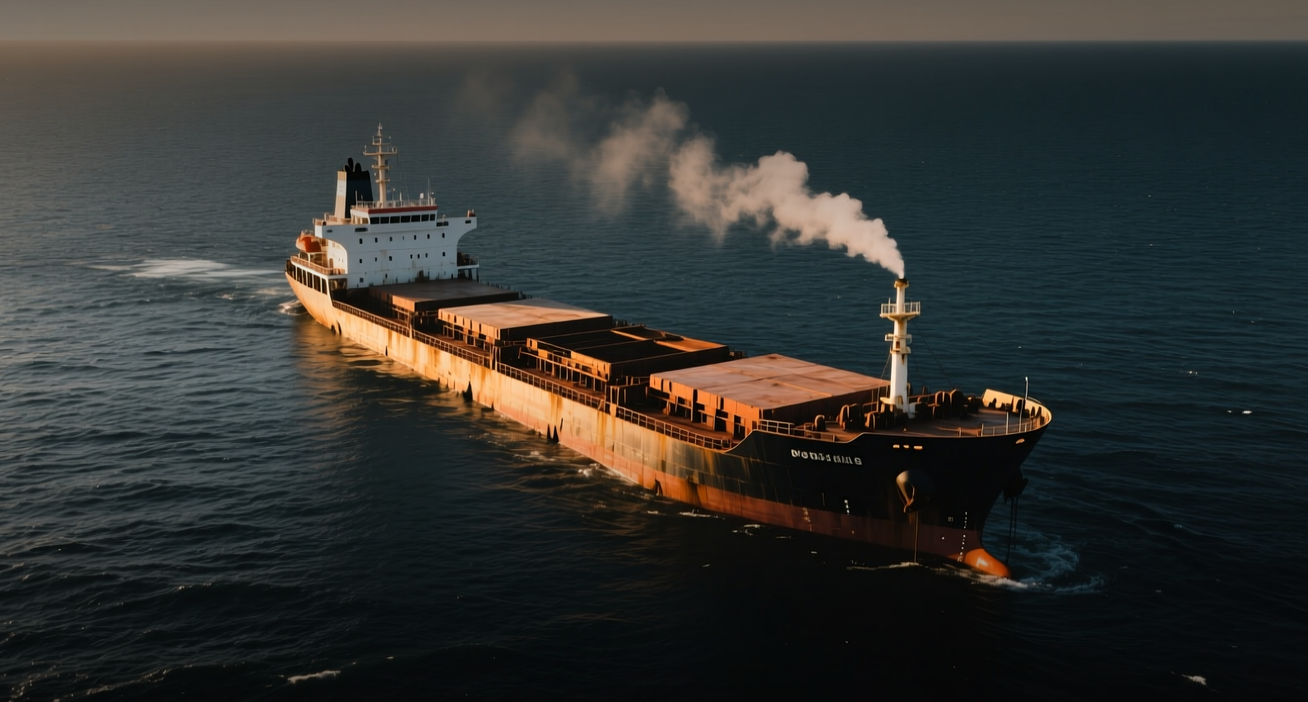
A cargo vessel was struck by a projectile in the Strait of Hormuz late Monday, hours after the US-Iran truce expired without renewal, pushing Brent crude above $89 a barrel.
A cargo vessel was struck in the Strait of Hormuz late Monday, hours after the US-Iran truce expired, pushing Brent above $89 a barrel and sharpening risk on the world's most critical oil chokepoint.
"This strait will be opened and closed only under Iran's command," Kazem Gharibabadi, Iran's deputy foreign minister, said Saturday, rejecting Washington's claim of control over the waterway.
The UK Maritime Trade Operations said the vessel was hit by an unknown projectile while transiting outbound, causing engine room damage and a crew casualty. Maritime security consultancy Vanguard Tech identified the ship as the bulker Minoan Pioneer (IMO 9471630), reporting a complete blackout, a fire in the accommodations area, and a missing third engineer. The attack came roughly 24 hours after a near-miss in the same area, about 20 nm northeast of Khasab in the Omani coastal channel.
The strike lands at a critical moment for energy markets. Only five commodity vessels crossed Hormuz on Saturday and none on Sunday, compared with 31 the previous weekend, according to Reuters. Brent crude rose to about $89.40 a barrel Monday, while the US diesel crack hit a record $102.20. The strait handles roughly one-fifth of global oil and LNG supplies, and shipping insurance costs for transits have climbed sharply through months of drone and projectile attacks.
The attack follows the formal expiry of the 60-day US-Iran memorandum of understanding signed June 17 by President Donald Trump and Iranian President Masoud Pezeshkian. The framework collapsed weeks ago — Trump declared it "over" on July 7 — but its formal lapse removes any remaining diplomatic scaffolding. Iran's Foreign Minister Abbas Araghchi said Tehran had "not yet made a decision to restart negotiations with the United States," while Trump has threatened to declare the Strait of Hormuz US territory after defeating Iran.
Iran is simultaneously negotiating with Oman on a joint administrative regime for the strait. According to the New York Times, a proposed framework would split oversight by direction: inbound traffic through a northern channel administered by Iran, outbound traffic through an Omani-controlled lane, with the two states splitting revenue from a transit "service fee." An American official briefed on the talks denied the account, saying any control scheme would be temporary and toll-free.
Iranian hardliners reject the Omani route because it bypasses Tehran's "Persian Gulf Strait Authority" administrative regime. The attack occurred in the Omani coastal channel used by GCC shipping interests, a pattern consistent with prior kinetic incidents in the area, all of which have been Iranian in origin.
The market reaction suggests traders are pricing a prolonged confrontation rather than a quick diplomatic fix. Brent's move above $89 reflects both the reduced vessel traffic and the explicit Iranian military threat — an Iranian military spokesperson warned vessels attempting passage would "find several beautiful holes in their hulls." US Treasury Secretary Scott Bessent has said Washington would combine economic isolation with its naval blockade of Iranian ports.
The last time shipping through Hormuz collapsed to near-zero levels was during the initial phase of the US-Israel-Iran conflict, when Brent spiked above $100 a barrel before retreating as the June truce took hold. The current trajectory — with the truce expired, Iran shifting to a "fully offensive" posture, and Trump threatening to bomb Oman — suggests the risk premium has further room to expand if vessel traffic does not recover.
For shippers, the immediate question is whether the Iran-Oman talks produce a workable transit mechanism before insurance costs make Hormuz transits economically prohibitive. For oil markets, the key signal will be whether vessel crossings recover from the current near-zero levels within the next week. If they do not, Brent's move above $89 could be the first step toward a retest of the $100 level seen during the conflict's opening phase.
This article is for informational purposes only and does not constitute investment advice.
