
The Strategic Petroleum Reserve, drained to its lowest level in more than four decades, is losing its power to calm oil markets as the US-Israeli war with Iran grinds into its seventh month.
The Strategic Petroleum Reserve, drained to its lowest level in more than four decades, is losing its power to calm oil markets as the US-Israeli war with Iran grinds into its seventh month.
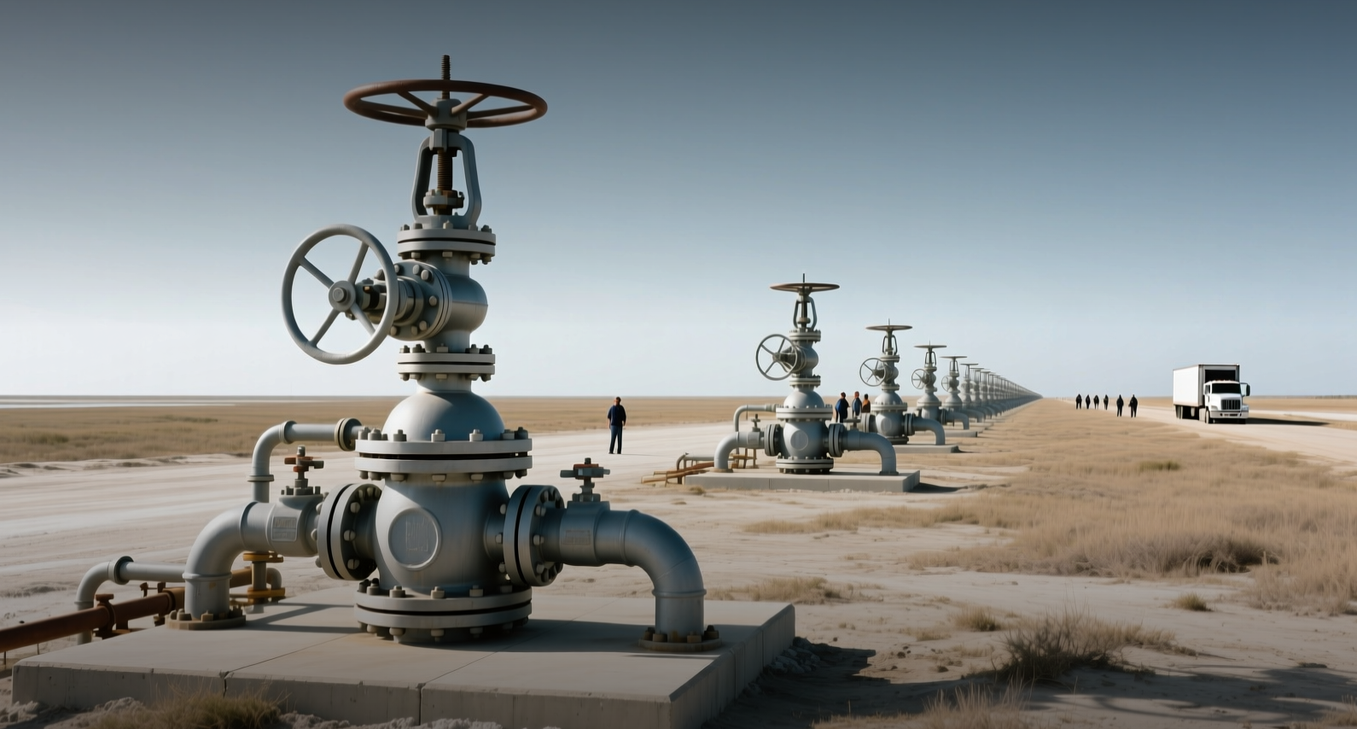
The Strategic Petroleum Reserve, drained to its lowest level in more than four decades, is losing its power to calm oil markets as the US-Israeli war with Iran grinds into its seventh month.
Washington's emergency oil cushion has thinned to 289.7 million barrels, the lowest since 1982, leaving the United States with limited firepower to tame crude prices that have climbed back above $90 a barrel as fighting around the Strait of Hormuz intensifies.
"The core mission of the reserve is to supply the market rapidly during a crisis, but operating below 250 million barrels pushes the infrastructure into a dangerous zone," said Siddharth Misra, professor of petroleum engineering at Texas A&M University.
The reserve would fall to about 243 million barrels if President Donald Trump releases a final 39 million barrels from a March agreement with the International Energy Agency, which coordinated a record 400 million barrel release with the US contributing 172 million. US law bars routine drawdowns below 252.4 million barrels, and a Government Accountability Office report in May warned that aging wells and maintenance backlogs limit the reserve's ability to fill and release crude quickly.
The depleted cushion leaves Washington with fewer options to counter supply shocks, with Brent crude rising above $90 a barrel Monday after US strikes on Iranian rocket launchers at Larak Island drew retaliatory missile attacks on American bases in Jordan and the UAE. "Once inventories are for all practical purposes exhausted, demand destruction becomes the only response to a shortage of oil," said Lutz Kilian, director of the Center for Energy and the Economy at the Federal Reserve Bank of Dallas.
The reserve's decline has been building for years. Beginning in 2021, former President Joe Biden released about 230 million barrels in coordination with international partners to dampen prices, including a record 180 million barrels after Russia invaded Ukraine in 2022. Replenishment stalled when the Iran war halted purchases, and Congress provided just $171 million last year, far below the roughly $20 billion the Energy Department said was needed.
The Trump administration released the 172 million barrels as a loan that companies must repay with interest in the form of about 40 million barrels of additional oil, roughly what the US consumes in two days. That return does not begin until later this year and is not slated for completion until late 2028.
Trump said Sunday the US will refill the reserve using Venezuelan oil, and Washington is expected to reach a deal with Caracas this week that could give the US control of a fifth of Venezuela's vast proved crude reserves. Kevin Book, an analyst at ClearView Energy Partners, said a full replenishment "could take years" and be cut short by elections at home and in Venezuela.
The thinning cushion matters beyond the reserve's walls. The last time the SPR sat near current levels was in the early 1980s, when the US was a net importer and the reserve's role was more straightforward. Today the US is a net total petroleum exporter, so an IEA requirement for members to store 90 days of net imports no longer applies — yet the reserve remains the primary tool for emergency supply.
Clayton Seigle, senior associate at the Center for Strategic and International Studies, said at an August 24 event that the reserve level is "precariously low," and the combination of thin crude stocks and dwindling OPEC spare capacity "is so thin that we'll have less policy flexibility in the case of future disruptions."
The stakes are visible in the broader market. Brent crude has swung from above $120 a barrel during the most intense phase of the war to about $90 now, and the renewed fighting around Hormuz — where about one-fifth of global oil consumption passed before the conflict — has pushed freight, marine insurance and security costs higher across Asia. The war has swollen the world's oil and gas import bill by as much as $330 billion between March and August, according to the Centre for Research on Energy and Clean Air, with Europe absorbing $78 billion and India $22 billion.
For Washington, the question is whether the reserve retains enough credibility to anchor markets in the next shock. "Would market participants worry more as we approach the bottom of the barrel? Clearly, yes," Kilian said. "They may even question the ability of the release of whatever oil is left to calm the market."
This article is for informational purposes only and does not constitute investment advice.
