
A two-seat robotaxi with no steering wheel or pedals hit Austin streets Sept. 3, as Tesla bets consumer comfort with driverless rides will close a wide deployment gap behind Waymo.
A two-seat robotaxi with no steering wheel or pedals hit Austin streets Sept. 3, as Tesla bets consumer comfort with driverless rides will close a wide deployment gap behind Waymo.
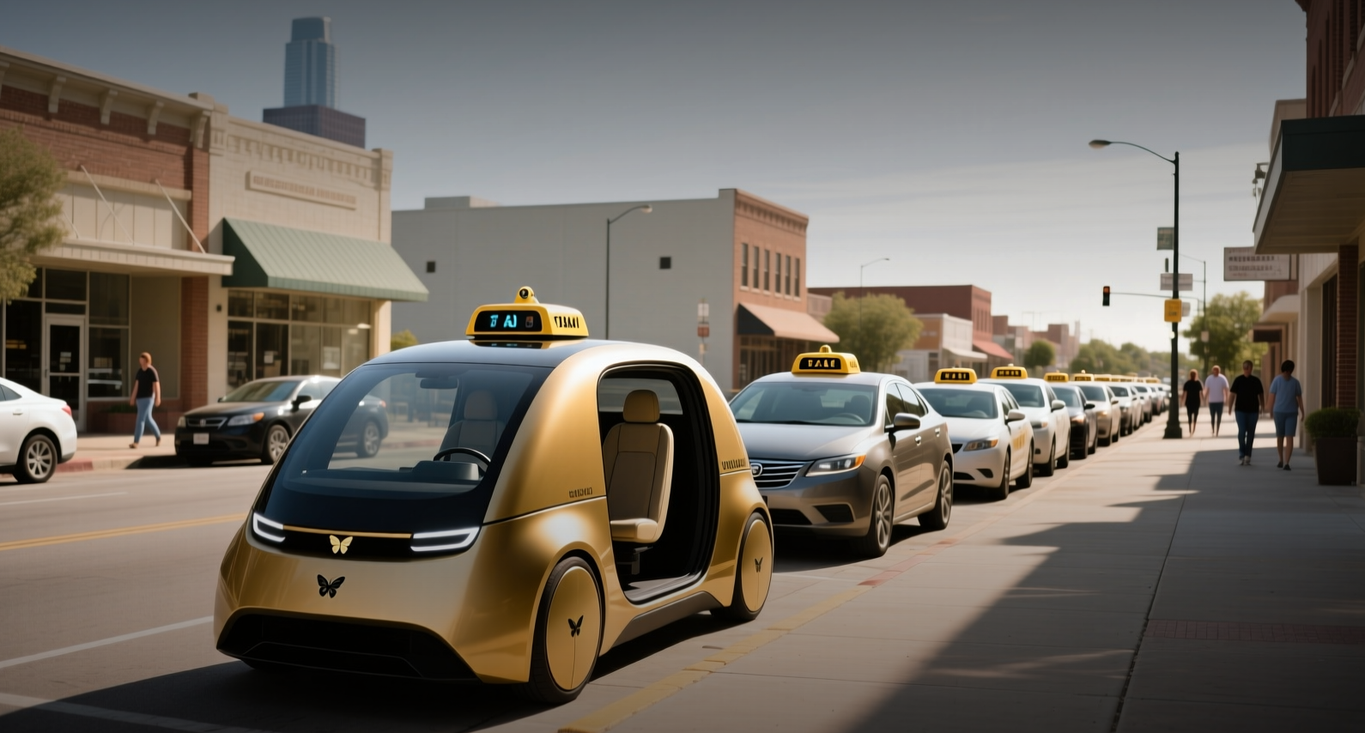
Tesla put dozens of steering-wheel-free Cybercabs on Austin streets Thursday, wagering riders will accept a two-seat robotaxi with no manual controls even as it trails Waymo's roughly 4,000-vehicle fleet.
"If the event includes a meaningful rollout of unsupervised vehicles, we expect the stock to regain momentum," Morgan Stanley analysts wrote before the launch, keeping a $400 price target and the equivalent of a hold rating on Tesla.
The gold-colored Cybercab, first shown nearly two years ago, seats two passengers behind butterfly doors and relies on a camera-only system, while Waymo and Amazon's Zoox pair cameras with radar and lidar. Tesla counted more than 200 "unsupervised" robotaxis across six Texas and Florida cities, per the monitoring site RobotaxiTracker, against Waymo's 4,000-plus vehicles in 14 cities. Texas records showed 45 Cybercabs authorized for driverless operation out of 420 Tesla vehicles registered in the state.
The launch tests whether Tesla can turn a hardware showcase into a recurring-revenue ride-hailing business after two straight annual declines in vehicle sales, which cost it the global EV crown to China's BYD. Shares, down about 21 percent this year into Wednesday's close, rose more than 5 percent Thursday on hopes the futuristic taxis catch on quickly.
The bigger question is whether Americans will climb in. A Pew Research Center survey in February found seven in 10 US adults were "not too" or "not at all" comfortable riding in a driverless car, while 16 percent said they would be "somewhat" comfortable and 7 percent "extremely" or "very" comfortable. Separate Gallup polling in 2025 found skepticism about driverless-car safety had risen over the previous several years, with more Americans calling human-operated cars the safest option than in a 2018 poll.
Musk's own standing complicates the pitch. A Pew poll in January found nearly six in 10 adults held a "very" or "mostly" unfavorable view of him, after his role leading President Trump's government cost-cutting campaign and embrace of right-wing candidates drew protests and boycotts that battered Tesla stock last year.
Austin has hosted a Tesla robotaxi service since June last year, though those cars kept steering wheels and brake pedals and initially ran with safety drivers aboard. The new Cybercab removes that fallback entirely, giving passengers no way to intervene in an emergency.
The National Highway Traffic Safety Administration has at least two open probes into possible safety defects in Tesla's partially automated systems, and Tesla has drawn criticism for asking the agency to redact more crash-report data than other autonomous-vehicle companies. New Street Research analyst Pierre Ferragu posted video clips of Cybercabs circulating on Austin streets with no driver aboard, evidence the vehicles are already running unsupervised ahead of the formal launch.
Tesla's valuation already prices in a large autonomous payoff, which is why the stock's 18 percent August gain and Thursday's jump hinge on deployment details rather than the vehicle's design. Morgan Stanley's analysts cautioned that an underwhelming event would draw a muted or negative reaction, and that continued growth in the unsupervised fleet is key for the shares to outperform through year-end.
Musk eventually plans to push full self-driving software to hundreds of thousands of existing Teslas, letting owners rent out their cars when idle. That would scale the fleet well beyond the Cybercab's initial footprint, but only if regulators and riders clear the same adoption hurdle the Austin launch now tests.
This article is for informational purposes only and does not constitute investment advice.
