

Tesla's market cap has fallen below $1.5 trillion as analysts cut forecasts through 2028, but the reset may create a long-term entry point.
Tesla's market cap has fallen below $1.5 trillion as analysts cut forecasts through 2028, but the reset may create a long-term entry point.
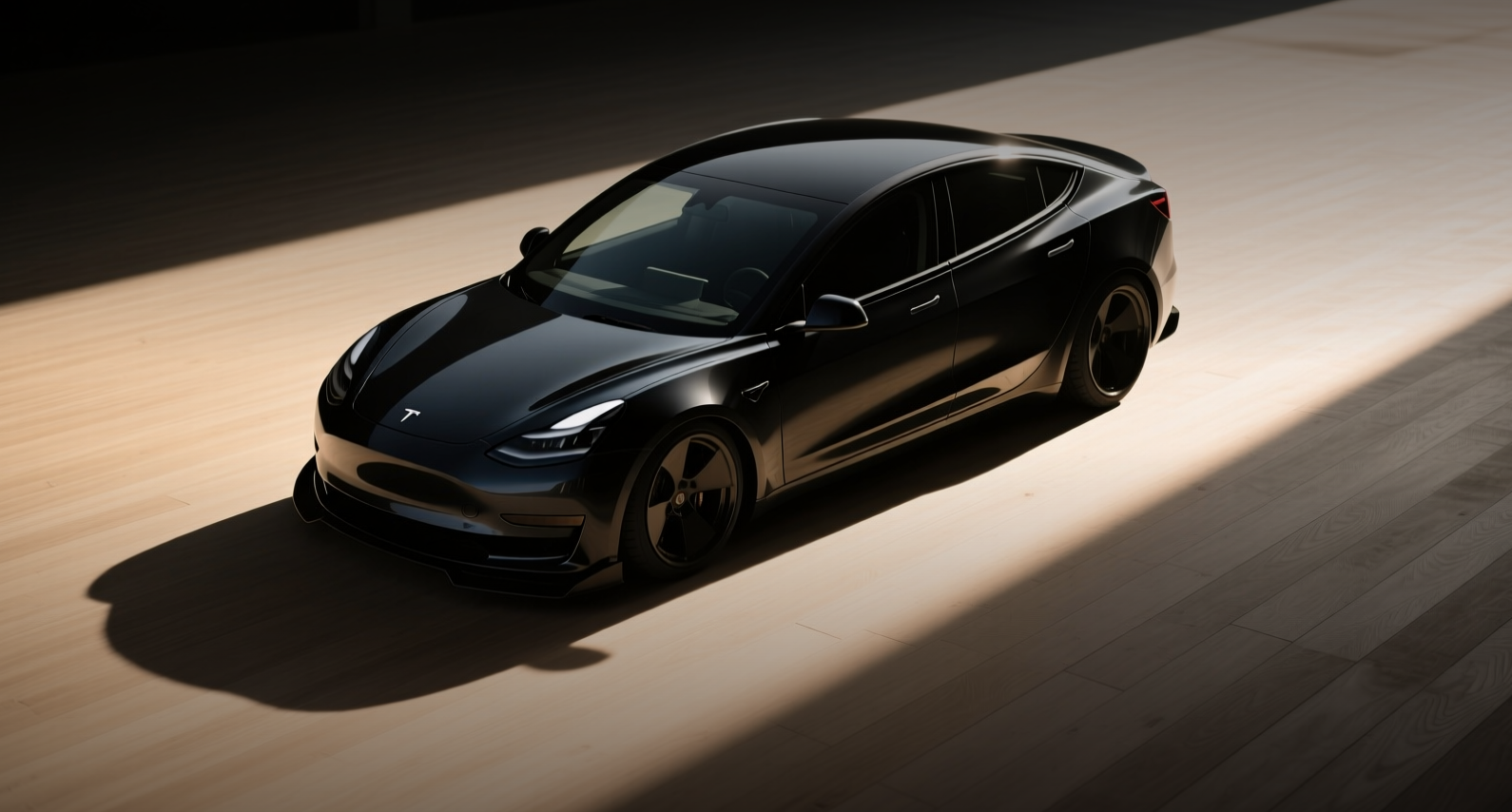
Tesla shares are down 24 percent this year, pushing market cap below $1.5 trillion as analysts cut forecasts through 2028. The S&P 500 is up 13.8 percent over the same period, widening the gap between Tesla and the broader market.
"We'll grow for the next two or three years" to fund Optimus production, the robotaxi fleet, Terafab, solar manufacturing, and AI compute, CFO Vaibhav Taneja said on the company's latest earnings call, outlining plans to ramp capital spending above $25 billion in 2026.
Wall Street consensus for Tesla's 2026 net income has fallen to $3.5 billion from $4.4 billion three months ago, according to Visible Alpha data. The 2027 estimate dropped to $4.5 billion from $6.1 billion, and 2028 to $7.1 billion from $8.9 billion. Capital expenditure expectations rose to $25.2 billion for 2026, $25.7 billion for 2027, and $26.3 billion for 2028. Free cash flow projections deteriorated to negative $8.5 billion in 2026, negative $11.1 billion in 2027, and negative $7.8 billion in 2028.
The bear case has been confirmed on near-term metrics — robotaxi revenue was pushed out, capex expectations rose, and margins compressed. But the reset in expectations, combined with progress on full self-driving software v15, could shift the narrative if Tesla scales its robotaxi fleet in 2027.
The bears who doubted CEO Elon Musk's previous robotaxi timeline have been proven right. Musk's earlier estimates focused on fleet size and expansion to new cities; management now wants investors to track miles driven under robotaxis and the development of FSD v15. The robotaxi fleet is already running with early versions of v15, and management has said it won't go "large-scale unsupervised FSD" until v15 is in place.
Tesla's second-quarter margin compression stems from an unfavorable sales mix and rising costs, with the company delivering 480,126 vehicles and missing expectations. The combination of higher spending and lower margins has forced analysts to reset their models. Ark Invest's Cathie Wood has maintained a bullish stance on Tesla despite the near-term headwinds, while Einride AB plans to deploy 500 Tesla Semi trucks this year, expanding the company's commercial vehicle footprint.
If the architectural and safety improvements in v15 enable Tesla to scale its robotaxi fleet in 2027, the narrative around the stock could change dramatically, potentially prompting upgrades to earnings expectations. The stock's decline this year may prove a good long-term entry point now that expectations have been reset.
The decline puts Tesla at its lowest level since late 2025, testing investor patience as the company burns cash on expansion. The next event to watch is the rollout of FSD v15 and any updates on robotaxi fleet scaling in 2027.
This article is for informational purposes only and does not constitute investment advice.
