

Tesla's first third-party large language model integration in China marks a strategic pivot from self-developed AI to local partnership.
Tesla's first third-party large language model integration in China marks a strategic pivot from self-developed AI to local partnership.
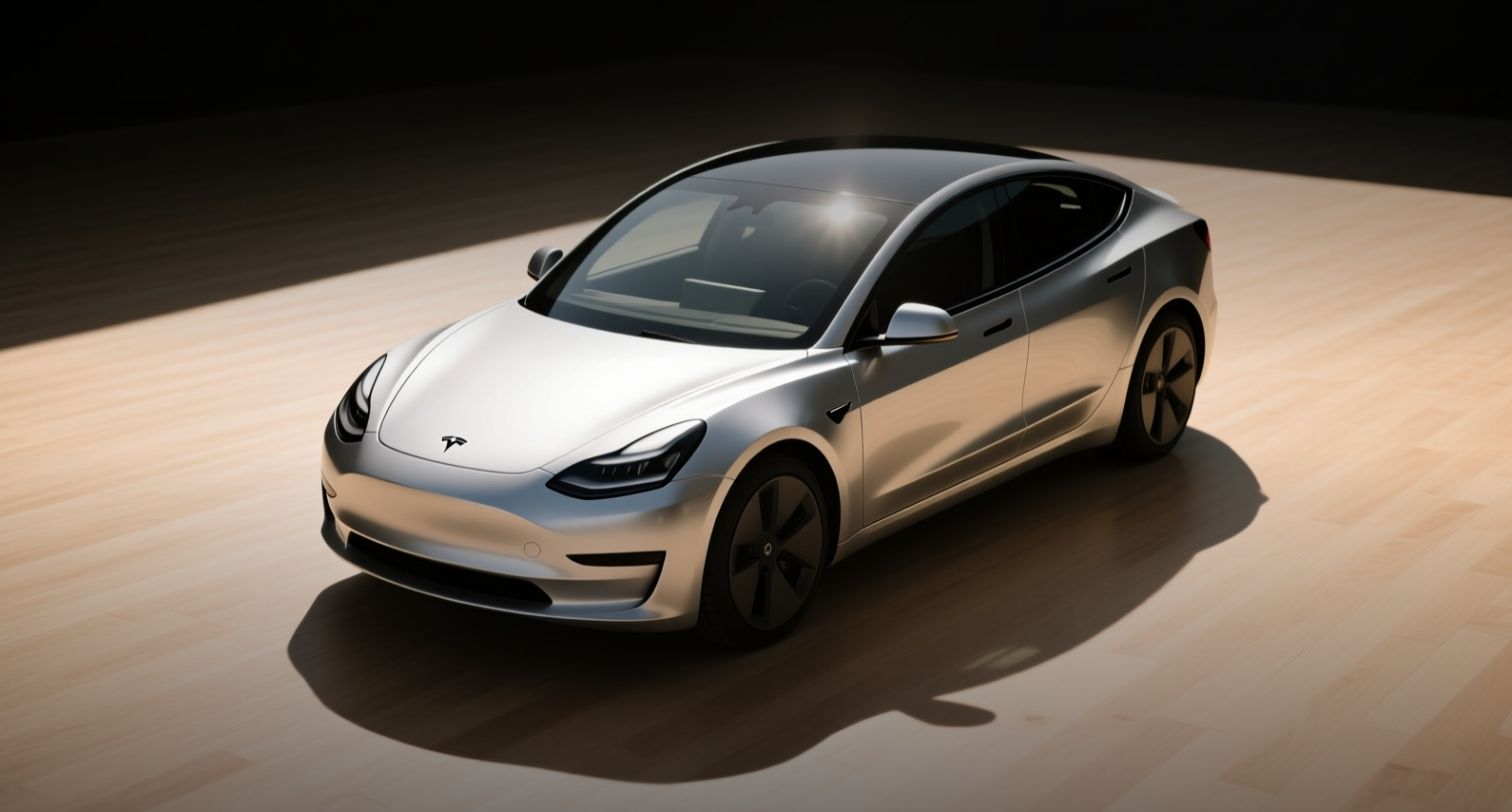
Tesla began pushing ByteDance's Doubao large language model to all four China-market models on July 31, its first third-party AI integration in more than a decade of operating in the country.
"Tesla has launched the Doubao large model, with the model progressively pushed to Tesla in-car infotainment systems," Volcano Engine, ByteDance's cloud unit, said in a statement on Aug. 19.
The over-the-air update, version 2026.14.13, covers Model 3, Model Y, Model S and Model X. Doubao operates as a standalone app within the infotainment system, supporting 18 Chinese dialects and four voice timbres. It handles real-time queries, multi-turn conversation, vehicle controls such as climate and navigation, plus entertainment functions including storytelling and English practice. The rollout follows a roughly one-year partnership cycle that began with a strategic agreement in August 2025.
The integration closes a long-standing gap in Tesla's China strategy. While Grok powers in-cabin AI in North America, regulatory constraints blocked a direct port. Doubao's parent ByteDance reports over 382 million monthly active users for the app as of June, and the model has already been deployed in 7 million vehicles across automakers including Mercedes-Benz, BMW, Audi, Geely and Seres.
Tesla's voice assistant previously operated at a "command recognition" level — opening sunroofs and adjusting climate, but little else. Domestic rivals had moved far ahead: NIO's NOMI performs anthropomorphic emotional interaction, and Li Auto's in-car assistant handles multi-round conversation and schedules vehicle functions. Doubao's end-to-end speech model processes "speech to speech" directly, cutting the latency inherent in cascaded recognition-transcription-synthesis architectures. The model supports tone recognition and emotional understanding, enabling active topic promotion and interruption.
The selection process was rigorous. Tesla screened large model partners using strict standards, with Musk personally participating in the review, according to the rollout details. Market speculation had suggested a dual-model approach pairing Doubao with DeepSeek, and Tongyi Qianwen was also rumored to be under evaluation. Doubao emerged as the sole deployment.
Volcano Engine's delivery track record proved decisive. The unit has completed mass production integration with dozens of automakers, accumulating 7 million vehicle deployments. For a company like Tesla that demands near-perfect delivery quality, proven mass production capability outweighed raw model performance.
The Doubao integration is the first half of a two-part AI strategy. Tesla's FSD, which has been rumored for nearly two years in China, has not yet been delivered in batches to Chinese owners due to compliance procedures. If FSD clears regulatory hurdles, Tesla would replicate its North American "Grok + FSD" architecture with "Doubao + FSD" — FSD handling driving intelligence, Doubao managing interaction intelligence.
The Doubao model is also evolving toward an Agentic AI architecture. According to 36Kr, the model will run three to four core agents in cloud collaboration to handle cabin-driving coordination, comfort control and emotional interaction. This would shift the in-cabin experience from passive command response to proactive task completion.
For Tesla, the deployment addresses its most visible competitive weakness in China. Domestic brands have caught up in three-electric technology, chassis and charging infrastructure, eroding Tesla's traditional advantages. In-cabin intelligence is the dimension Chinese consumers perceive most directly, and the Doubao integration brings Tesla from "understanding commands" to "being able to chat" in a single update.
The strategic weight extends beyond Tesla. Doubao's 7 million vehicle deployments already cover 100 percent of mainstream automakers, from luxury brands like Mercedes-Benz, BMW and Audi to Chinese local manufacturers and new energy vehicle startups. Tesla's participation fills the last major gap — top-tier foreign automakers — and provides a strong endorsement of Doubao's capabilities. When the global smart vehicle leader adopts a third-party LLM, every Chinese automaker must accelerate its own AI integration or risk falling behind.
Tesla shares have not yet shown a significant reaction to the rollout. The strategic value lies in long-term positioning: if FSD lands in China, the combined Doubao + FSD stack would give Tesla a complete AI capability closed loop in its most critical market, potentially reshaping how investors value Tesla's China operations.
This article is for informational purposes only and does not constitute investment advice.
