

Key Takeaways:
- Sunrise Energy Metals secured $400 million conditional loan from US Department of War
- Syerston project in NSW to become world's first primary scandium mine
Global scandium output: ~80 tonnes (2025) | Syerston capacity: 60 tonnes/year
Key Takeaways:
Global scandium output: ~80 tonnes (2025) | Syerston capacity: 60 tonnes/year
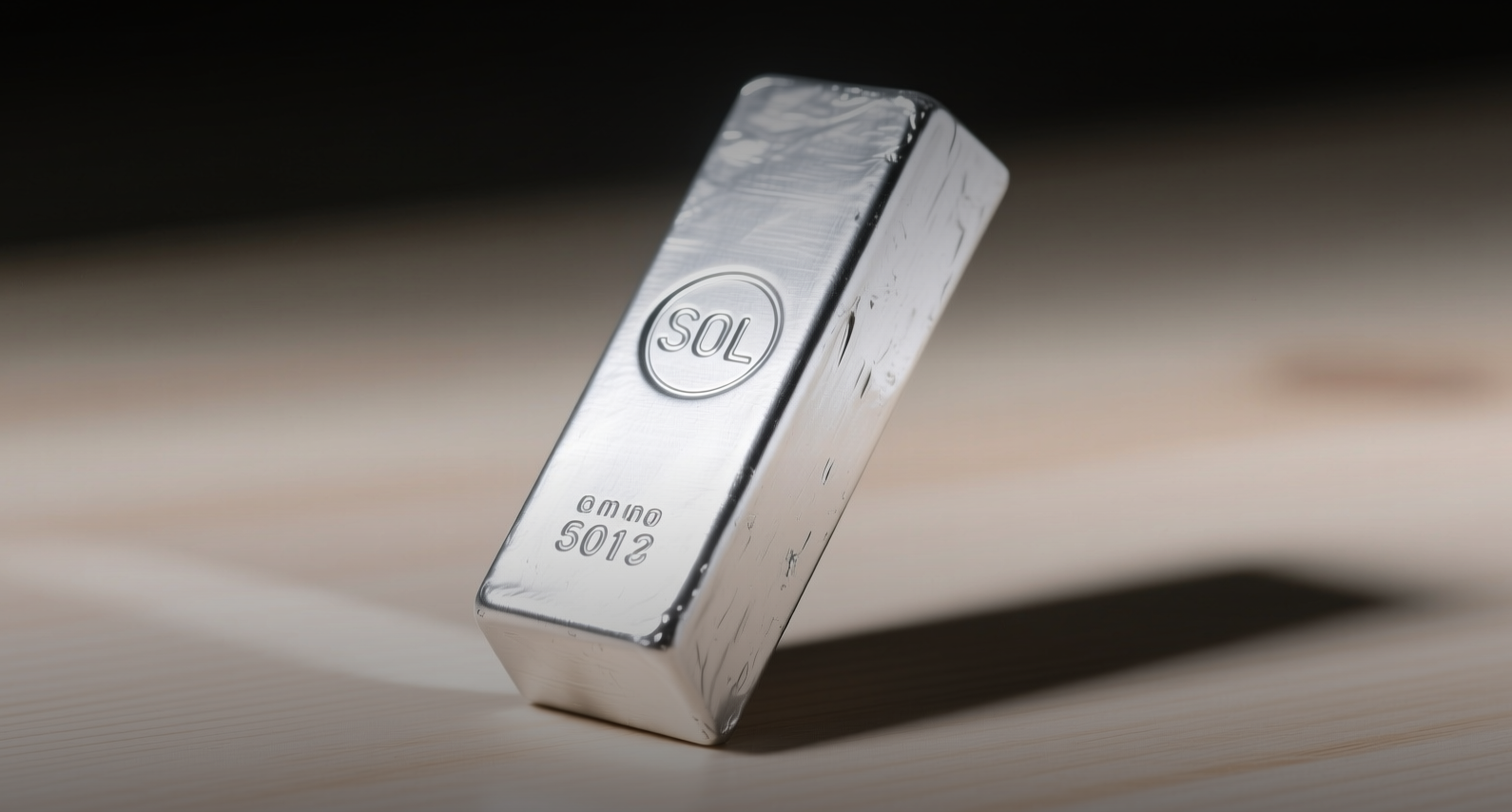
Sunrise Energy Metals shares gained 29 percent Monday after the US Department of War committed $400 million to its NSW scandium project.
The funding marks "a landmark moment" for the company and Australia's mining industry, Robert Friedland, chairman of Sunrise, said in a statement filed with the Australian Securities Exchange.
The US Office of Strategic Capital's conditional loan commitment supports the Syerston Project, designed to produce 60 tonnes of scandium annually — roughly three-quarters of the estimated 80 tonnes of global production in 2025, according to US Geological Survey data. The deal gives the Department of War a right of first offer on Sunrise's output, and the company plans to build metallization and additive layer manufacturing capabilities to keep the value chain aligned with Western markets. Sunrise said it will develop a full scandium value chain beginning with primary mining operations at Syerston.
China produces nearly 70 percent of the world's rare earths and processes almost 90 percent of global supply, according to USGS and IEA data. The nearly $1 billion transaction, combining public and private capital, is part of the Trump administration's push to break that dominance as critical mineral demand grows with the clean energy transition and AI data center buildout.
Scandium is one of the most effective elements for strengthening aluminum while remaining flexible and resistant to heat and corrosion. The silvery-white metal is used in defense and aerospace applications, as well as for providing reliable power for AI data centers and other power-constrained infrastructure.
Foreign competitors account for roughly 80 percent of global scandium mining production and nearly all processing, with no primary mine-source supply existing globally. Currently, scandium is obtained only as a byproduct of other industrial or resource extraction processes. The Syerston project, one of several proposed non-Chinese scandium sources, has not yet begun construction. Other Australian developers pursuing scandium include Cobalt Blue Holdings, which plans byproduct recovery at its Broken Hill project, and Scandium International Mining, developing the Nyngan project in NSW.
"The contemplated Sunrise transaction marks a significant step in establishing supply chain resiliency for an increasingly critical mineral," David A. Lorch, director of the OSC and senior advisor to Deputy Secretary of War Steve Feinberg, said.
San Jose-based Bloom Energy, the West's largest consumer of scandium oxide, used an estimated 30 tonnes in 2025 — about half of global consumption — according to short-seller Hunterbrook Media. On July 8, Hunterbrook alleged that Chinese scandium oxide was still reaching Bloom through Thailand, Japan, and South Korea. In a July 9 filing, Bloom rejected the report's financial claims as false and misleading.
The stock was last seen trading 16 percent higher on Monday, paring earlier gains. The loan commitment follows a meeting between Trump and mining executives last week, part of a broader $3 billion push into defense-linked minerals projects announced by the administration.
This article is for informational purposes only and does not constitute investment advice.
