


SpaceX's exclusive commitment to Nvidia's AI chips removes a deep-pocketed customer from AMD's reach and tightens Nvidia's grip on the AI accelerator market.
SpaceX's exclusive commitment to Nvidia's AI chips removes a deep-pocketed customer from AMD's reach and tightens Nvidia's grip on the AI accelerator market.
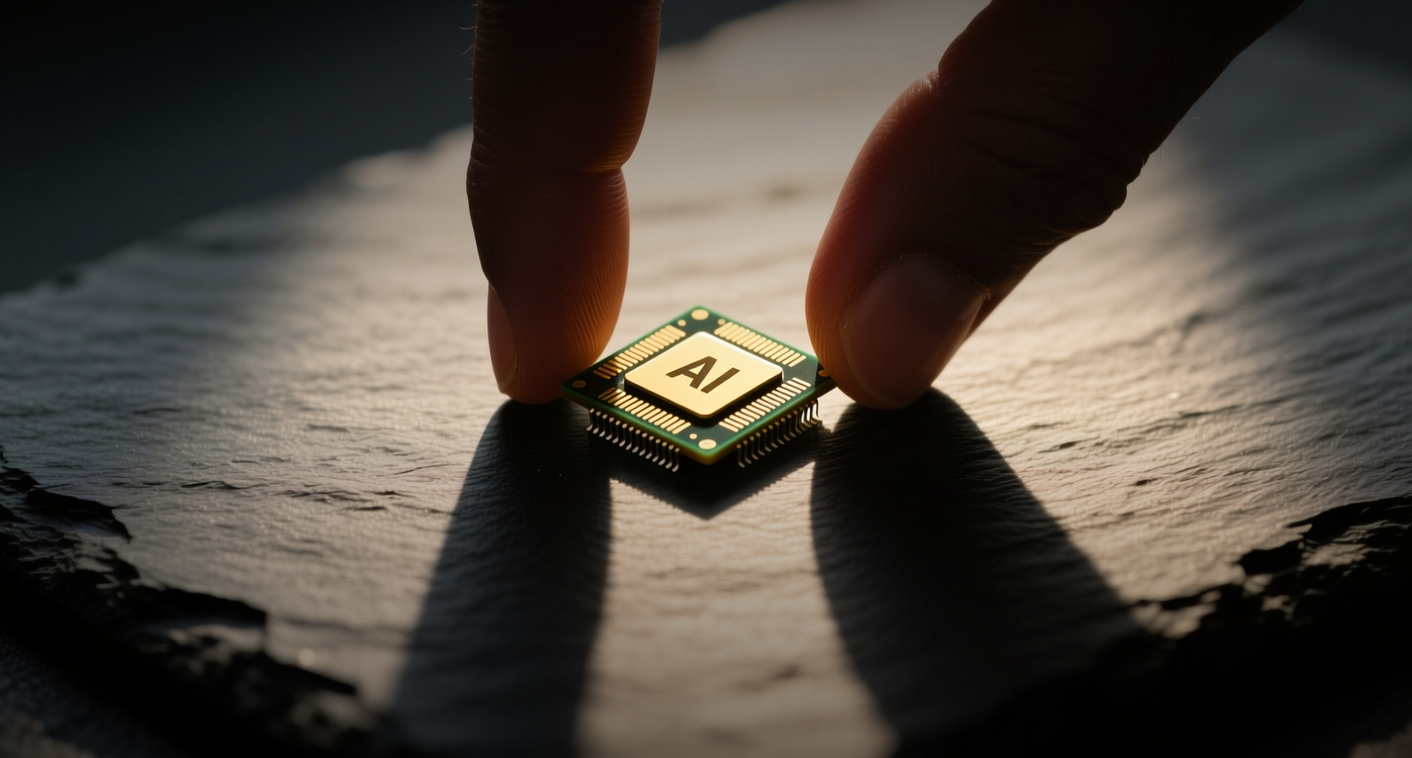
SpaceX's decision to go exclusive with Nvidia for AI chips removes a potential $2 trillion customer from AMD's addressable market, deepening the competitive gap in the AI accelerator race.
Elon Musk confirmed the partnership during SpaceX's first earnings call as a public company, declaring Nvidia's Vera Rubin architecture "the undisputed best available hardware for complex AI workloads."
AMD shares sank over 6 percent following the announcement, even after the company topped its second-quarter earnings estimates. The stock had more than doubled over the past year, gaining 162 percent, while Nvidia rose 23 percent. JPMorgan noted that SpaceX alone is expected to absorb a "very significant percentage" of Nvidia's total GPU shipments in 2027.
Nvidia shares rose 3.5 percent on the news, trading at $217.51, up 15.2 percent year-to-date. The exclusivity deal extends Nvidia's dominance beyond terrestrial data centers into orbital computing, while AMD must now compete for remaining hyperscaler demand as Microsoft develops its own Maia 300 AI chip.
The SpaceX commitment marks a shift in how AI infrastructure customers procure chips. Rather than playing vendors against each other for better pricing, SpaceX chose strategic alignment with a single supplier. Musk's endorsement of Vera Rubin — Nvidia's next architecture for complex AI workloads — carries weight beyond the deal itself. It confirms Nvidia's roadmap at a moment when the company faces questions about a $500 billion financing plan for AI infrastructure and rising competition from major customers building in-house silicon.
For AMD, the loss is strategic as much as financial. Lisa Su's firm had built its pitch around offering competitive performance at lower price points than Nvidia. But the SpaceX deal shows that at the highest end of the market, performance leadership outweighs price. AMD's softer-than-expected revenue forecast and increased capital expenditures, disclosed alongside its Q2 earnings, suggest the company is still investing heavily to close the gap.
The competitive dynamics extend beyond SpaceX. Microsoft's development of its own Maia 300 AI chip represents a longer-term threat to Nvidia's market share among hyperscalers. Meanwhile, Nvidia's reported work with Apollo Global and Blackstone on a $500 billion financing plan for AI infrastructure has drawn scrutiny from investors, including billionaire Mark Cuban, who warned that subsidizing customer purchases could make the market fragile.
The SpaceX-Nvidia partnership is the most visible example yet of a trend reshaping the AI chip market: customers choosing strategic alignment over multi-vendor procurement. SpaceX's commitment to Nvidia's Vera Rubin architecture, combined with its orbital data center ambitions under the Starmind program, positions Nvidia at the center of aerospace computing.
For AMD, the path forward likely involves structured equity deals and deeper collaborations within the data center market, rather than competing head-to-head for exclusive commitments. The company's 162 percent stock rally over the past year suggests investors still believe in the value proposition, but the SpaceX loss narrows the addressable market.
Nvidia shares, trading at $217.51 and near their 52-week high of $235.74, have gained 15.2 percent year-to-date. AMD shares, which have outperformed Nvidia by a wide margin over the past year, face renewed questions about whether the value strategy can sustain momentum as Nvidia locks in marquee customers. The SpaceX deal also strengthens Nvidia's supply chain position — Foxconn, its primary manufacturing partner, reported a 54.2 percent increase in monthly sales, reflecting sustained demand across the AI infrastructure buildout. For investors, the deal reinforces a simple calculus: in the AI chip market, the winner takes the largest share of the fastest-growing segment, and exclusivity agreements compound that advantage. SpaceX's Starmind orbital compute program is expected to require substantial GPU shipments through 2027, according to JPMorgan, giving Nvidia a visible revenue pipeline that extends beyond traditional data center demand.
This article is for informational purposes only and does not constitute investment advice.
