
SpaceX's upgraded Starship rocket failed to launch Thursday after multiple engines did not ignite, triggering an automatic abort and sending shares below their IPO price.
SpaceX's upgraded Starship rocket failed to launch Thursday after multiple engines did not ignite, triggering an automatic abort and sending shares below their IPO price.
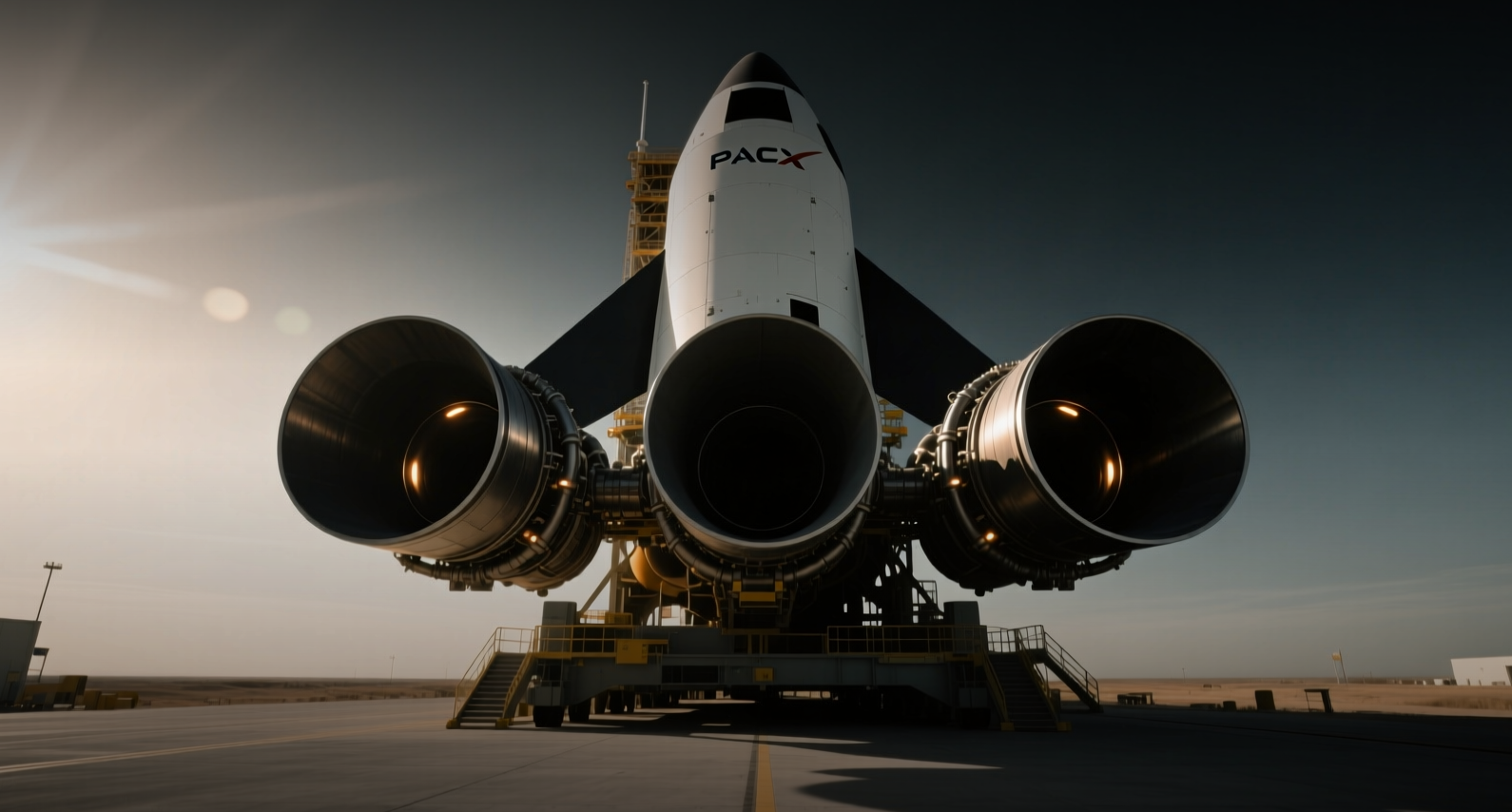
SpaceX's upgraded Starship rocket failed to launch Thursday after multiple engines did not ignite, triggering an automatic abort and sending shares below their IPO price.
SpaceX's failure to launch its upgraded Starship V3 rocket on Thursday, after four of 33 Raptor engines failed to ignite, threatens to delay the company's Starlink V3 satellite deployment and weighed on shares that have already fallen below their June IPO price.
"Some of the engines didn't start, triggering an automatic launch abort," Elon Musk, chief executive officer of SpaceX, said on X. "Now offloading propellant. Next launch attempt hopefully in a few days."
The 407-foot rocket, the world's largest, was set to deploy 20 of SpaceX's next-generation Starlink V3 satellites on a suborbital flight — the first space test for the upgraded satellites. The abort came during engine ignition at SpaceX's Starbase facility in South Texas, with the water deluge system activated before an automatic safety system shut everything down. Musk later said two Raptor engines would be removed and replaced, with the next attempt likely early next week.
SpaceX shares fell more than 4% in after-hours trading following the abort, closing below the $135 IPO price from the company's June 12 public debut that raised more than $85 billion. The failed launch adds pressure on a stock that has declined since its first-day pop, as investors weigh the timeline for Starship's operational capability and the revenue-generating Starlink business it is designed to support.
The abort was the second launch attempt for the V3 Starship variant. Its first test flight on May 22 was mostly successful — the upper stage completed a controlled splashdown off Western Australia — but the Super Heavy booster failed during its Gulf of Mexico landing. The Federal Aviation Administration investigated that flight and only cleared the V3 for re-flight earlier this week.
SpaceX's Starlink business remains the company's only profitable segment, making the successful deployment of V3 satellites critical to the company's financial outlook. The company has filed plans to build a constellation of as many as 100,000 Starlink V3 spacecraft in low Earth orbit, a scale achievable only with Starship's payload capacity.
NASA is counting on Starship to land astronauts on the moon under the Artemis program. The space agency has contracted both SpaceX and Jeff Bezos' Blue Origin to develop lunar landers, with the first crewed landing targeting no earlier than 2028.
This article is for informational purposes only and does not constitute investment advice.
