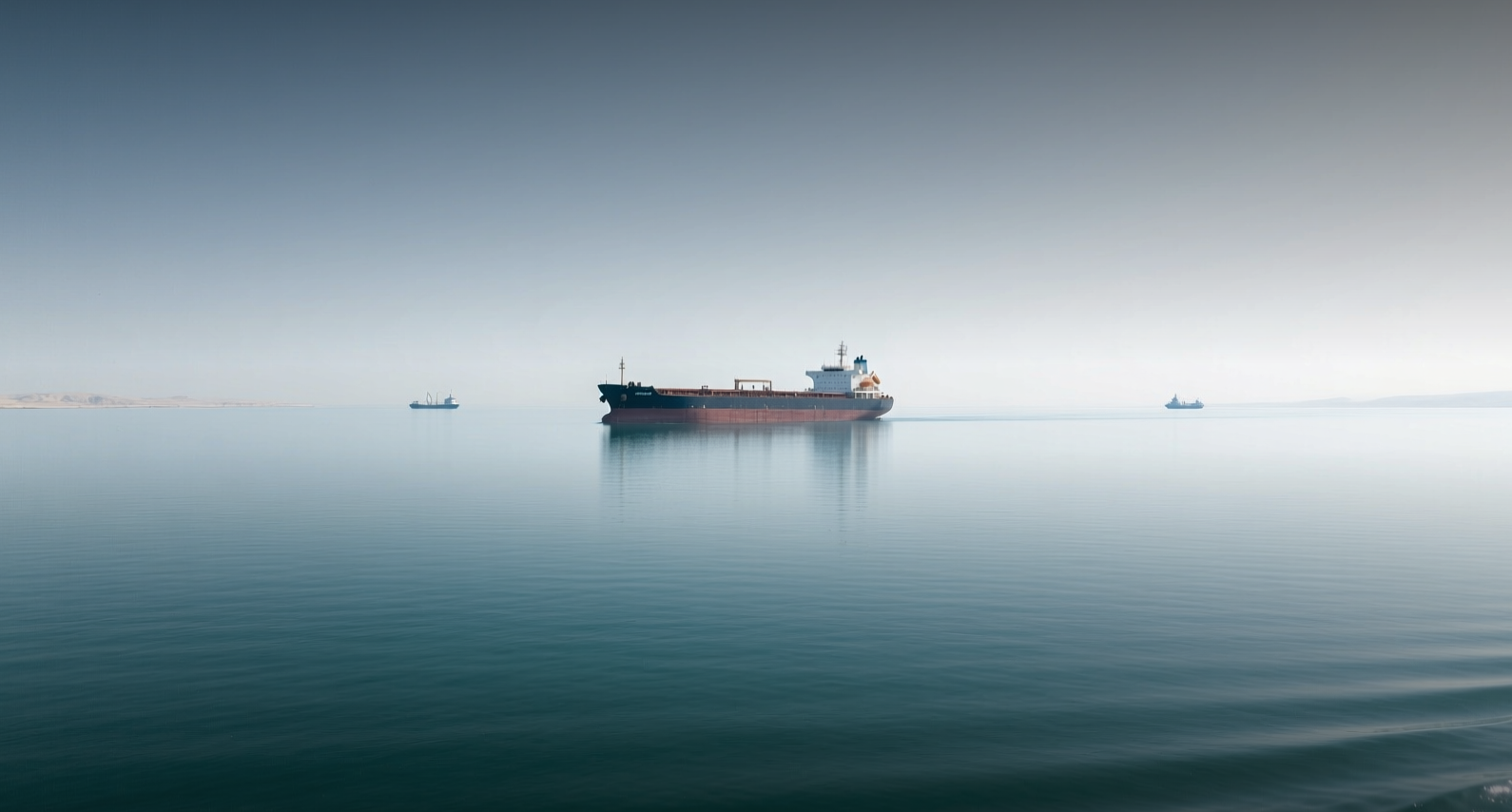
Two supertankers carrying Saudi oil were struck by unknown projectiles within minutes of each other while transiting outbound through the Strait of Hormuz late Monday, according to shipping intelligence firms Marisks and Kpler, escalating a six-month conflict that has already cut Gulf crude flows by roughly a third.
The attack came hours after Brent crude futures settled at $90.20 a barrel, up $2.11 or 2.40 percent, and U.S. West Texas Intermediate rose $1.89 to $85.30, as traders priced the weekend's U.S. strike on Iranian launchers on Larak Island and Iran's retaliatory missile and drone barrage against two U.S. air bases in Jordan. Jordan said its air defenses intercepted eight incoming missiles.
"The market is now pricing a higher probability that this latest exchange is not a one-off," said Josh Owens, content director at Oilprice.com, who has tracked the conflict since it began in March. "The combination of low traffic, attacks on shipping, the U.S. blockade, and renewed IRGC attempts to mine the strait suggests the geopolitical premium isn't going anywhere."
Visible commodity-vessel traffic through the strait has collapsed to roughly five ships per day, Kpler data shows, down from pre-war levels that typically saw more than 100 transits daily. Some vessels have switched off their automatic identification systems to evade attacks, meaning actual traffic is likely higher. The United Kingdom Maritime Trade Operations reported a third tanker strike in the strait over the past week, and CENTCOM said its blockade of Iranian ports has redirected 83 commercial vessels, disabled three, and boarded two as of Aug. 30.
The supply math is stark. Goldman Sachs estimates Gulf exports at 15-16 million barrels per day, still 7-8 million bpd below pre-war levels. JPMorgan calculates each additional month of disruption could add $7-$8 a barrel to Brent, with a three-month disruption scenario pushing average monthly Brent to around $114. Goldman warns Brent could reach $120 if shipping problems through Hormuz persist, while ING and others see prolonged disruption scenarios in the $105-$120 range. Base cases cluster in the $80-$90 band if a diplomatic off-ramp appears.
The escalation is rippling beyond crude. Fed Chair Kevin Warsh's Friday emphasis that the central bank still has "work to do" on inflation, combined with the oil spike, pushed two-year Treasury yields to 4.36 percent and lifted market pricing for a September rate hike to 57 percent. Japan's Nikkei fell 2.1 percent and South Korean stocks dropped 2.4 percent Monday, while S&P 500 futures dipped 0.3 percent. The dollar held at 160.00 yen, near its July top of 163.99.
War-risk insurance premiums are climbing as underwriters reassess exposure to the world's most critical oil chokepoint. The last comparable disruption came in 2019, when attacks on tankers off Fujairah and the Abqaiq processing facility temporarily knocked out 5.7 million bpd of Saudi production and sent Brent above $70 within days — a fraction of the current scale. With Iran's IRGC Navy claiming a supertanker struck two sea mines Monday and warning ships violating its passage rules face the same fate, the risk of a full strait closure — which would strand roughly 20 percent of global seaborne oil — remains the tail scenario traders are hedging.
The immediate question is whether Monday's tanker strikes mark a new phase of direct attacks on Saudi shipping, potentially drawing Riyadh more deeply into the conflict. President Trump's social-media post claiming Iran's Kharg Island oil terminal was "being blown to smithereens" — unconfirmed by U.S. military sources — added to the uncertainty. Traders will watch for independent battle-damage assessments and verification of the tanker incident in coming sessions to determine whether the premium holds or fades.
This article is for informational purposes only and does not constitute investment advice.