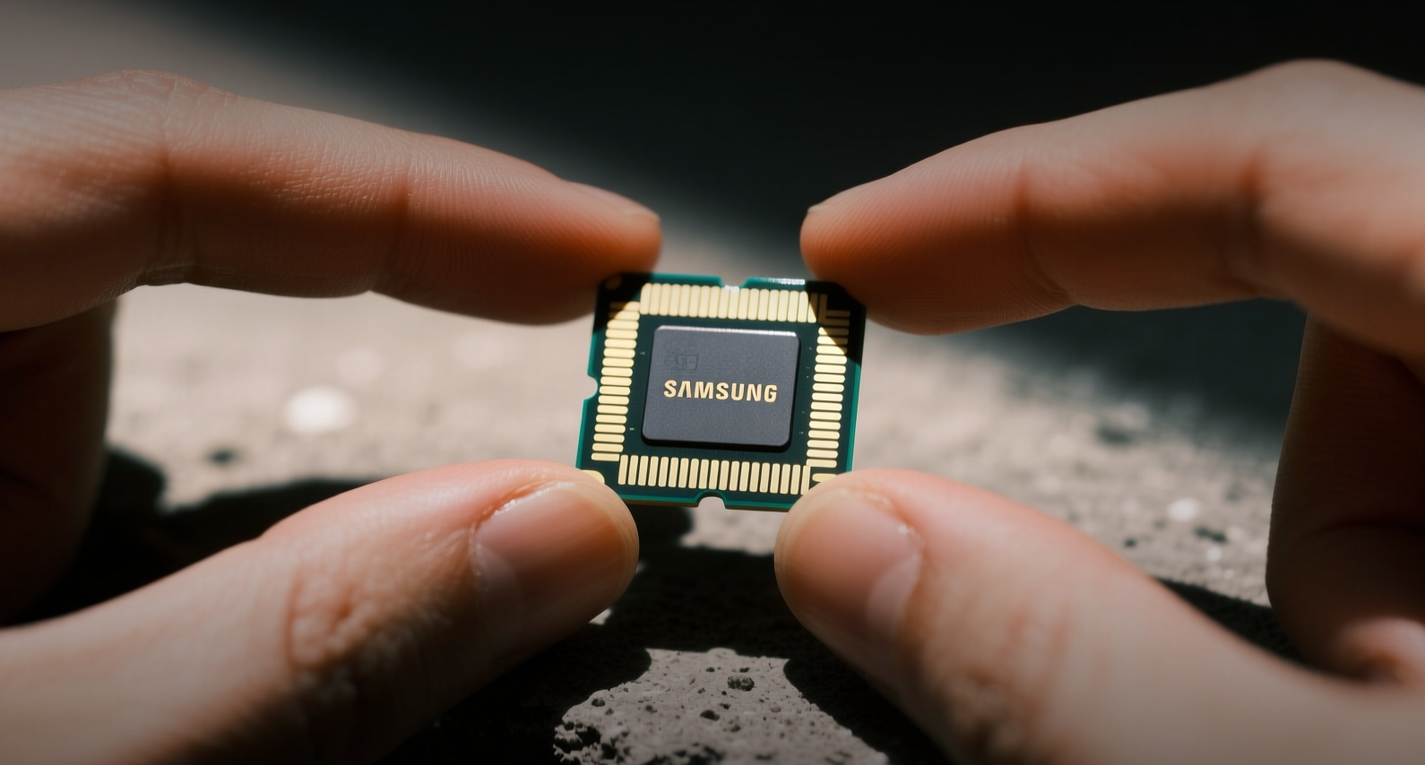
Samsung has moved 60-70% of its memory sales into long-term agreements that cap price declines but leave upside open.
Samsung Electronics has shifted 60-70% of its memory sales into long-term agreements that cap quarterly price declines at 5% while leaving increases open, locking in AI demand as DRAM and NAND spot prices hit records.
"The contract structure clearly favors the supplier," a BofA Merrill Lynch research note published Aug. 1 said, describing terms that limit downside while preserving upside in a tightening market.
The shift comes as spot prices surge. A 16Gb DDR5 chip trades at $51, up 733% from a year earlier, while 16Gb DDR4 reached $85.2, up 896%, and 8Gb DDR4 hit $42.1, up 722%, per DRAMeXchange data. A 1Tb NAND wafer rose 3% week over week to $26.4, up 415% year over year. Server DRAM set records, with 64GB DDR5 module contracts surpassing $1,480 and 64GB DDR4 at $1,300.
The pricing power rests on an unprecedented wave of AI infrastructure spending. Amazon, Microsoft, Alphabet, Meta and Oracle are projected to spend a combined $730 billion on capital expenditures in 2026, up about 100% from a year earlier, with annual outlays potentially exceeding $1 trillion by 2027-2028, BofA said.
Samsung's five-year rolling contracts with large US technology customers renew before the first term expires, creating a durable revenue base while retaining the ability to raise prices 10-20% or more in tight quarters. The agreements now cover high-bandwidth memory and enterprise solid-state drives, not just traditional DRAM, reflecting how AI servers and data centers have become the industry's growth engine.
The model marks a break from the boom-bust cycles that long defined memory. For years Samsung and SK hynix depended on short-term orders that shifted as customers adjusted purchasing, leaving suppliers exposed to price swings and excess inventory. Multi-year contracts with advance payments now let manufacturers recover production costs even if demand softens, while customers keep the option to renegotiate terms every 12 months.
Competition remains thin, which strengthens the suppliers' hand. Micron is the main alternative, while China's CXMT has entered the market though its DDR5 reportedly costs more than Samsung's products. CXMT's July 27 debut on Shanghai's STAR Market, which sent its market cap to roughly $487 billion, has not dented NAND demand because the two memory types serve distinct roles in AI data centers.
Kioxia, the NAND specialist, is following a similar path, targeting 50% long-term agreement volume coverage for calendar 2028 after reporting an 80% gross margin for its fiscal first quarter. The company said NAND demand continues to outpace supply, driving a roughly 70% quarter-over-quarter jump in average selling prices.
The supplier-friendly contracts and record prices point to sustained margin expansion across the memory sector. Samsung and SK hynix, along with Micron and SanDisk, stand to benefit as shortages are expected to persist until 2028, though TrendForce projects NAND supply to loosen in the second half of 2027 as new capacity comes online. Downstream PC and server makers face higher component costs that could squeeze their margins.
This article is for informational purposes only and does not constitute investment advice.