

Rocket Lab's hinged fairing design keeps the nose cone attached to the booster, eliminating the cost of recovering or replacing the hardware after each launch.
Rocket Lab's hinged fairing design keeps the nose cone attached to the booster, eliminating the cost of recovering or replacing the hardware after each launch.
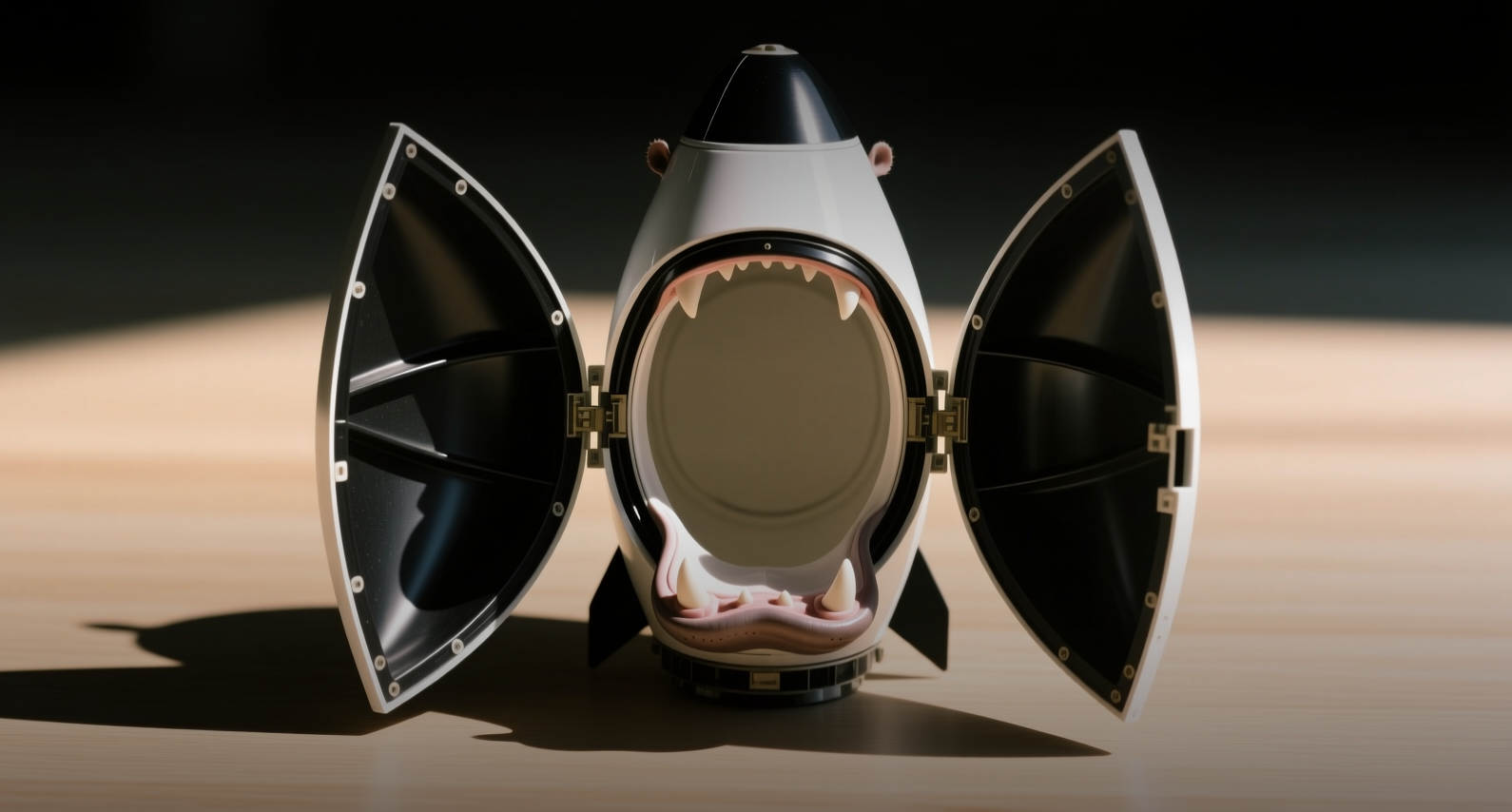
Rocket Lab's hinged fairing design keeps the nose cone attached to the booster, eliminating the cost of recovering or replacing the hardware after each launch.
Rocket Lab unveiled a payload fairing that stays attached to the booster after separation, eliminating the need to recover or replace the protective nose cone on each Neutron rocket flight.
"The fairing and the top of the rocket are among the most expensive structures on the vehicle, so recovering them in one piece with the booster removes a cost that rivals either have to eat or work hard to reclaim," a Rocket Lab spokesperson said.
The two fairing halves are hinged to the top of the first stage and never detach. Once the rocket climbs high enough, the halves swing open like jaws — engineers nicknamed it the Hungry Hippo — release the second stage and payload, then snap shut in about 1.5 seconds. Neutron is designed to lift 13,000 kilograms into low Earth orbit, powered by nine methane-fueled Archimedes engines.
The captive fairing also allows a lighter upper stage, since it is shielded from wind and heat during ascent, improving payload capacity. The catch: Neutron's first launch has slipped to late 2026 after a first-stage tank ruptured during a pressure test earlier this year. Rocket Lab remains unprofitable while funding the work.
SpaceX recovers Falcon 9 fairings by fishing them out of the ocean and refurbishing them — a process that adds time and cost between launches. Blue Origin's New Glenn uses a similar approach. Rocket Lab's design eliminates the recovery step entirely because the fairing never separates. The approach mirrors the philosophy behind SpaceX's Starship catch mechanism but applies it to the nose cone rather than the booster.
Rocket Lab (RKLB) trades on the Nasdaq and has yet to turn a profit as it funds Neutron's development alongside its smaller Electron rocket operations. If the Hungry Hippo works as designed, it could give Neutron a cost advantage over partially reusable rivals by removing fairing recovery from the launch cycle. But the technology remains unflown at orbital scale — Neutron's debut, now expected by late 2026, will determine whether the design delivers on its promise.
This article is for informational purposes only and does not constitute investment advice.
