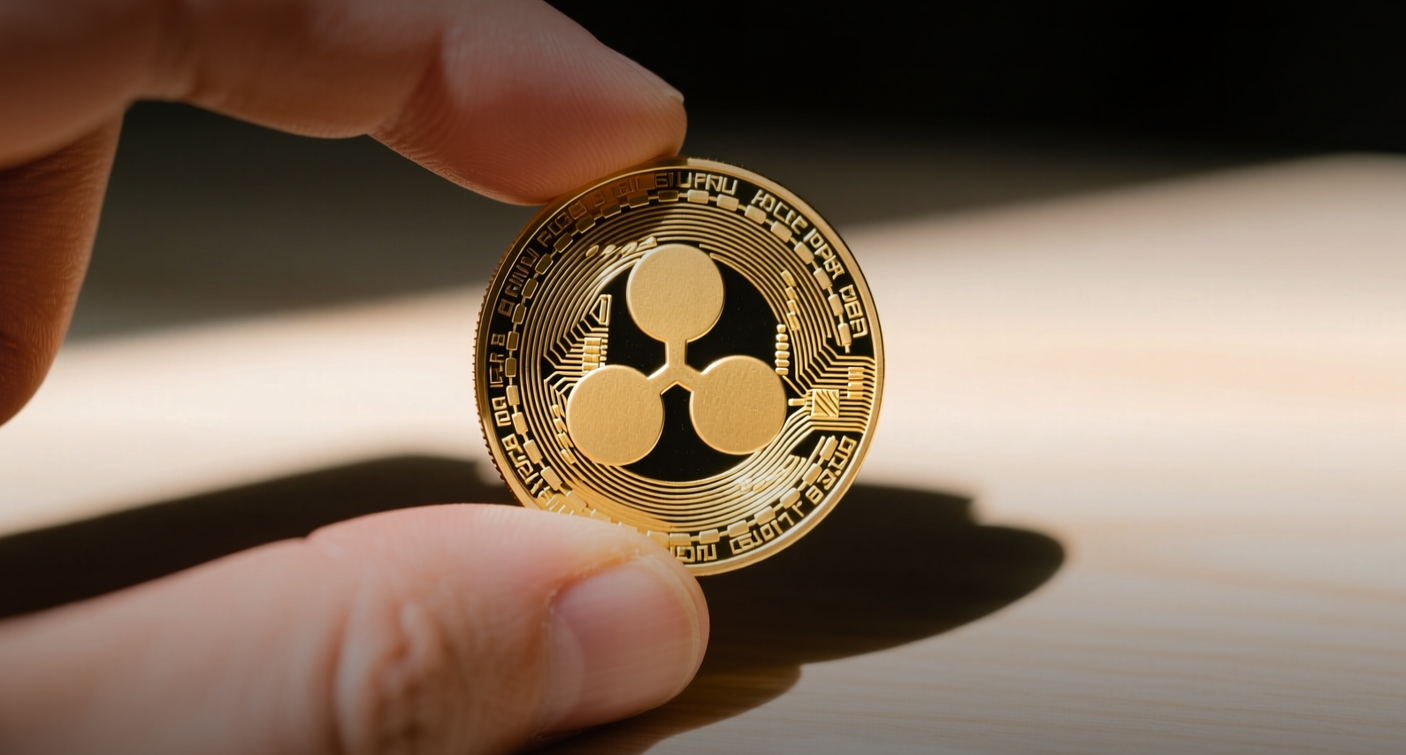
Ripple Chief Legal Officer Stuart Alderoty marked the 3rd anniversary of the landmark ruling that XRP is not a security, as crypto attorney John Deaton credited over 75,000 token holders for shaping the outcome.
"Happy XRP IS NOT A SECURITY Day," Alderoty said in a public statement on July 14, commemorating U.S. District Judge Analisa Torres' July 13, 2023 decision in the SEC lawsuit against Ripple.
Deaton noted that Judge Torres cited not only his amicus brief but also nearly 4,000 affidavits from XRP holders — one of the few exhibits specifically referenced in the court's summary judgment. The ruling drew a critical distinction between XRP as a digital asset and the specific transactions in which it was sold, finding that Ripple's programmatic sales on public exchanges were not securities transactions because buyers had no direct relationship with Ripple.
The decision weakened the SEC's broader enforcement strategy and intensified calls for Congress to establish a clear regulatory framework for digital assets. Three years later, the ruling remains one of the most consequential in crypto law, shaping how courts approach digital asset classification across the U.S.
The court found that Ripple's institutional XRP sales did violate securities laws, but made clear that XRP itself is not inherently a security. That distinction became a precedent that influenced subsequent digital asset cases, including SEC actions against Coinbase and Binance, where defendants cited the Ripple ruling to argue that tokens traded on secondary markets should not be classified as securities.
Deaton, who represented XRP holders as amicus curiae in the case, said the backing of more than 75,000 holders was instrumental in helping Ripple CEO Brad Garlinghouse and Executive Chairman Chris Larsen withstand years of SEC pressure. In his brief, Deaton urged the court to recognize that XRP itself is not a security, arguing that digital tokens are software code and should not automatically assume the legal status of the transactions in which they are sold.
The anniversary comes as Ripple has moved from defense to expansion. The company that spent roughly $150 million fighting the SEC over four years has since won conditional approval to operate a national trust bank and is pursuing a Federal Reserve master account. Its RLUSD stablecoin has surpassed $1.6 billion in market cap, and XRP this month became the first cryptocurrency to appear on a major college sports jersey, under a five-year deal with the University of Kansas Jayhawks.
For XRP holders, the ruling removed the legal uncertainty that had kept major U.S. institutions from touching the token. Exchanges that delisted XRP after the SEC filed suit in December 2020 have since relisted it, and trading volumes have recovered as the regulatory cloud cleared. The SEC initially sought $2 billion in penalties from Ripple but settled for about $50 million after the ruling weakened its position.
The forward-looking question is whether the Torres framework will hold under future SEC leadership or be codified into law. The Digital Asset Market CLARITY Act, a crypto market structure bill advancing through Congress, would enshrine the distinction between digital assets and securities transactions into statute — potentially making the Ripple ruling the template for U.S. crypto regulation.
This article is for informational purposes only and does not constitute investment advice.