
Key Takeaways:
- FY26 underlying profit before tax fell 14% to A$2.06 billion, beating consensus
- Middle East conflict cut second-half earnings by A$420 million
- Qantas forecasts 8% to 10% unit revenue growth in 1H27
Key Takeaways:
Qantas Airways reported FY26 underlying profit before tax of A$2.06 billion, down 14% as fuel costs surged on the Iran conflict.
"The year was defined by two very different operating environments," CEO Vanessa Hudson said, as strong travel demand collided with a surge in fuel costs driven by the Middle East conflict that reduced second-half earnings by A$420 million.
Higher fares, a reduction in domestic capacity and redeploying aircraft to stronger international routes only partially offset the fuel headwinds. Despite easing tensions in the Middle East, Qantas forecast jet fuel prices to remain elevated through the first half of the 2027 financial year, projecting net fuel cost of about A$3.6 billion, compared with A$2.6 billion spent in the six months ending December 2025.
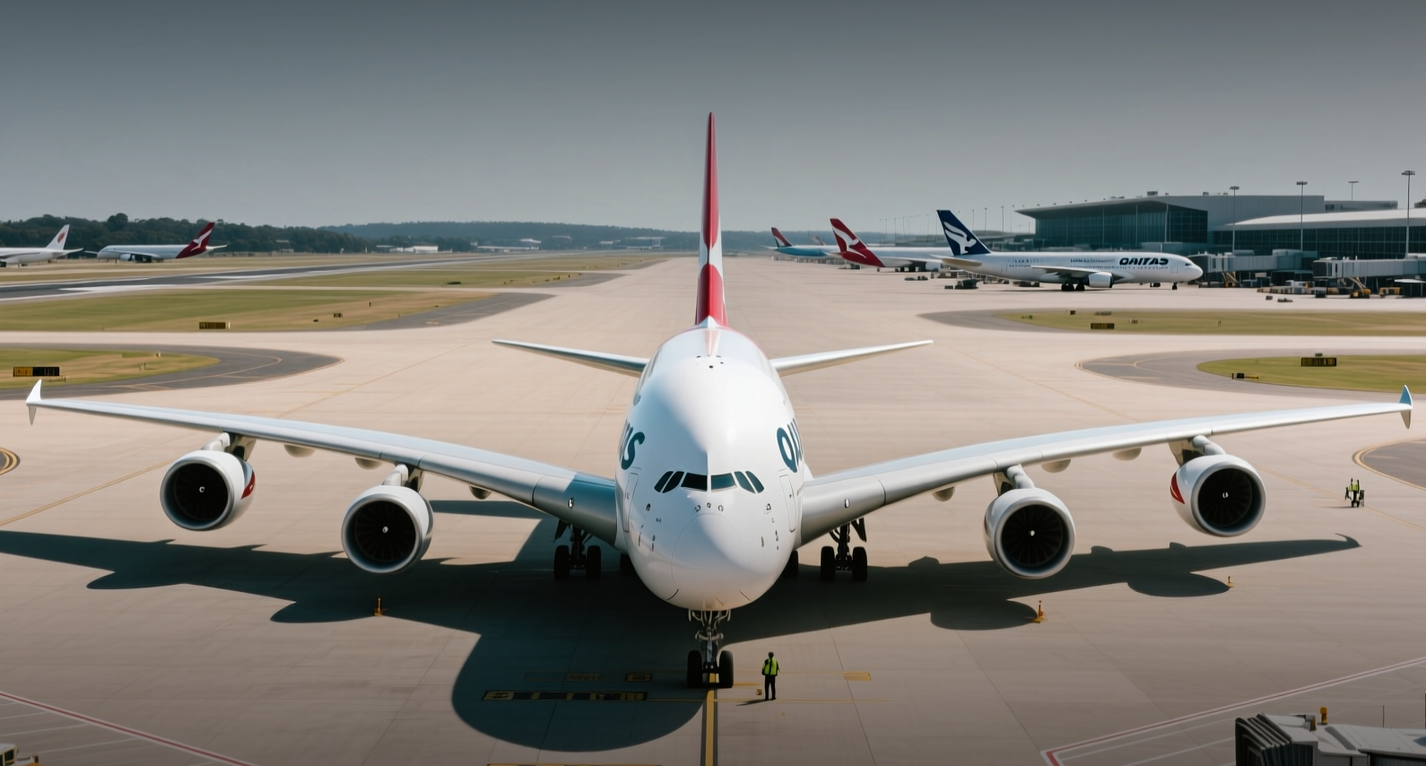
The carrier said it would begin retiring its Airbus A380 superjumbos in 2028, about four years earlier than planned, and is in talks with Airbus and Boeing to convert 20 options to firm orders for A350s and 787s from 2030. "The A380s are now no longer in production, and so the cost of those aircraft over time will increase in terms of maintenance," Hudson said. The order would be separate from "Project Sunrise" non-stop flights from Sydney to London and New York on 12 long-range A350-1000s arriving from next year.
Qantas projected domestic and international total unit revenue growth between 8 percent and 10 percent in the first half, above Visible Alpha consensus on both measures. It forecast domestic capacity to decline 3 percent in the first half while international capacity rises 2 percent. The airline declared a final dividend of 19.8 Australian cents per share and scrapped its A$150 million share buyback program announced in February, which it never began after the outbreak of the Iran war.
"Qantas delivered resilient earnings, maintained balance sheet strength, continued returning capital to shareholders and provided a constructive outlook," Jefferies analysts said in a note.
Shares in Qantas jumped 3 percent in early trading to their highest in a week, compared with a 0.4 percent decline in the ASX200 benchmark index.
The profit decline points to margin compression across the airline sector as the Iran conflict keeps oil prices elevated, pressuring carriers that rely on fuel as their largest cost. Investors will watch whether Qantas's 8 percent to 10 percent unit revenue growth forecast holds as fuel costs stay high through the first half.
This article is for informational purposes only and does not constitute investment advice.
