

A new zero-knowledge proof prototype could give Bitcoin holders a way to prove wallet ownership after quantum computers break current cryptography.
A new zero-knowledge proof prototype could give Bitcoin holders a way to prove wallet ownership after quantum computers break current cryptography.
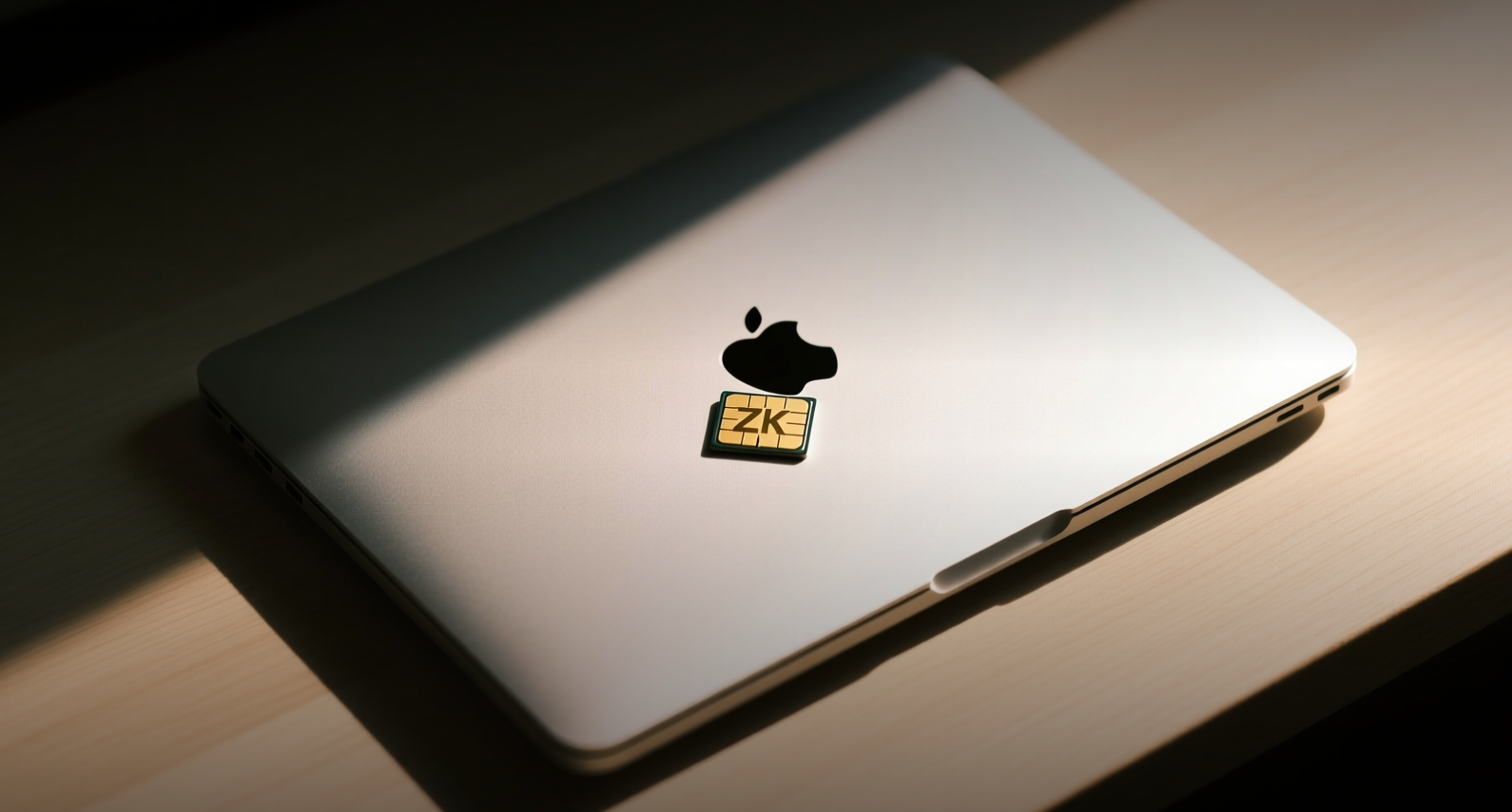
A new zero-knowledge proof prototype could give Bitcoin holders a way to prove wallet ownership after quantum computers break current cryptography.
Project Eleven on July 15 unveiled a zero-knowledge proof prototype letting Bitcoin holders prove wallet ownership without exposing private keys after Q-Day.
"After Q-Day, once a quantum computer can derive an ECC private key from its public key, a valid signature no longer proves ownership," Alex Pruden, chief executive officer at Project Eleven, said in a post on X. "Both the quantum adversary and the legitimate owner are able to produce identical signatures."
The prototype generates proofs in 243 milliseconds and verifies them in 40 milliseconds on an Apple M5 MacBook Air using four CPU cores — roughly 16 times faster than a prior approach by developer Olaoluwa Osuntokun that required 14.6 seconds and GPU acceleration. Peak memory usage reached 2.1 gigabytes with a proof size of 358 KiB, according to the company.
The technique relies on a wallet's key derivation path, allowing users to prove control of the parent key used to generate a wallet's private key without revealing it. Because quantum computers cannot reverse hash-based hardened derivation functions, the method can distinguish a legitimate owner from an attacker even after a private key has been compromised. The work, funded by Project Eleven and developed with Jim Posen, lead maintainer of the open-source Binius zero-knowledge proof system, builds on a "signature lifting" concept first proposed by researchers Alon Sattath and Robert Wyborski.
The tool supports three Bitcoin address types — P2PKH, P2WPKH, and P2SH-P2WPKH — though any real-world deployment would require protocol-level support from Bitcoin or other blockchain networks. Project Eleven described the release as an early, unaudited prototype that does not currently allow users to recover assets on any live blockchain.
The announcement comes as the industry accelerates preparations for a post-quantum future. In February, Bitcoin developers advanced BIP-360 into formal review, laying groundwork for quantum-resistant upgrades. BTQ Technologies released the first working implementation on its Bitcoin Quantum testnet in March. Coinbase's quantum advisory council warned in June that roughly 7 million Bitcoin could become vulnerable if owners fail to move funds to quantum-safe addresses. Later that month, President Donald Trump signed executive orders accelerating the federal government's transition to post-quantum cryptography.
"As much as I'd love for the entire world to take a quantum migration plan seriously, the reality is that some digital asset wallets will miss the window," Pruden wrote. "This gives them a fallback: prove ownership through derivation, not signature, even after that window closes."
This article is for informational purposes only and does not constitute investment advice.
