
OpenAI claims its AI model proved the Navier-Stokes equations break down, a $1 million Clay Institute problem now caught in a credit dispute with rival mathematicians.
OpenAI claims its AI model proved the Navier-Stokes equations break down, a $1 million Clay Institute problem now caught in a credit dispute with rival mathematicians.
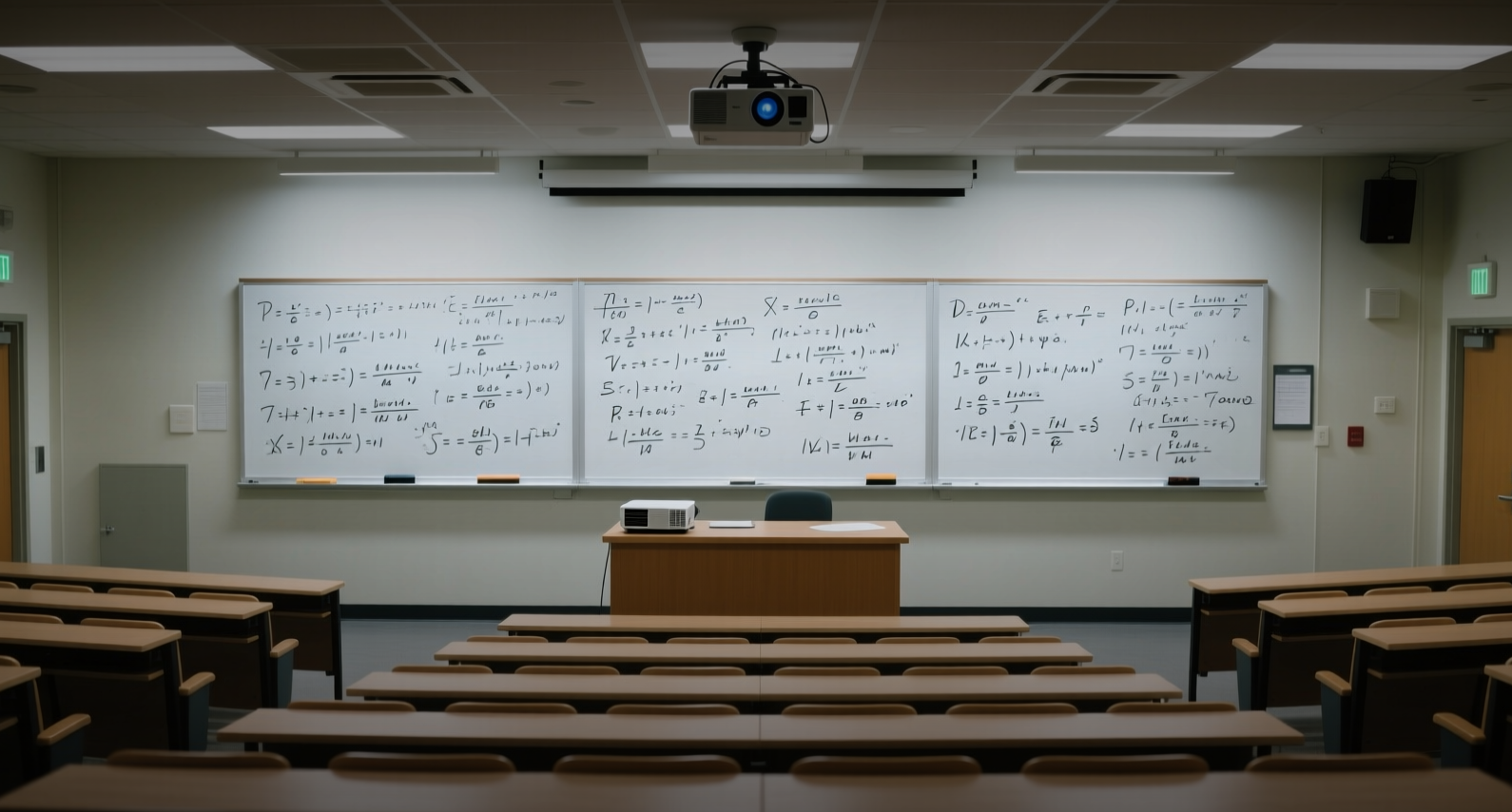
OpenAI says its internal model solved the $1 million Navier-Stokes Millennium Prize problem, a claim rival mathematicians allege was rushed after the company learned of their parallel work.
"We did not use their prompt or models or proof," Sebastien Bubeck, a mathematician and AI researcher at OpenAI, said in a press briefing Tuesday, responding to allegations from NYU mathematician Tristan Buckmaster.
OpenAI deployed more than 1,000 AI agents over more than 50 hours beginning August 28 to attack the problem, spending "in the millions of dollars" on compute, according to Mark Chen, OpenAI's head of research. The proof, which shows the Navier-Stokes equations can "blow up" — dictating infinite fluid speeds that cannot occur in nature — was verified using the Lean programming language. OpenAI did not disclose the model's name.
The result marks the second time anyone has solved one of the seven Clay Millennium Problems, each carrying a $1 million prize, and the first by an AI company. But the dispute over credit threatens to overshadow the achievement and raises questions about how AI labs handle attribution as frontier models take on more of mathematics' hardest open questions.
Buckmaster and Levent Alpöge, a mathematician at Anthropic, posted documents Monday showing they had proved that the Euler equations — the frictionless cousins of Navier-Stokes — blow up, a result widely seen as a key step toward the full problem. The pair used AI models from Anthropic and OpenAI's Codex to parse mathematical possibilities, according to Buckmaster's statement.
In that statement, Buckmaster alleged that OpenAI learned of the pair's progress last week and redirected its own research toward the "forcing" method that Buckmaster and Alpöge had been using. He claimed OpenAI offered him sole authorship on a paper announcing the Navier-Stokes result, excluding Alpöge because he works for OpenAI's competitor. Buckmaster said he was told "Why would you ruin your career?" when he threatened to go to the media.
Bubeck denied the allegations, saying OpenAI's internal model independently solved the Euler problem by different means and that the full Navier-Stokes proof was developed over the weekend. "We, whether it's the researchers or the agents, did not see any of their work until it was released publicly last night," he said.
The mathematical approach at the center of the dispute traces to Diego Córdoba and Luis Martínez-Zoroa, who developed a technique called "forcing" that exploits a term in the Navier-Stokes equations most mathematicians ignore. Buckmaster said Martínez-Zoroa deserves a Fields Medal for the underlying insight.
There is also a mathematical question beyond the credit fight. The Clay problem, as written, includes the forcing term, but many mathematicians study a version without it. Some in the community may argue the problem has only been solved through a loophole, leaving the Clay Institute and the field in a quandary about whether to award the prize.
"If it's done, that will be a big surprise for us," Córdoba said, expressing caution about the result.
The dispute comes as AI labs compete to demonstrate frontier mathematical capability. OpenAI, Anthropic, and Google DeepMind have all invested heavily in models trained to solve formal mathematics problems, viewing the ability to produce verifiable proofs as a proxy for reasoning capability.
For investors, the stakes extend beyond bragging rights. OpenAI's claim, if independently verified, would strengthen its position in the race toward artificial general intelligence and could influence how the market values AI research capabilities. Anthropic's involvement through Alpöge — and the dispute over whether OpenAI improperly used information from a competitor's employee — adds a competitive dimension that could affect how the labs collaborate or compete on research going forward.
University of Chicago mathematician Luis Silvestre captured the mood: "Yesterday and today are crazy days. We're all, in the community, discussing the implications of this."
The Clay Institute has not yet commented on whether it will accept OpenAI's proof or how it will adjudicate the competing claims. Verification of the Lean-formalized proof could take months, and the dispute over attribution may take longer to resolve.
This article is for informational purposes only and does not constitute investment advice.
