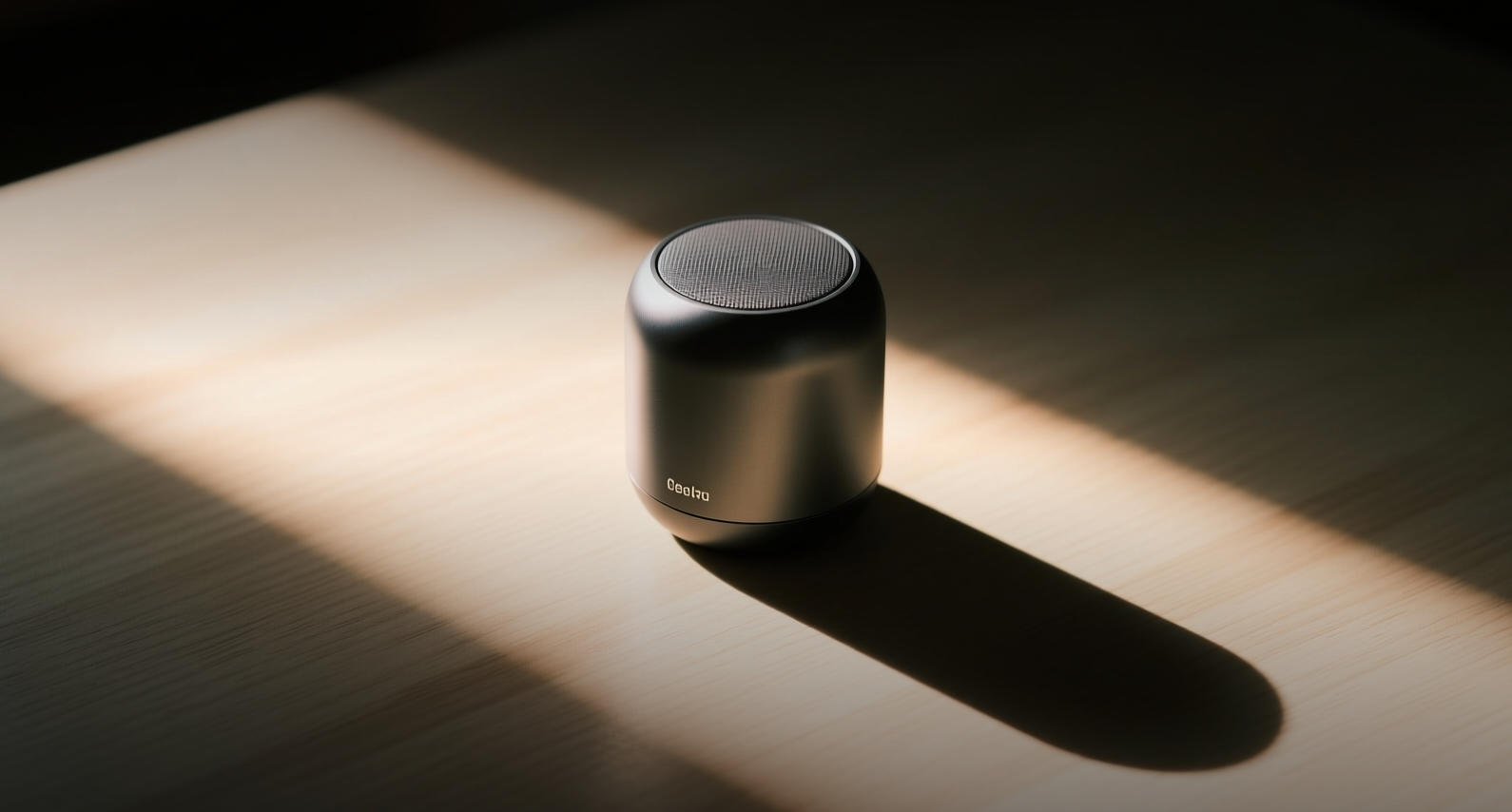
OpenAI's push into consumer hardware will begin with a portable, screenless smart speaker designed as a humanlike AI companion, challenging Amazon and Apple in the smart home market with a device that can move and learn its owner's habits over time.
The product, still under development, is meant to serve as "a humanlike AI companion that lives in the home," people familiar with the matter told Bloomberg. It will use a camera and sensors to understand its environment, control smart home appliances, play media, answer questions, and respond to messages through ChatGPT's upgraded GPT-Live voice model, the people said.
The device will feature mechanical elements that can move on their own, creating the impression that it is alive, according to the report. It will run on a rechargeable battery and be small enough to carry between rooms, distinguishing it from stationary smart speakers like Amazon's Echo or Apple's HomePod. OpenAI is positioning the device as having a "personality" that becomes increasingly personalized and proactive as it gains a deeper understanding of its owner over time, drawing on data such as emails and calendar entries.
OpenAI is collaborating with former Apple design chief Jony Ive on the device, following its roughly $6.5 billion acquisition of Ive's design company io Products last year. The speaker is the first of about five devices in OpenAI's planned hardware lineup, with a launch targeted for 2027. The company is also releasing a separate device called the Codex Micro, made in partnership with Work Louder, on July 15.
The hardware push comes as Apple last week sued OpenAI for alleged trade secret theft, accusing the AI company of poaching talent including mechanical engineer Tang Tan. OpenAI has denied the claims, saying it is "not aware of any evidence that this complaint has merit." People familiar with OpenAI's plans told Bloomberg the new product "veers significantly from anything Apple has on the market today" and is unlikely to violate Apple's trade secrets.
The broader market for AI-native hardware is attracting significant capital. Hark, an AI lab founded by Brett Adcock, raised an oversubscribed $700 million Series A in May at a $6 billion valuation to build what it calls "personal intelligence" — proprietary AI models paired with custom hardware designed as a universal interface between humans and machines.
For investors, the device represents OpenAI's bet that consumers will pay for a dedicated AI companion rather than accessing ChatGPT through existing smartphones and smart speakers. Amazon's Echo line and Apple's HomePod have struggled to generate sustained growth, with the smart speaker market contracting 5% in 2025, according to IDC data. OpenAI's challenge will be proving that a $200-to-$400 device — the likely price range for a Jony Ive-designed AI companion — can succeed where incumbents have plateaued.
This article is for informational purposes only and does not constitute investment advice.