


The AI industry has crossed $100 billion in annualized revenue, but the trillion-dollar capital spending required to get there is splitting tech into clear winners and losers.
The AI industry has crossed $100 billion in annualized revenue, but the trillion-dollar capital spending required to get there is splitting tech into clear winners and losers.
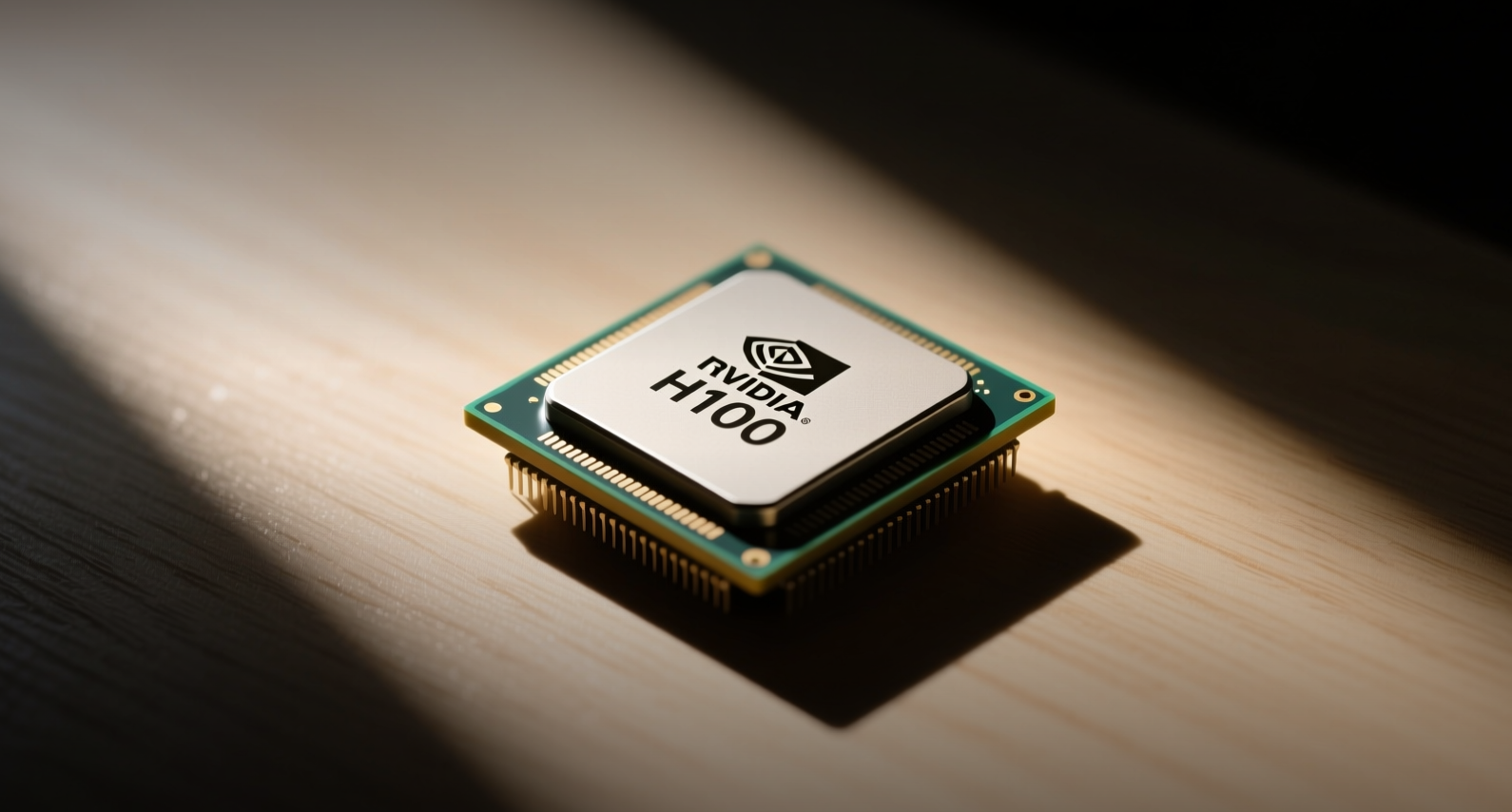
The AI industry has generated more than $100 billion in annualized revenue from zero two years ago, yet roughly $1 trillion in cumulative capital spending has ignited a fierce debate over which companies will capture the returns.
"Investors are no longer giving hyperscalers the benefit of the doubt on spending," Mark Mahaney, head of internet research at Evercore ISI, said after Alphabet's capex boost triggered a 7% stock decline.
The debate, featured on the latest episode of "Real Eisman Playbook" with "Big Short" investor Steve Eisman, Wedbush's Dan Ives, and D.A. Davidson's Gil Luria, centers on two questions: whether massive infrastructure spending will generate adequate returns, and whether AI will destroy or enhance traditional software businesses. Chip supply-demand ratios remain at 15-to-1, according to Ives' Asia supply chain checks, suggesting demand far outstrips supply. But Eisman pointed out that Alphabet, Microsoft and Meta — companies that historically never raised external capital — have become capital-intensive enterprises, with Alphabet's long-term debt surging 111% to $98 billion and the company turning cash-flow negative for the first time in the second quarter.
The outcome will determine which of the world's most valuable companies justify their premiums. Nvidia, Microsoft, Apple and Micron are positioned as winners, while Salesforce, Intel and private-equity-owned software firms face the greatest risk of being washed out, according to the analysts.
The $1 Trillion Question
The core disagreement is one of time horizon. Ives, who describes the current cycle as "year three of an eight-to-10-year AI infrastructure build," argues the spending mirrors the construction of the Las Vegas Strip in the 1950s — periods of doubt punctuate a secular trend. Luria counters that while $100 billion in annual AI revenue proves real economic demand, it remains modest relative to the roughly $1 trillion already committed.
Alphabet's second-quarter results crystallized the tension. The company boosted its 2026 capex forecast to as much as $205 billion, sending shares down 7% and dragging Amazon, Meta and Microsoft lower. Amazon's consensus capex estimate subsequently crept up nearly $2 billion to $207.4 billion, according to Visible Alpha. Microsoft is expected to report $190.1 billion in capex for the year, while Meta guided to as much as $145 billion. Alphabet's cloud business grew 82% in the second quarter, the fastest since at least 2020, but the company's cash flow turned negative for the first time.
"The trade-off is worthwhile given AWS's re-acceleration and Amazon's expanding platform advantages," Wedbush analysts wrote, though they acknowledged the market's growing scrutiny. Amazon's long-term debt rose 81% to $119 billion from Dec. 31 to March 31.
Model Moat or Mirage?
A second debate concerns whether large language models have durable competitive advantages. Eisman argued the industry lacks moats: new models emerge weekly, and Chinese startup Kimi K3 prices tokens at roughly one-fifth the cost of leading US models. Luria countered that the AI value chain extends beyond model companies to include equipment makers (ASML, TSMC), chip designers (Nvidia, AMD, Micron), and cloud providers (Microsoft, Amazon, Google) — all of which benefit regardless of which model wins.
"The model itself will commoditize over time," Luria said. "The real value is in data, compute infrastructure, and platform access."
Ives agreed, noting that enterprises will ultimately choose from a handful of hyperscalers — Microsoft, Google, Oracle — creating a natural oligopoly. "Today it looks like there's no moat," he said. "But they're building the moat right in front of us."
The Winners
Nvidia remains the clearest beneficiary. Every dollar spent on its chips generates $8 to $10 in downstream technology spending, Ives estimated, and the company's lead in AI training and inference remains unassailable. Apple occupies a unique position: it controls 2.5 billion iOS devices without bearing infrastructure risk, allowing it to integrate whichever model wins. Ives called Apple AI's "EZ Pass."
Micron presents what Luria called a "severe mispricing." The memory maker trades at 6 times earnings despite a booming storage cycle, while Intel — whose CPU business faces structural headwinds — trades at 100 times. "The market is pricing Micron as if the cycle is over and Intel as if it will run for five more years," Luria said. "That's the opportunity."
Cybersecurity stocks including CrowdStrike and Palo Alto Networks also stand to benefit, Ives said, as AI agents expand the attack surface and double security budgets over the next two to three years.
The Losers
Salesforce faces the most acute risk among large-cap software. Luria said the company has not delivered meaningful new value to customers in years, relying instead on annual price increases. As CIOs reallocate budgets toward AI, Salesforce's products are among the first to face cuts.
Intel's 100x price-to-earnings ratio reflects expectations that cannot be met given its manufacturing challenges and market share losses, the analysts said. Private-equity-owned software companies face an even starker fate: PE firms acquired them, cut research and development to extract cash, and now CIOs are slashing vendor counts from 100 to 30 to fund AI initiatives. "Those PE-owned companies are going to get wiped out," Luria said.
Traditional software franchises including Intuit and Adobe face structural threats as AI models increasingly handle tax preparation and content creation directly, bypassing their products entirely.
This article is for informational purposes only and does not constitute investment advice.
