

Nvidia is spending billions to finance AI infrastructure for its biggest customers, a strategy that cements its GPU dominance but carries two distinct risks.
Nvidia is spending billions to finance AI infrastructure for its biggest customers, a strategy that cements its GPU dominance but carries two distinct risks.
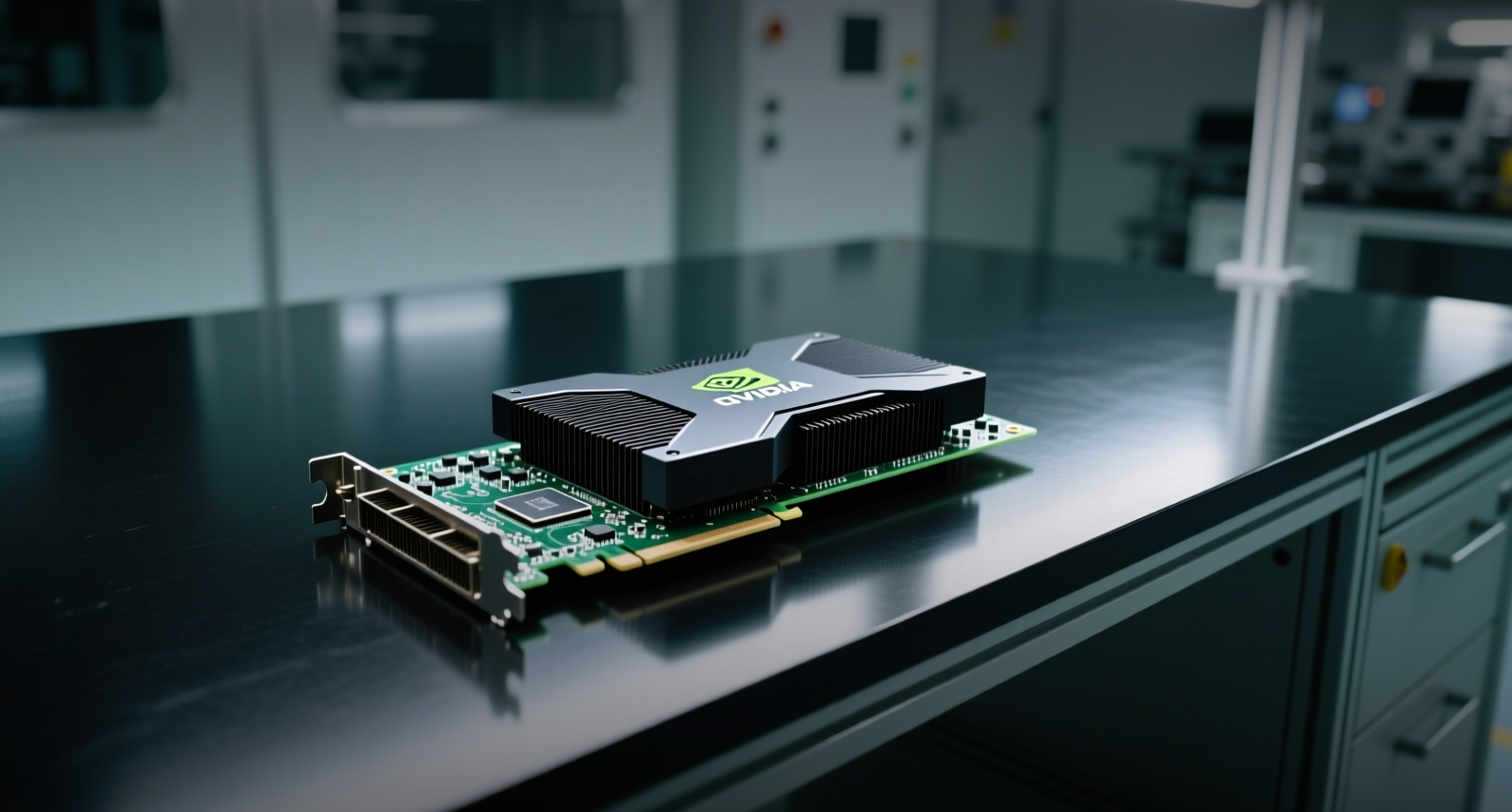
Nvidia is spending billions to finance AI infrastructure for its biggest customers, a strategy that cements its GPU dominance but carries two distinct risks.
Nvidia is shifting from pure chip manufacturing to capital deployment, committing up to $105 billion toward an OpenAI data center in Ohio and securing $500 billion in GPU financing, as rivals AMD and Google erode its technology lead.
"They remain dominant, but they're very paranoid about making sure they don't lose ground," Ram Bala, associate professor of AI and analytics at Santa Clara University, said.
Nvidia's free cash flow has climbed 18-fold in three years to $48.5 billion last quarter, funding a $30 billion stake in OpenAI, a $1.5 billion investment in SB Energy, and an $80 billion buyback plan. The company holds $30.2 billion in marketable equity securities, up from $12.9 billion a year earlier.
The strategy answers an insatiable demand for AI compute from a handful of hyperscalers, but analysts warn the financial engineering could compress margins and buy revenue rather than build durable advantage.
The Ohio project, announced Aug. 18, will operate under a 20-year lease to OpenAI, with Nvidia supporting development of 4 gigawatts of power at the site and infrastructure contracts extending from 2028 to 2030. The move follows Nvidia's agreement with Wall Street firms to secure $500 billion in financing for its graphics processing units, which CEO Jensen Huang framed as treating GPUs as a new asset class.
"Frontier AI labs have extraordinary demand for training and inference compute, but many are growing faster than their balance sheets and long-term credit profiles can support," Huang said at a CNBC event alongside Wall Street financiers. "These are revenue-generating assets now. They're productive, they're long-lived, they're fungible, they're flexible."
Nvidia plans to backstop 25 percent of every loan, embedding its technology into the financing market as competition intensifies. Google began recognizing revenue from its TPU system sales, contributing to an 82 percent growth in its cloud unit, while AMD reported more than 100 percent growth in its data center business. Google also forged an AI chip alliance with Marvell Technology, granting warrants for about 59 million shares at $206.58 apiece — up to $12.18 billion — in exchange for AI accelerators, storage and network controllers for its TPU platform through 2033.
Margins under pressure as rivals close the gap
Paul Meeks, head of technology research at Freedom Capital Markets, said increased competition is pressuring Nvidia's margins, prompting the company to diversify. "Part of their thinking is let's broaden our reach. We just can't ride this one horse, which is GPUs," he said.
Analysts at Cantor reiterated their buy rating, arguing the financing deals help the AI buildout rather than merely recycle revenue. "We view this less as circular and more facilitating the coming AI buildout while at the same time creating additional competitive moats that will continue to enable NVDA to remain the AI leader," they wrote.
Demand remains strong. Anthropic reported a sevenfold increase in its annualized revenue run rate to $65 billion in July, and OpenAI's run rate reached $40 billion. Matthew Vegari, head of research at Clearwater Analytics, said claims of a fragile AI market structure are misguided, noting overcapacity may occur in the future but is not currently an issue.
A $305 target hinges on margin durability
Nvidia reports Q2 fiscal 2027 earnings on Aug. 26, with Wall Street expecting revenue between $93 billion and $95 billion, up about 70 percent year over year. The stock trades near $220, with the average analyst price target around $305 implying roughly 38 percent upside. Nvidia commands an estimated 81 percent share of the AI accelerator market, but the financial strategy raises the question of whether the company is buying growth at the expense of margins — a trade-off investors will weigh against the durability of its CUDA software moat and the $1 trillion cumulative revenue target for its Blackwell and Rubin platforms through 2027.
This article is for informational purposes only and does not constitute investment advice.
