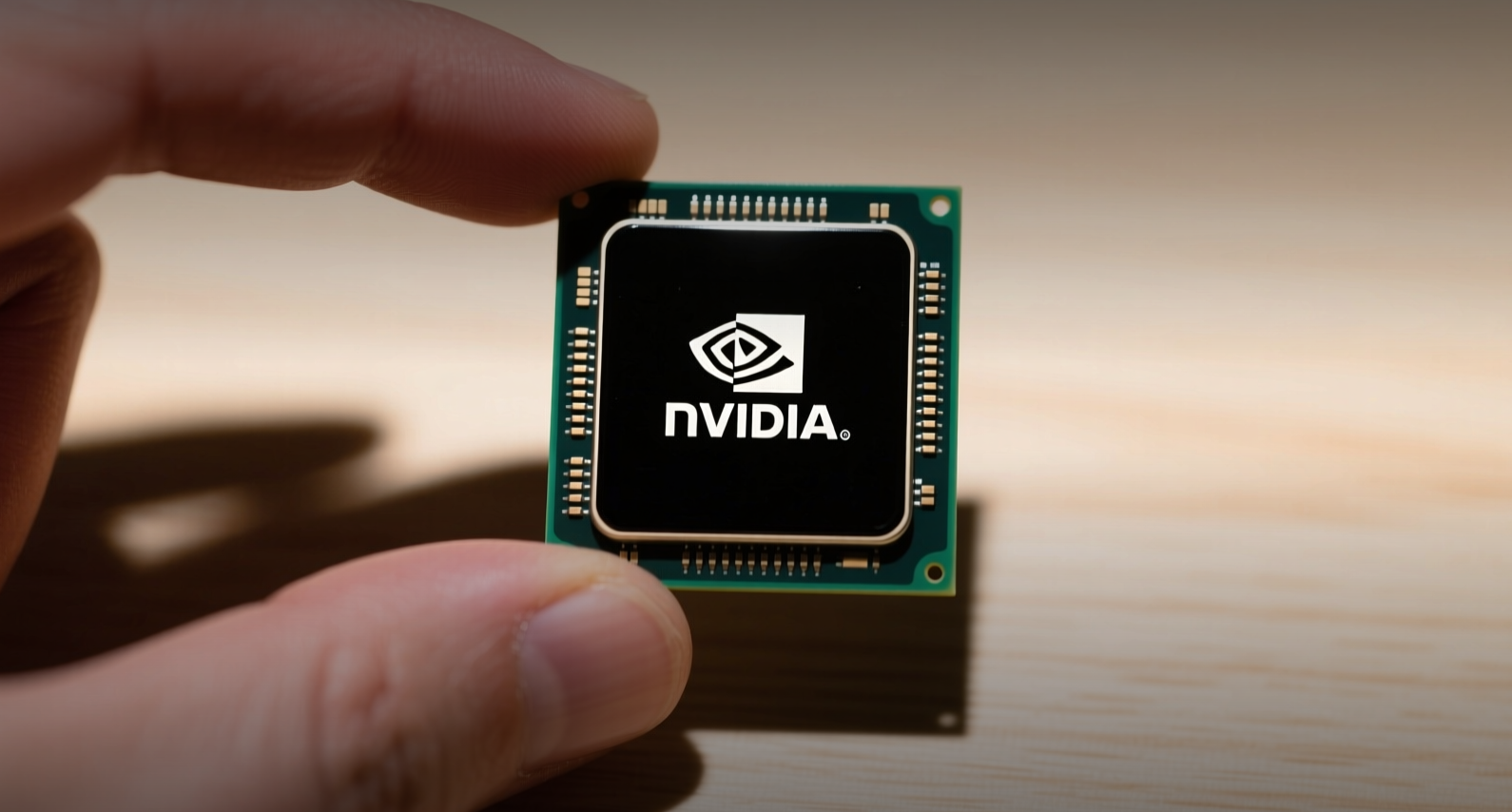
Nvidia shares broke through a key resistance level Wednesday, rebounding from lows as SpaceX's new AI model reignited enthusiasm for artificial intelligence stocks.
Nvidia shares broke through a key technical resistance level on Wednesday, rebounding from recent lows as SpaceX's new AI model release reignited investor enthusiasm for the semiconductor AI trade.
"The combination of technical support and a fresh AI catalyst is drawing buyers back into Nvidia after weeks of consolidation," said Rachel Kim, semiconductor analyst at Edgen. "SpaceX entering the AI model space validates the thesis that infrastructure spending will remain elevated for years to come."
The stock had fallen roughly 25% from its mid-October 2025 highs before finding support at its 2024 breakout levels. Wednesday's move above resistance came as the broader AI trade showed signs of stabilization after a period of profit-taking across the semiconductor complex.
Nvidia remains the primary beneficiary of AI infrastructure spending, with hyperscalers projected to spend upward of $800 billion in capex in 2026 alone, according to industry estimates cited by Zacks Investment Research. The SpaceX AI model release adds another potential demand vector, expanding the addressable market for Nvidia's data center GPUs beyond the current hyperscaler customer base.
The broader AI trade had come under pressure in recent weeks as the 10-year U.S. Treasury yield climbed to 4.67%, its highest level since January 2025, prompting rotation out of growth names into defensive sectors. The Nasdaq Composite tested its 50-day moving average during the selloff, with traders watching the 25,700 level as a key support zone.
SpaceX's entry into the AI model space marks a significant expansion of the competitive landscape. The company, best known for its rocket and satellite businesses, joins a field dominated by OpenAI, Google, Anthropic and Meta. While SpaceX has not disclosed details of its model's architecture or performance benchmarks, the announcement signals that AI development is spreading beyond traditional technology companies into adjacent industries.
For Nvidia, each new entrant into the AI space represents potential incremental demand for its H100 and Blackwell-series graphics processors. The company's data center revenue has been the primary growth driver, accounting for the majority of its more than $130 billion annual revenue run rate. Competitors such as AMD and Intel have launched competing AI accelerators, but Nvidia maintains an estimated 80% share of the AI training chip market, according to industry estimates.
Technical Breakout Signals Shift in Sentiment
The move through resistance comes after Nvidia spent several weeks consolidating below its all-time highs. Technical analysts view the breakout as a potential signal that the correction that began in late 2025 has run its course. The next resistance level sits at the stock's record high, representing substantial upside if the uptrend resumes.
SpaceX AI Model Expands Addressable Market
SpaceX's AI ambitions add a new dimension to the AI infrastructure buildout. The company's Starlink satellite network generates vast amounts of data that could benefit from on-orbit or ground-based AI processing. While the immediate revenue impact for Nvidia is difficult to quantify, the trend of non-traditional technology companies developing AI capabilities supports the long-term demand thesis for semiconductor infrastructure.
Nvidia shares trade at roughly 35 times forward earnings, a discount to their peak multiples but above the semiconductor industry average. The combination of technical support, a fresh catalyst from SpaceX and sustained hyperscaler capital spending provides multiple vectors for a continued recovery. Investors will watch Nvidia's next earnings report for confirmation that demand remains on track, with consensus estimates calling for another quarter of triple-digit data center revenue growth.
This article is for informational purposes only and does not constitute investment advice.