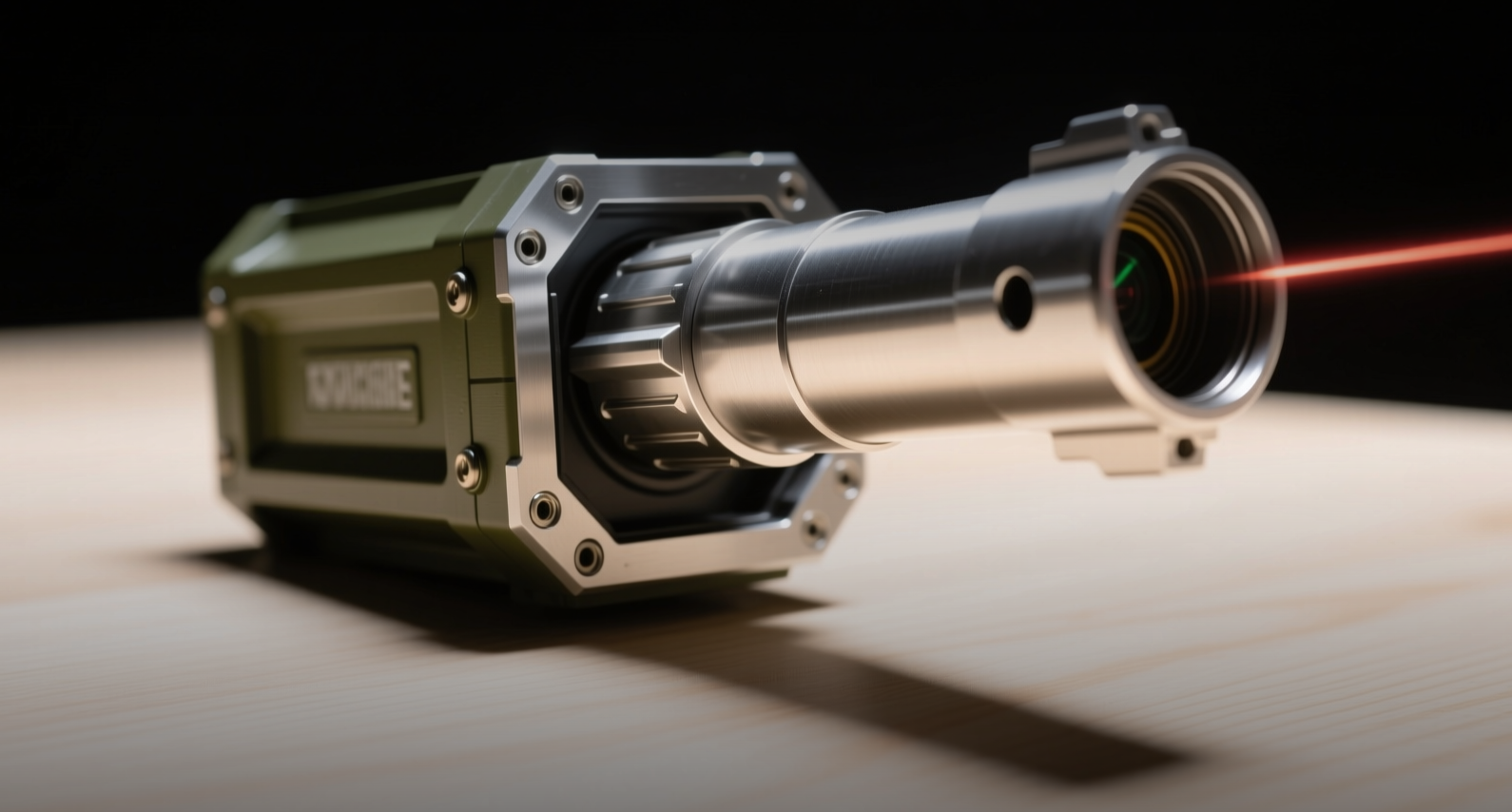
The U.S. Department of War awarded nLIGHT a contract worth as much as $627 million to build high-energy laser weapons for cruise missile defense, the largest directed-energy production deal to date.
The U.S. Department of War awarded nLIGHT Inc. a contract worth as much as $627 million to develop containerized laser weapons, shifting directed energy from prototype testing toward field-ready production for cruise missile defense.
"nLIGHT's vertically integrated laser architecture, state-of-the-art beam-combination, precision tracking expertise, and production-ready high-energy laser solutions position us to deliver reliable, scalable performance in support of next-generation air and missile defense missions," Scott Keeney, chairman and chief executive officer of nLIGHT, said.
The initial award is valued at $44 million, with the total program ceiling reaching $627 million including follow-on development, integration and production options. The Joint Laser Weapon System program, led by the Office of the Under Secretary of War for Research and Engineering, calls for initial prototypes rated at about 150 kilowatts, with later iterations scaled to 300 to 500 kilowatts — the threshold required for robust cruise missile defense. nLIGHT previously delivered a 300-kilowatt laser through the High Energy Laser Scaling Initiative and a 50-kilowatt system for the Army's Directed Energy Maneuver-Short Range Air Defense program.
The contract signals the Pentagon's intent to deploy directed energy as a cost-effective alternative to traditional kinetic interceptors, which can cost millions per missile. Laser systems offer speed-of-light engagement, deep magazines and lower per-intercept costs — attributes the department considers essential for countering drone swarms and advanced cruise missiles. The JLWS program is structured under an Other Transaction Authority agreement, which allows faster acquisition timelines than standard defense contracts.
Scaling From Prototypes to Production
nLIGHT's selection builds on its work under the High Energy Laser Scaling Initiative, where it demonstrated a 300-kilowatt laser, and the Army's DE M-SHORAD program, which produced a 50-kilowatt system for short-range air defense. The company's proprietary coherent beam combination and atmospheric correction technology, combined with its vertically integrated manufacturing approach, allows it to produce modular, containerized systems deployable across land and maritime platforms, according to the company.
The JLWS program aims to transition directed energy from demonstration prototypes into production-oriented platforms that combatant commanders can field against asymmetric and high-tier threats. The Department of War has emphasized the need for scalable, cost-effective intercept solutions as the U.S. faces growing threats from unmanned aerial system swarms and advanced cruise missiles developed by peer adversaries.
Defense Spending Context
The award comes as the proposed $1.5 trillion 2027 U.S. defense budget, which includes a 28 percent base increase, signals sustained demand for next-generation weapons systems. Lockheed Martin Corp., the largest U.S. defense contractor by revenue, is trading 24 percent below its 52-week high despite a $186.4 billion backlog, partly reflecting uncertainty over budget approval timelines. The JLWS contract positions nLIGHT — a smaller, specialized defense technology company — to capture a share of the growing directed-energy market as the Pentagon shifts procurement toward non-kinetic interceptors.
For nLIGHT, the $627 million ceiling represents a transformative revenue pipeline. The company's previous government contracts, including the HELSI and DE M-SHORAD programs, were smaller in scale and focused on technology demonstration rather than production. The JLWS award includes potential production options, suggesting the Department of War views nLIGHT's laser architecture as a candidate for serial manufacturing.
The last major directed-energy program of comparable scale was the U.S. Navy's Laser Weapon System, or LaWS, deployed on the USS Ponce in 2014 at a fraction of this contract's value. Since then, laser power output has increased roughly tenfold, and the Pentagon has shifted focus from shipboard point-defense to land-based and containerized systems capable of engaging cruise missiles at operational ranges.
This article is for informational purposes only and does not constitute investment advice.