
Key Takeaways: MiniMax priced its H3 video model at 0.8 yuan per second, one-third of rivals, betting cost and open weights win commercial share.
Key Takeaways: MiniMax priced its H3 video model at 0.8 yuan per second, one-third of rivals, betting cost and open weights win commercial share.
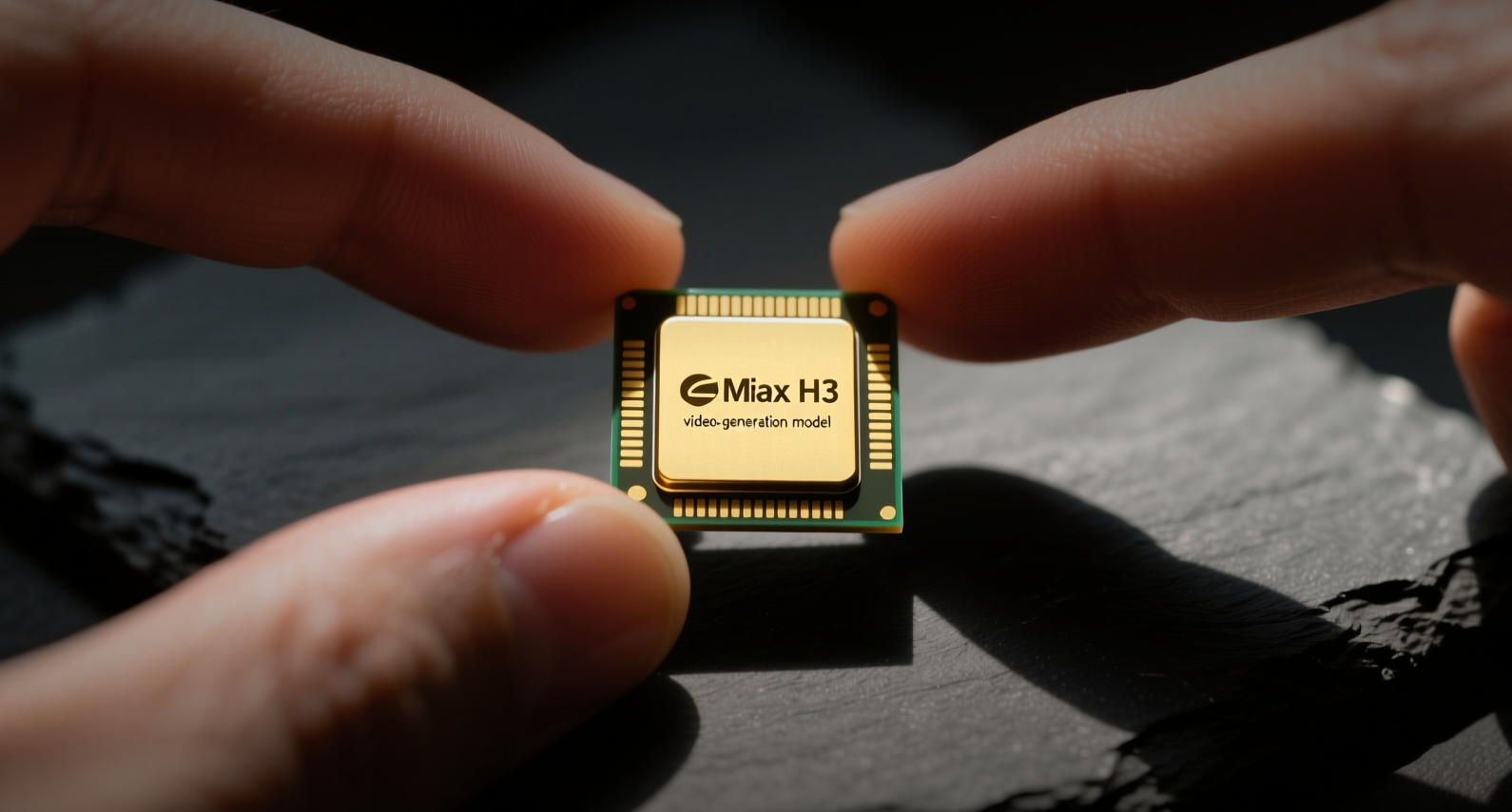
MiniMax's H3 video-generation model, priced at 0.8 yuan per second and ranked first globally for video editing on Artificial Analysis, undercuts mainstream rivals by two-thirds as China's AI race shifts from parameter scale to cost. The Shanghai-based company released the open-source, all-modal model on July 31, capable of generating up to 15 seconds of 2K-resolution audio-video with native stereo sound from text, image, video, and audio inputs.
"Chip manufacturers and developers can also participate in adaptation and optimization, reducing usage costs and expanding application scope," a MiniMax spokesperson said. The company plans to release H3's model weights within days, subject to regulatory compliance, letting enterprises deploy the system locally with their own data.
The cost advantage stems from system-level optimization: a high-compression tokenizer that cuts the number of tokens needed for video generation, plus tuning in heterogeneous training, load balancing, and GPU utilization. MiniMax said generating 2K video costs less than one-third of mainstream rival products, and aimed H3 at advertising, e-commerce, product design, UI/UX, and games. The model also supports V2V Motion Transfer, which maps motion from a source video onto target content for controllable editing.
Shares of MiniMax jumped more than 14% on the day, reversing a slide tied to share lockup expiry and earlier price cuts. The company, founded in 2022 and listed in Hong Kong in January, is the second of China's "AI tigers" to go public, following Z.AI. Reuters reported in early July that MiniMax is also developing a 2.7-trillion-parameter language model.
The 0.8 yuan-per-second price point is the sharpest challenge yet to China's video-model leaders. ByteDance's Seedance 2.0, released earlier this year, drew attention for producing clips from combined text, image, audio, and video inputs, and followed Kuaishou's Kling 3.0. Neither has matched H3's disclosed price, and MiniMax did not specify the test conditions behind its Artificial Analysis ranking.
The cost structure, if it holds at scale, gives MiniMax a commercial edge in price-sensitive segments. Advertising and e-commerce clients, which generate high volumes of short-form video, are the most direct beneficiaries of a two-thirds price cut. MiniMax said H3 was designed to work with several Chinese-made chips, part of a broader push to reduce dependence on U.S. semiconductors.
Open-sourcing the weights is the strategic counterweight to the price cut. Moonshot AI released Kimi K3, a 2.8-trillion-parameter open model, on July 16, and within 48 hours user requests neared cluster capacity, forcing it to pause new consumer subscriptions on July 19. MiniMax's open-weight approach extends that playbook into video generation, where most prominent models remain proprietary.
For enterprises, local deployment addresses security and compliance concerns that cloud-only APIs cannot. MiniMax said chip vendors and developers can adapt and optimize the model, lowering usage costs and broadening applications. The open strategy also creates a distribution channel that proprietary rivals lack, letting MiniMax attract third-party developers around H3.
MiniMax shares, which had fallen on lockup expiry and price cuts, now trade on expectations that the cost-plus-open-source combination can drive volume. The question is whether the "price-for-share" strategy holds margins while ByteDance and Kuaishou respond. If rivals match the 0.8 yuan-per-second price, the cost war in Chinese video generation will intensify, and the winner will be the developer with the lowest inference cost, not the largest parameter count.
This article is for informational purposes only and does not constitute investment advice.
