

Memory chip stocks suffered their worst session in months after Buffett warned of AI speculation and a broker cut DRAM price forecasts, threatening the sector's pricing power.
Memory chip stocks suffered their worst session in months after Buffett warned of AI speculation and a broker cut DRAM price forecasts, threatening the sector's pricing power.
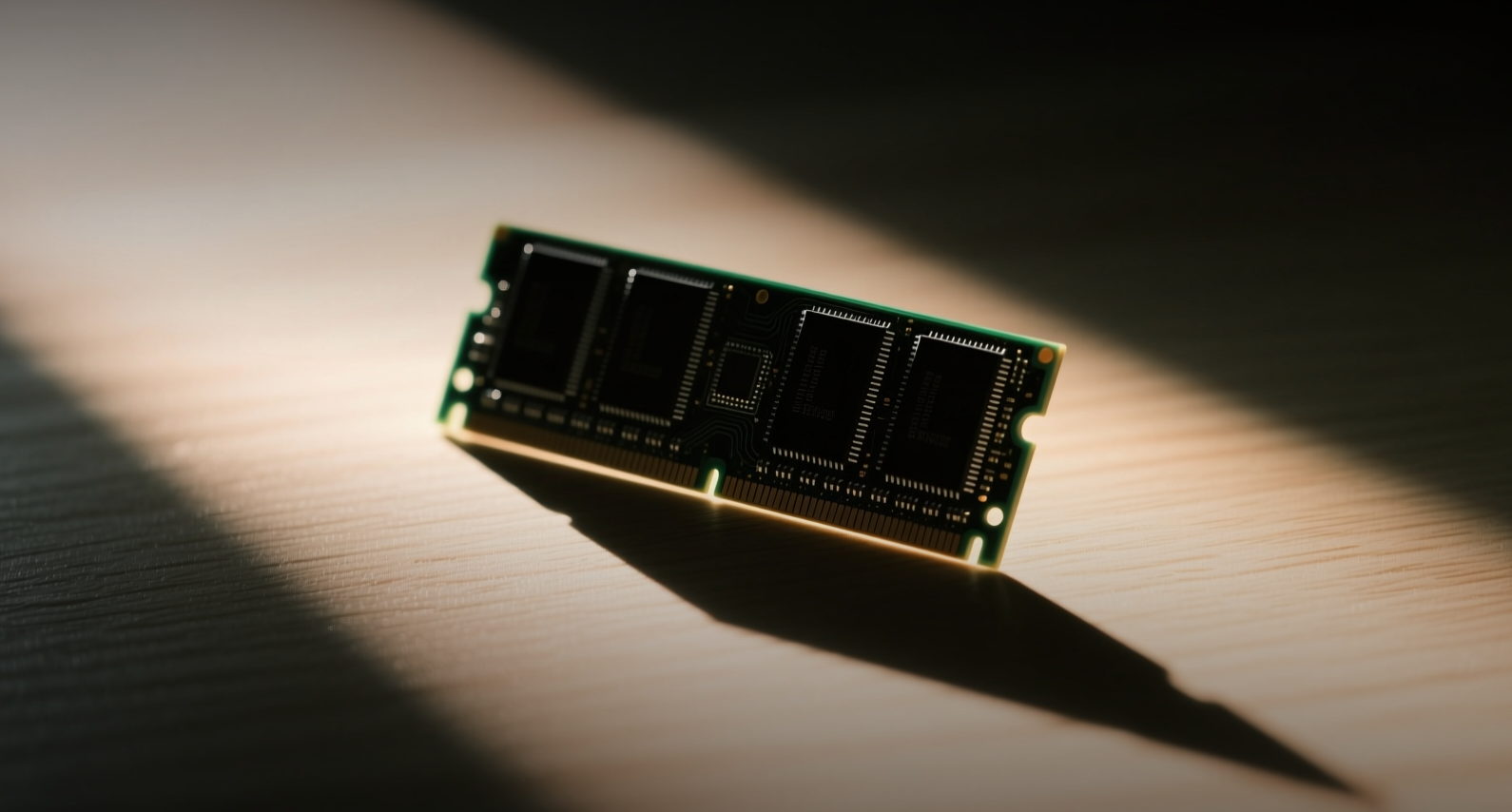
Micron Technology shares plunged 10 percent on Wednesday, after Warren Buffett warned of AI speculation and GF Securities cut its DRAM price forecast on customer resistance to near 30 percent increases.
"When everyone is gambling on themes like AI, finding truly valuable investments becomes harder," Buffett said, according to a transcript of his remarks. The comment did not name any specific company but landed squarely on a sector where investors have been pricing memory stocks for uninterrupted growth.
The selloff extended to SK Hynix, whose US-listed shares fell 9 percent to $176.46, reversing a 27 percent surge from the prior session triggered by its Nasdaq listing. GF Securities' Hong Kong unit cited "strong customer resistance" to near 30 percent DRAM price increases as the reason for trimming its Q3 outlook, a more cautious stance than KeyBanc's forecast of 15 percent to 20 percent quarterly DRAM price gains and shortages persisting through 2027.
The dual shock — a legendary investor questioning AI valuations and a broker flagging customer pushback on pricing — tests a core thesis behind the memory sector's 2026 rally: that AI-driven demand would keep supply tight and prices elevated for years. Micron, which generated $41.5 billion in revenue last quarter with an 83 percent operating margin in its data center unit, now faces questions about whether that pricing power can hold.
Customers Push Back on DRAM Pricing
GF Securities' downgrade reflects a dynamic building beneath the surface. Memory buyers, including hyperscale cloud operators and server makers, are resisting price increases that have compounded for multiple quarters. The broker noted that standard DDR5 server module specifications may be cut by about 50 percent, with suppliers pivoting to lower-capacity 96GB or 64GB configurations.
The resistance extends to Nvidia's latest AI infrastructure. According to GF Securities' July 2 analysis, the LPDDR5X memory content in Nvidia's VR200 NVL72 rack could be reduced by as much as 75 percent in an extreme scenario, compressing the memory cost from a potential $1.2 million to roughly $293,000 per rack. Such a reduction would directly impact memory suppliers' revenue per AI server, a key driver of the sector's growth narrative.
Strong Fundamentals Face a Cyclic Test
Micron's underlying business remains strong by historical standards. The company posted $41.5 billion in revenue last quarter, up 346 percent year over year, with net income surging nearly 1,400 percent to $28.2 billion. It has locked in $22 billion in supply commitments from 16 strategic customers under take-or-pay agreements with cash deposits and price floors.
Yet the sector's cyclical DNA is stirring. Micron's capital expenditure this year stands at roughly $27 billion, while SK Hynix and Samsung Electronics are also expanding capacity at record rates. The question is whether supply additions catch up to demand before 2028, as some industry researchers predict, or whether the current pricing cycle has further to run.
An additional overhang for SK Hynix ADR holders is the July 29 deadline for bidirectional conversion between its US-listed shares and Korean-listed stock. The ADR currently trades at a premium of more than 50 percent to the local shares, a gap that Korea Securities Depository's conversion mechanism is expected to narrow significantly.
For investors, the calculus is shifting. Micron shares, which more than quadrupled in the first half of 2026, now face a market questioning how long the pricing power can last. If customer resistance to price increases hardens into a broader trend, the margin expansion that has defined this cycle could begin to reverse.
This article is for informational purposes only and does not constitute investment advice.
