

Key Takeaways:
- MU opens at $876.645, down 3.06%, market cap drops below $1 trillion
- Stock has surged 712% over the past year on AI-driven memory demand
- Memory chip oversupply fears loom as new production capacity comes online in 2027
Key Takeaways:
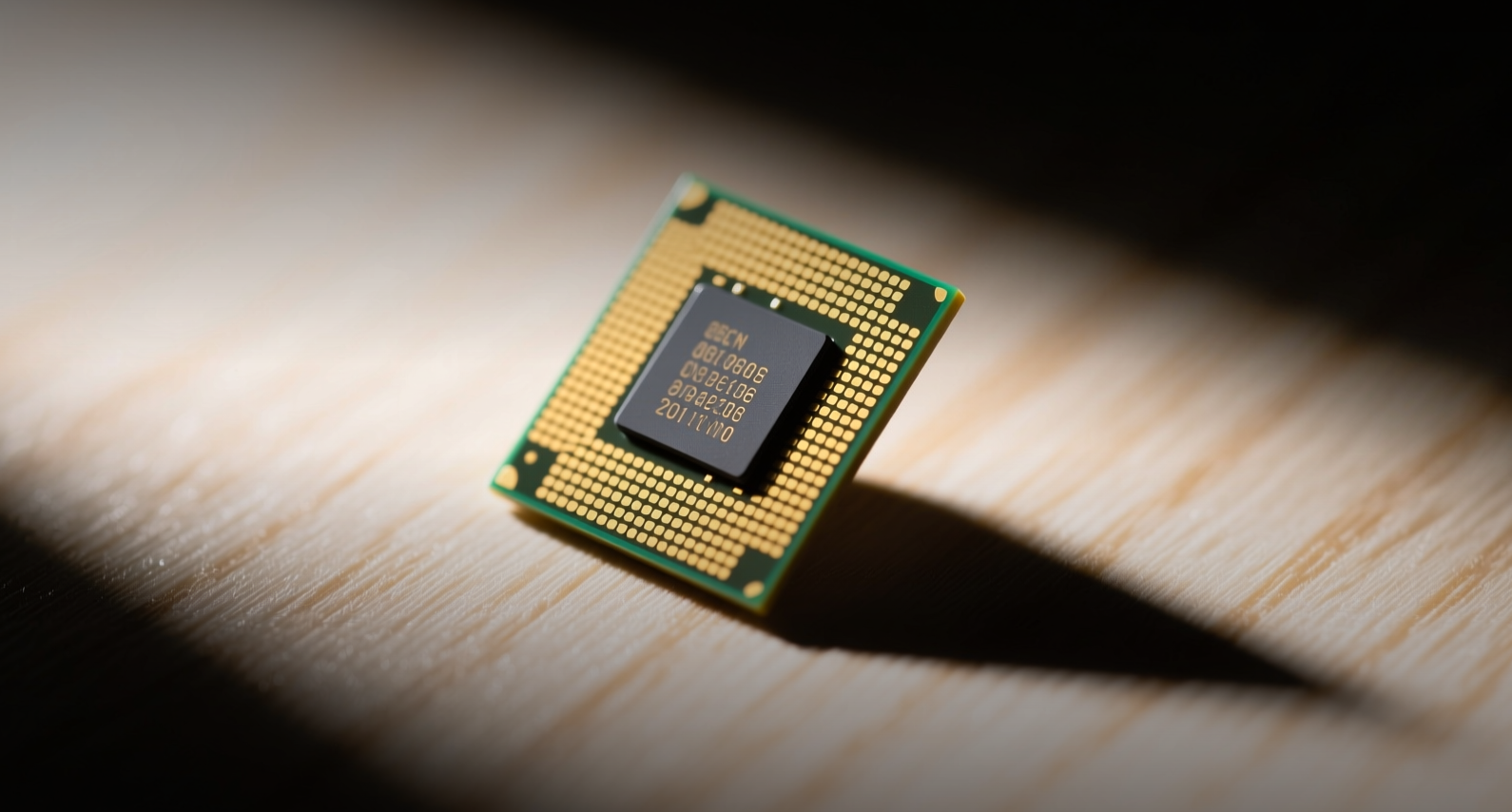
Micron Technology's market capitalization fell below $1 trillion for the first time since its rally began, as the memory chip maker's stock opened at $876.645 a share, down 3.06% from the previous close.
"The memory cycle is turning, and the market is pricing in the peak before it arrives," said C.J. Muse, semiconductor analyst at Cantor Fitzgerald.
The decline extends a 22% drop since the start of July, paring a 712% surge over the past 12 months that made Micron one of the best-performing stocks in the semiconductor sector. The company's market value stood at $990.1 billion at the open, down from about $1.1 trillion at its recent peak.
The selloff reflects growing concern that the memory chip boom — which saw Micron's revenue jump 345% in fiscal Q3 as NAND and DRAM prices doubled — may be approaching its peak. Several memory chipmakers have new production capacity coming online in 2027, threatening to end the supply shortage that has driven prices higher.
Memory Cycle Risk Returns
Memory chips have historically been one of the most cyclical semiconductor markets. During the COVID-19 pandemic, NAND and DRAM prices plunged about 70% when enterprise and consumer spending normalized by mid-2023, following a boom driven by remote work demand. Some analysts argue the current cycle is different because Micron has signed 16 multiyear supply deals with customers, offering some protection from the next downturn. But the memory chipmaker's forward price-to-earnings multiple of 6 — compared with a trailing multiple of 21 — signals that investors are already discounting a normalization in earnings.
Micron ranks as the third-largest supplier of DRAM and is tied with SK Hynix as the second-largest supplier of HBM, according to Counterpoint Research. The company also competes with Samsung Electronics in NAND flash, where it is tied with Sandisk as the fourth-largest supplier. All three memory types are critical for artificial intelligence infrastructure, which has driven unprecedented demand. HBM, in particular, has become a key component in Nvidia's graphics processing units, linking Micron's fortunes directly to the AI chip leader's production plans.
Valuation at a Crossroads
Micron trades at 12.4 times sales, a premium to its five-year average of 4.7 times. Wall Street consensus projects the company will generate $250 billion in revenue in fiscal 2027, according to estimates cited by analysts. If the stock reverts toward its historical valuation multiple, the implied market value could contract significantly from current levels.
The broader semiconductor sector has also faced headwinds. Sandisk fell 8.1% in the same session and is down 29% month to date, while the PHLX Semiconductor Index has declined as the AI trade shows signs of fatigue. Meta Platforms, a major customer of memory chips through its data center buildout, has planned $125 billion to $145 billion in capital expenditure for 2026, funding the AI infrastructure that has filled Micron's order book. Amazon and Microsoft have also announced large data center investments, sustaining demand for memory chips even as supply-side concerns grow.
For investors, the question is whether Micron's current valuation already reflects the cyclical risk. The stock trades at 21 times trailing earnings but just 6 times forward earnings — a gap that typically signals the market expects peak earnings to be temporary. If memory prices begin to decline in 2028 as new supply enters the market, Micron's revenue could fall sharply, as it did in fiscal 2023 when sales dropped 50%. The company's adjusted net income soared more than 1,200% in the most recent quarter, a rate of growth that becomes harder to sustain as the cycle matures. The next catalyst for the stock will be Micron's fiscal Q4 report, due in September, where investors will watch for any signs that demand growth is slowing.
This article is for informational purposes only and does not constitute investment advice.
