

Micron is gaining DRAM market share as AI demand tightens supply through 2027, with bulls seeing 100% upside by cycle end.
Micron is gaining DRAM market share as AI demand tightens supply through 2027, with bulls seeing 100% upside by cycle end.
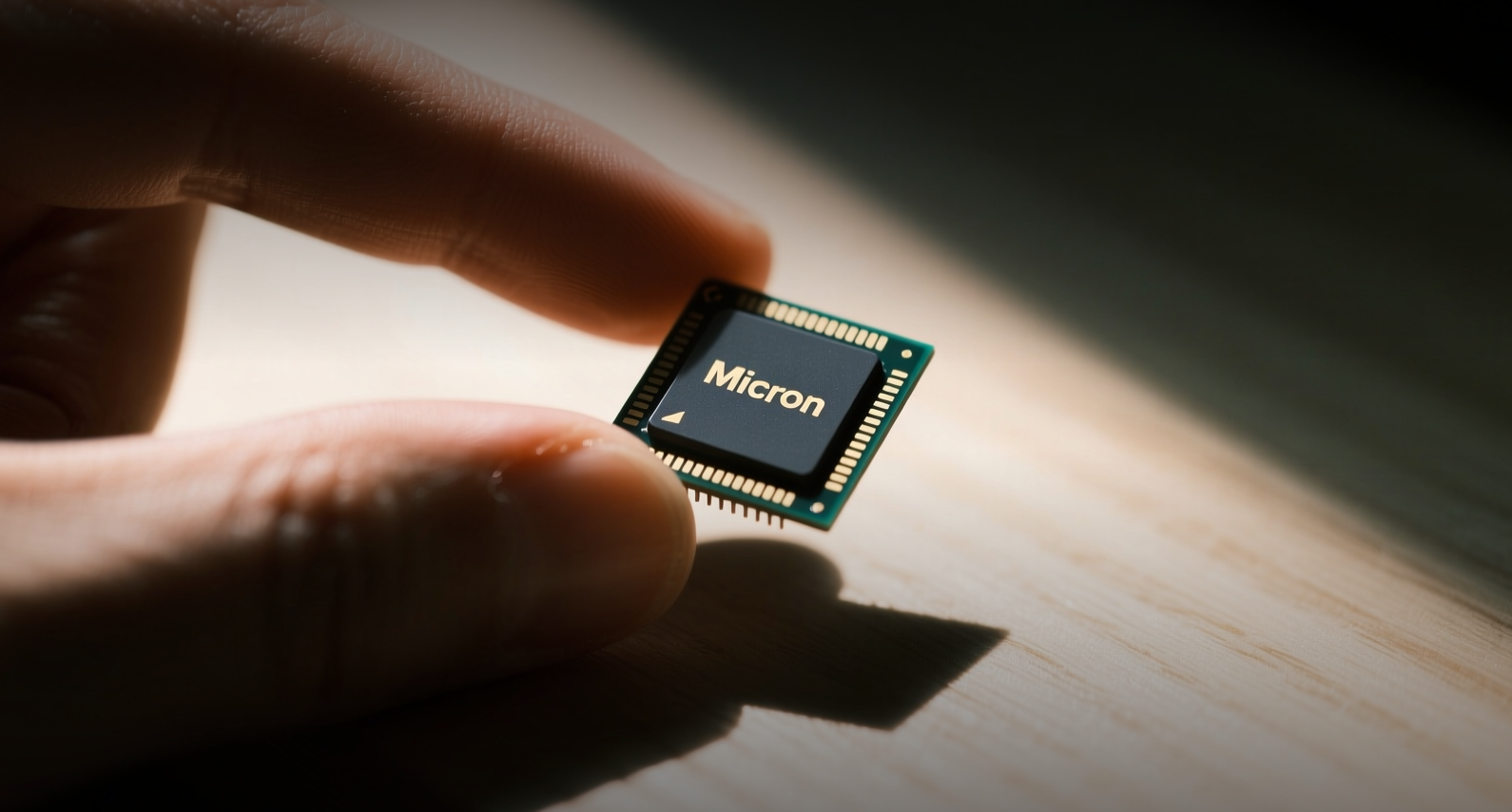
Micron is gaining DRAM market share as AI demand outstrips supply, with executives saying 2027 will be even tighter than 2026 and bulls projecting the stock could double by cycle end.
"Our customers are telling us that despite the fact that the prices are at very high levels, they are eager to get more supply because they are not able to meet their own business case requirements," Sumit Sadana, Micron's executive vice president and chief business officer, said at the KeyBanc Capital Markets Technology Leadership Forum on Aug. 10.
Micron posted an 81 percent operating margin in its latest quarter and has raised its U.S. investment commitment to $250 billion from $200 billion. The company committed $500 million to GlobalWafers as part of $3 billion in supply-chain investments. Micron, Samsung Electronics and SK Hynix have already completed part of their 2027 DRAM capacity allocation, according to market sources.
Micron shares trade at $874.27 with a market cap of $987 billion and a P/E of 40.7. Trivariate Research CEO Adam Parker told CNBC the stock could double by the end of the cycle, while Citigroup's Atif Malik maintains a Buy with a $1,150 target. The stock has retreated more than 30 percent from its all-time high before a recent recovery.
Sadana said AI has created a different demand cycle for memory, with customer demand rising faster than industry supply. The shortage is most acute in data centers, where Micron often can meet no more than half of customer demand. The company has no clear line of sight to when supply will catch up with demand, he said.
Micron is the only company investing in front-end memory fab manufacturing in the U.S., with projects in Idaho, New York and Virginia, along with global investments in Japan, Taiwan, Singapore and India. The company is moderating price increases to balance long-term customer demand with return on investment, while still expecting revenue and profit growth from better product mix, higher shipments and future pricing opportunities.
Adam Parker of Trivariate Research said Micron could double by the end of the cycle because investors may already be pricing in too much earnings deterioration after the eventual peak. He argued investors are focusing too heavily on Micron's income statement and not enough on its improving balance sheet, pointing to the company's revenue outlook, high gross margins and potential to generate substantial free cash flow over the next several years.
Citigroup's Atif Malik maintained a Buy rating on Aug. 7 but lowered his price target to $1,150 from $1,400, expecting memory pricing momentum to slow over the next year even as DRAM and NAND prices continue to rise. The firm expects memory prices to peak in the second quarter of next year and identified rising Chinese memory capacity as the biggest long-term risk to its Micron thesis.
Wall Street expects Micron to report earnings of $31.24 per share on revenue of $50.72 billion when it announces quarterly results around Sept. 22, compared with $3.03 per share and $11.31 billion a year earlier. The stock carries a consensus Buy rating with an average analyst price target of $1,548.86. KeyBanc raised its target to $1,750 on July 14, and Cantor Fitzgerald lifted its target to $2,000 on June 29.
Micron trades about 0.1 percent below its 20-day moving average of $893.35 and roughly 8 percent below its 50-day average of $971.96, while remaining nearly 68 percent above its 200-day average of $531.67. The stock is up about 688 percent over the past 12 months.
For investors, the question is whether Micron's market share gains and supply tightness justify the premium valuation. The stock trades at 40.7 times trailing earnings, and with the memory upcycle expected to peak in mid-2027, the risk-reward depends on whether pricing power holds longer than bears expect. Micron's position as the only U.S.-based front-end memory fab manufacturer gives it a structural advantage as AI infrastructure spending continues to expand.
This article is for informational purposes only and does not constitute investment advice.
