

Michael Burry, who shorted subprime mortgages before the 2008 crash, says a two-year-old AI chip startup threatens Nvidia's dominance.
Michael Burry, who shorted subprime mortgages before the 2008 crash, says a two-year-old AI chip startup threatens Nvidia's dominance.
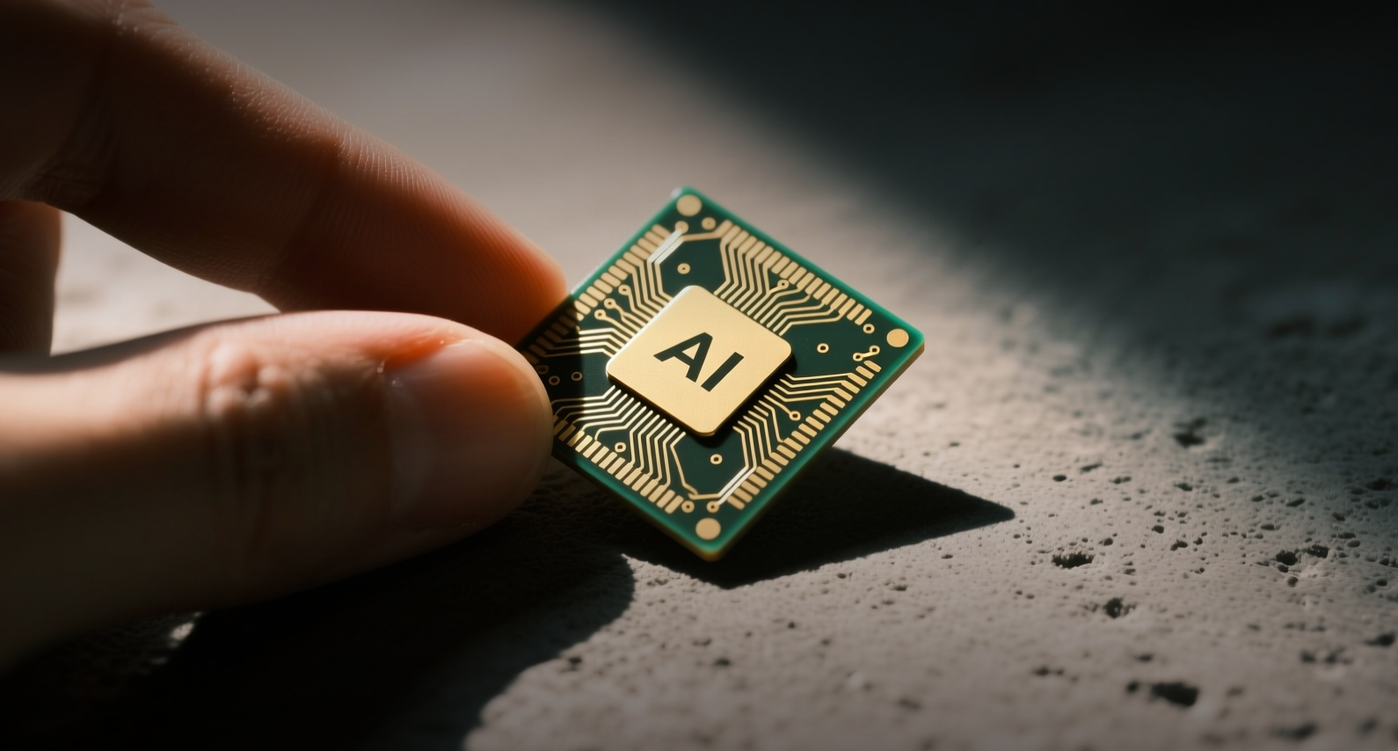
Etched, a two-year-old startup that recruited 15 percent of its 400-person workforce from Nvidia, poses "serious competition" to the chip giant, Michael Burry said Tuesday, citing a Wall Street Journal report.
"This is serious competition for NVDA," Burry said, pointing to the Journal's account of Etched's engineering bench and its speed in bringing chips to market.
Etched took just 44 days after receiving test chips from Taiwan Semiconductor Manufacturing to run inference workloads — a process that typically takes six months or longer, the Journal reported. Central to that speed is Brian Loiler, who spent 22 years at Nvidia building its HGX and DGX server systems before joining Etched in 2024 as VP of Platform. Loiler has helped recruit roughly a dozen more Nvidia engineers, some of whom turned down richer counteroffers to stay. Nvidia alumni now make up about 15 percent of Etched's roughly 400-person workforce, per the report.
Nvidia stock fell 2.24 percent to $219.97 Tuesday. The endorsement adds to Burry's broader bearish positioning on AI infrastructure — he holds put options on Nvidia and Palantir, increased his Micron short, and has said his current short book rivals his 2020 positioning.
A Chip Built for One Job
Etched's flagship product, a chip called Sohu, is designed exclusively to run transformer-based AI models — the architecture behind large language models like ChatGPT — rather than functioning as a general-purpose GPU the way Nvidia's chips do. The startup raised a $120 million Series A in 2024 with backing from Peter Thiel and Replit CEO Amjad Masad, and closed a $300 million Series C in July that pushed its valuation to $10.3 billion, led by Sequoia with participation from Andreessen Horowitz, Jane Street, Diffusion and SK Hynix.
The specialization bet mirrors a broader industry shift. Groq, another Nvidia challenger, raised $350 million at a $3.5 billion valuation in August — but its pivot tells a different story. After Nvidia licensed Groq's chip technology in a deal widely pegged at about $20 billion and hired away founder Jonathan Ross, Groq now runs Nvidia-powered data centers as a neocloud rather than competing on silicon.
Burry's Broader AI Short
Burry's Etched comment is part of a wider bearish thesis on AI infrastructure. His latest portfolio update shows QQQ puts representing about 6 percent of his portfolio after he exited losing SOXX puts, while an outright SOXX short remains his largest bearish position at roughly 7 percent. He has also increased cash to about 12 percent.
Burry argues that AI companies increasingly finance one another and recycle capital through the same ecosystem, while growing debt introduces a real cost of capital. He has identified 2028 as a possible point when excess compute capacity becomes more visible. Nvidia's push to mobilize more than $500 billion of third-party capital through financing platforms with Apollo, BlackRock, Blackstone, Brookfield, Goldman Sachs and KKR — with Nvidia itself potentially backstopping up to $125 billion — gives Burry's circular-financing concerns a concrete target.
Even CoreWeave, the AI cloud provider Burry has criticized for its debt-funded GPU spending and customer concentration, is off limits as a short because of its "meme vibe," he said. The stock surged more than 19 percent Wednesday after second-quarter revenue more than doubled to $2.58 billion, with a revenue backlog of $104.2 billion.
Nvidia shares fell 2.24 percent to $219.97 Tuesday. Bank of America's Vivek Arya described Nvidia's new third-party AI infrastructure financing platform as structurally bullish, arguing it shifts capital burden away from Nvidia while reinforcing its CUDA ecosystem. But Burry's endorsement of Etched — a company whose valuation has climbed from a $120 million Series A to $10.3 billion in two years — gives investors a concrete alternative narrative. If specialized inference chips like Sohu close the performance gap with general-purpose GPUs, the economics of Nvidia's data center business could face a structural challenge that no amount of financing can offset.
This article is for informational purposes only and does not constitute investment advice.
