


Marvell Technology is betting its new memory pooling and shared-memory silicon can relieve the biggest constraint on hyperscale AI workloads — and open a growth engine beyond custom chips and networking.
Marvell Technology is betting its new memory pooling and shared-memory silicon can relieve the biggest constraint on hyperscale AI workloads — and open a growth engine beyond custom chips and networking.
Marvell Technology is attacking the memory bottleneck that throttles hyperscale AI inference, rolling out pooling and shared-memory silicon that could expand its addressable market beyond custom chips and networking. Shares fell 5.57 percent on Aug. 22 as investors weighed the technology against a rich valuation.
The custom-silicon push is not "necessarily a zero-sum game" for rivals, Matt Bryson, an analyst at Wedbush Securities, said, noting that chip designers with strong intellectual property stand to benefit as cloud providers diversify suppliers.
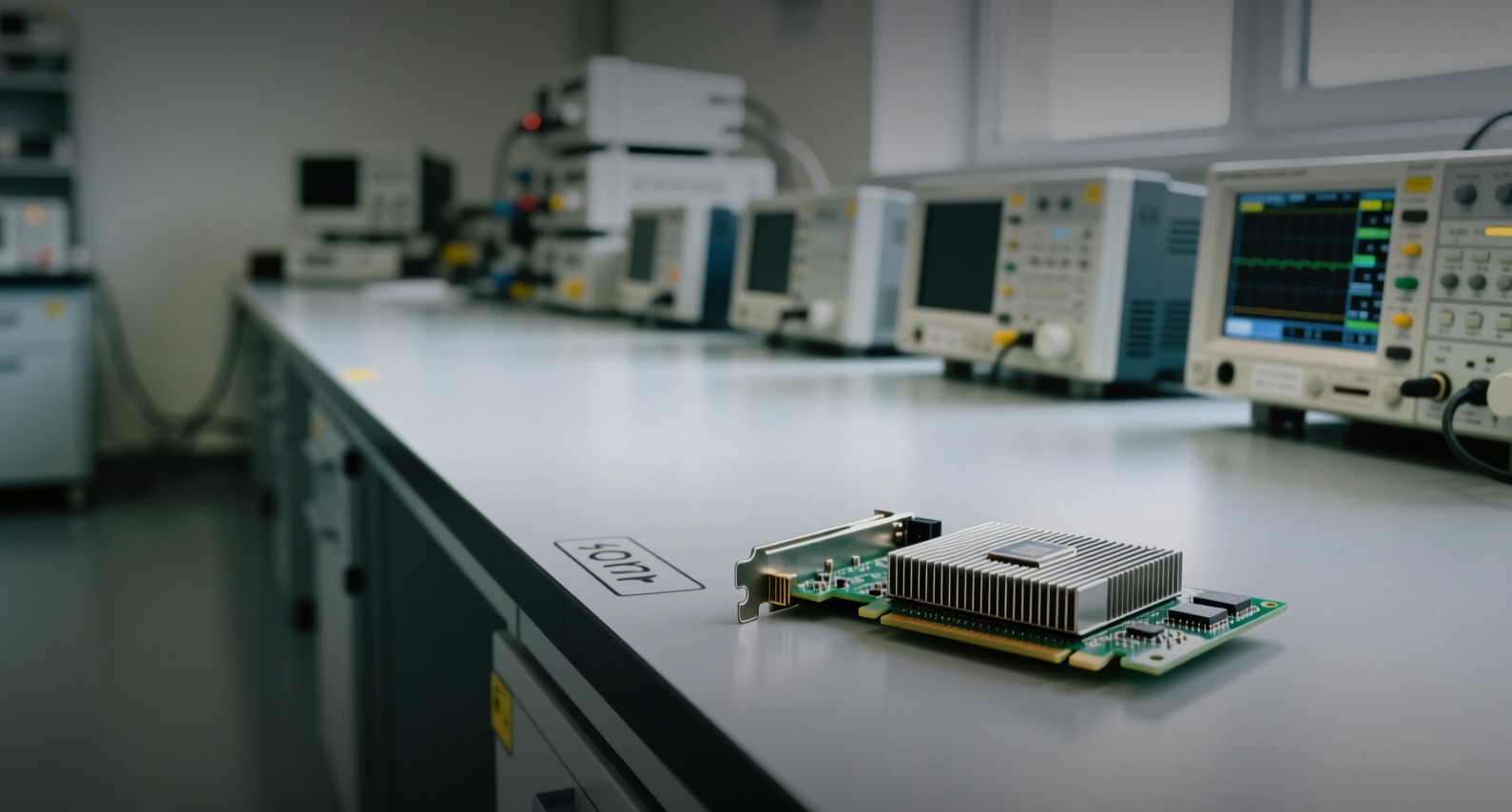
The new portfolio spans the Bravera SC6 PCIe 6.0 SSD controller, Structera X CXL memory expansion modules, and Photonic Fabric optical shared-memory components, unveiled at the Flash Memory Summit. The products target a simple problem: as AI models grow and context windows stretch, moving data in and out of memory — not raw compute — increasingly determines performance. Marvell wants to sit at every layer of the AI memory stack, from a single server to rack-scale CXL pooling to multi-rack optical shared memory.
The bet extends a broader push into AI infrastructure that has already delivered a landmark win. In July, Marvell expanded its partnership with Google to develop custom chips across Google's Tensor Processing Unit infrastructure, including inference accelerators, storage and networking products, memory interface controllers, and near-memory computing. Google received a warrant to buy up to 58.97 million Marvell shares at $206.58 each — worth about $12.18 billion if fully exercised — with most tranches vesting only as Marvell generates qualifying revenue from Google.
The memory story is central to Marvell's pitch. Hyperscalers running inference and agentic workloads increasingly hit walls where the limiting factor is not compute but how fast data can be accessed. Memory pooling lets multiple servers share a common pool of memory, while CXL expansion and optical shared memory extend that capacity across racks. Marvell's Bravera SC6 SSD controller is scheduled to begin sampling in the fourth quarter.
The company is backing the strategy with capital. Marvell committed $250 million over three years to expand its Bangalore and Hyderabad operations, doubling headcount and deepening research into advanced process nodes and AI-oriented semiconductors. Management is betting real dollars that the AI wave is durable.
The Google agreement, formalized July 29, gives Marvell a broader role in a market where cloud providers are moving away from general-purpose GPUs. Every $500 million in qualifying revenue from Google vests another tranche of the warrant, giving investors a direct way to track the relationship. The structure mirrors a smaller December 2024 warrant with Amazon Web Services covering 4.18 million shares at $87.78, but the Google deal is more than 14 times larger by share count.
Marvell has targeted more than $10 billion in custom-chip revenue by fiscal 2029 and expects data-center revenue to grow roughly 50 percent this year. The Google agreement could strengthen that trajectory, though it also raises the bar: Broadcom remains Google's primary TPU development partner through 2031, and reports suggest Google is also in talks with AMD for future TPU work.
Marvell's valuation leaves little room for error. The stock trades at a price-to-earnings ratio above 80 and price-to-sales near 23.5, with an enterprise value near $190 billion. Analysts remain broadly constructive — UBS trimmed its target to $300 from $340 while keeping a Buy, and China Renaissance set a $276 target — but the memory technology faces competition from established players, and the stock's 5.57 percent decline on the announcement suggests some skepticism about whether the products can convert into near-term revenue. For investors, the question is whether Marvell can turn memory pooling from a narrative into a measurable revenue line before the market's patience runs out.
This article is for informational purposes only and does not constitute investment advice.
