
Key Takeaways:
- Revenue rose 20 percent to $15.8 billion, beating consensus by 7.94 percent
- Full-year EBIT guidance raised to $4.5 billion-$6.5 billion
- Gemini Cooperation delivered $950 million in cost benefits, above target
Key Takeaways:
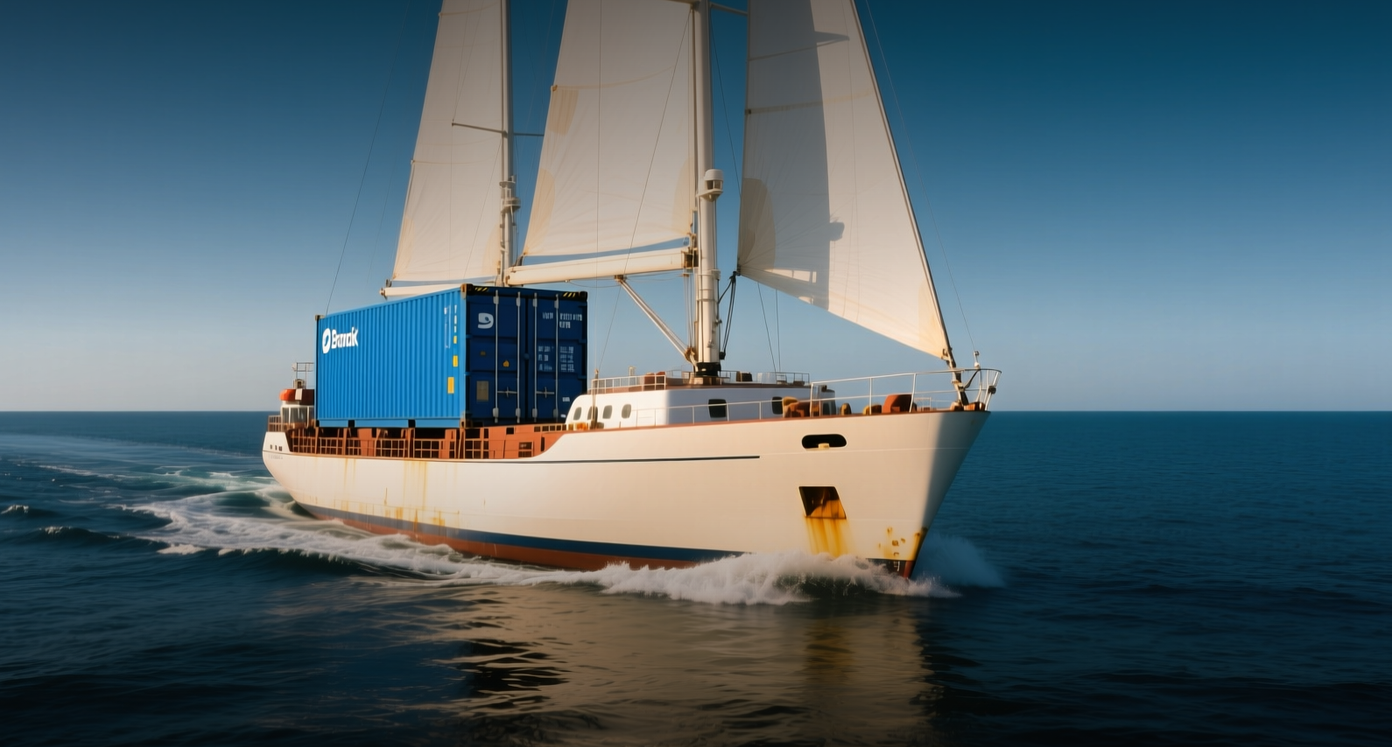
A.P. Moller-Maersk reported Q2 revenue of $15.8 billion, up 20 percent year on year, with EPS of $0.45 beating consensus by 114 percent.
"We delivered revenue of $15.8 billion, up 20 percent year-on-year, supported by strong demand in the container market, higher spot rates in Ocean, and continued growth across all our segments," CFO Robert Erni said.
Ocean revenue rose 23 percent to $10.5 billion with EBIT of $935 million. Loaded volumes increased 4.1 percent to 3.4 million FFE, while average freight rates climbed 22 percent year on year and 32 percent sequentially. Logistics & Services revenue grew 15 percent to $4.2 billion with EBIT up 24 percent to $217 million. Terminals revenue rose 11 percent to $1.4 billion, delivering a 31.6 percent EBIT margin.
The company raised its full-year underlying EBIT guidance to $4.5 billion-$6.5 billion from an earlier range, citing stronger container demand and a tighter rate environment. Underlying EBITDA guidance was lifted to $10.5 billion-$12.5 billion. Management now expects container market volume growth of about 4 percent this year, up from an earlier assumption of 2 percent.
CEO Vincent Clerc said the Gemini Cooperation network program delivered about $950 million in cost benefits, above the previously communicated range of $700 million-$900 million. "The bottleneck in the supply chain is now moving from ships to the land side. This cannot be debottlenecked quickly," Clerc said.
Free cash flow turned positive at $549 million, compared with negative $373 million in Q2 2025, supported by higher earnings but partially offset by working capital buildup from higher receivables and bunker inventories. The company returned $367 million to shareholders during the quarter, mostly through buybacks.
Maersk said it is gradually reintroducing services through the Bab el-Mandeb Strait and Suez Canal, with four services now transiting, representing about a third of normal volumes. The company said a full return would shorten sailing distances and reduce fuel use but could add to congestion at European ports in the near term.
Shares rose 6.42 percent to $17,890 in early trading, near the 52-week high of $18,370. The stock has gained about 18 percent year to date, outperforming the S&P 500's 13.2 percent advance. Rival ZIM Integrated Shipping Services reports Q2 results on Aug. 19.
The guidance raise signals management expects the current demand and rate environment to persist through year-end. Investors will watch whether port congestion eases after China's Golden Week holiday in early October, which would determine whether Maersk lands at the lower or upper end of its revised range.
This article is for informational purposes only and does not constitute investment advice.
