
LandSpace's Zhuque-3 became China's first reusable rocket to land its first stage on land, cutting launch costs toward SpaceX's Falcon 9 model.
LandSpace's Zhuque-3 became China's first reusable rocket to land its first stage on land, cutting launch costs toward SpaceX's Falcon 9 model.
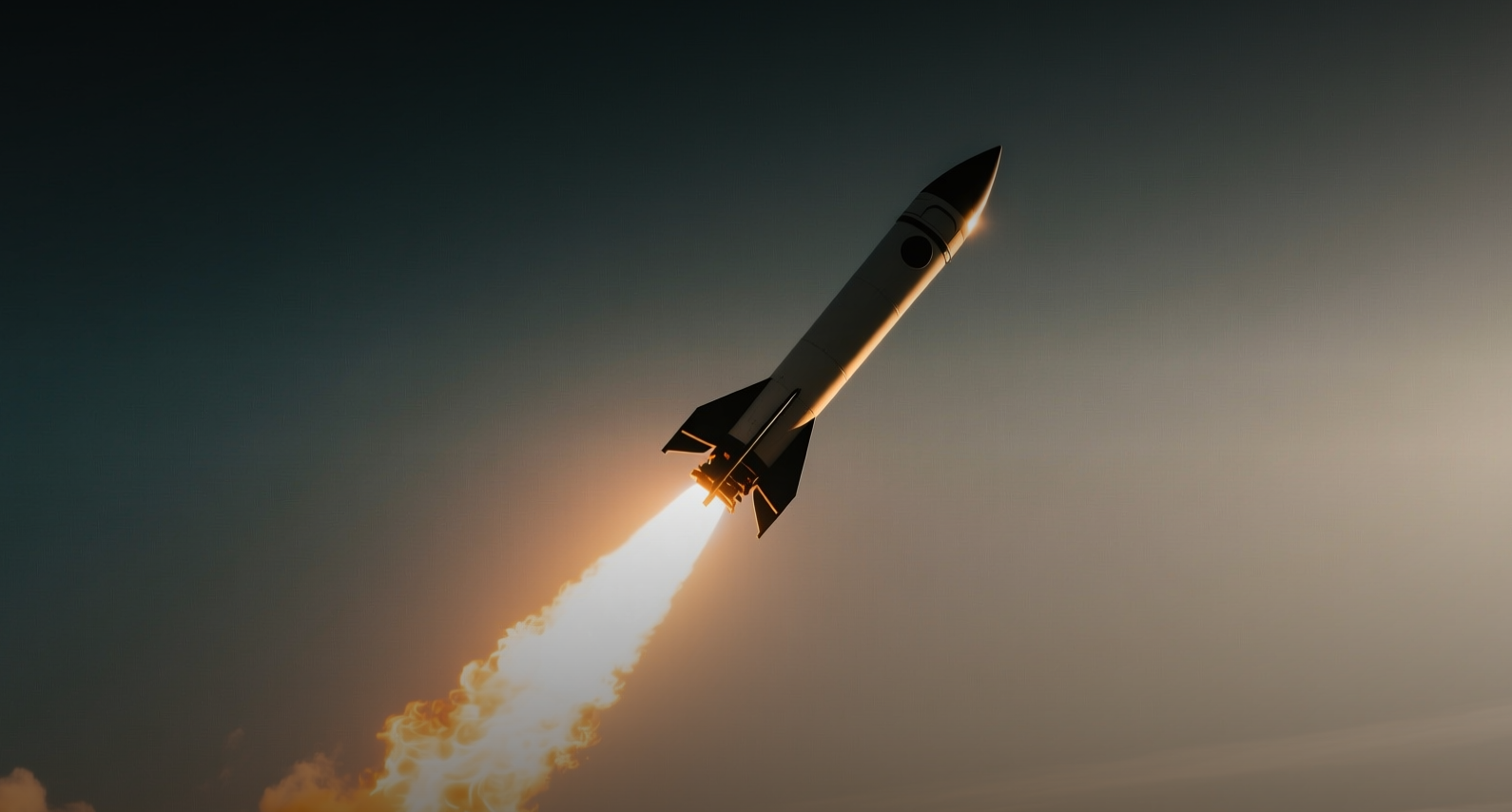
LandSpace recovered the first stage of its Zhuque-3 rocket on Aug. 19, becoming China's first private launcher to land an orbital-class booster and narrowing the gap with SpaceX's reusable Falcon 9.
"The industry's valuation logic could shift from concept to reusable rocket industrialization verification," Huayuan Securities said in a note.
The 66.1-meter stainless-steel rocket, powered by nine Tianque-12A liquid oxygen-methane engines with 40%-110% thrust adjustment, lifted off at 7:35 a.m. Beijing time from the Dongfeng commercial space innovation pilot zone in northwest China. The land-based recovery used deployable landing legs, following the Long March-10B's sea-based net recovery on July 10.
First-stage hardware accounts for about 70% of total rocket cost, so recovering it could cut per-launch costs 60%-80% with more than 10 reuses, supporting China's low-orbit satellite constellation buildout. The CIMC Satellite ETF (159218) has rebounded more than 18% since August.
The Zhuque-3's liquid oxygen-methane propellant accounts for just 1%-3% of launch cost, while the first stage represents roughly 70% of the vehicle's total cost, the model development lead at LandSpace said. Even including maintenance, rockets reused fewer than five times show clear cost advantages, and with more than 10 reuses per-launch cost could fall 60%-80%, according to Xiangcai Securities.
LandSpace plans to reuse the recovered booster soon, building a launch-recovery-inspection-reuse loop for high-frequency, low-cost commercial operations, the company said. The project was approved in August 2023, and the successful second-stage orbital insertion and first-stage recovery came three years later.
China is pursuing two complementary recovery paths. The Long March-10B completed the world's first rocket sea-net recovery on July 10, an approach that reduces stage mass and landing-precision requirements, converting saved structural weight into payload capacity, Xiangcai Securities said. The Zhuque-3 takes the land vertical recovery route with landing legs, consistent with SpaceX's Falcon 9.
LandSpace now joins SpaceX and Blue Origin as one of only three private rocket developers worldwide to land a large booster that has flown to space with the goal of reusing it. The success could accelerate deployment of the Guowang and Qianfan constellations, which have roughly 100 satellites in orbit each — about 1% of their planned scale. Guowang plans 15,000 satellites in three phases, with global coverage by end-2027 and full constellation by end-2030.
The breakthrough provides key capacity for low-orbit constellation deployment. On Aug. 16, the Long March 12 launched the 24th group of satellite internet satellites from the Hainan commercial launch site. SpaceX's first post-IPO earnings report offers a reference point: Starlink had 12 million global subscribers at Q2 end, doubling from 6 million a year earlier, with connectivity revenue of $4.291 billion, up 66%, and operating profit of $1.656 billion, up 79%. That confirms the loop of falling launch costs, constellation expansion, user growth, and revenue gains, offering an overseas model for China's satellite internet commercialization.
This article is for informational purposes only and does not constitute investment advice.
