

Key Takeaways: Lam Research plans to spend more than $3 billion over five years to expand its global R&D lab network, lifting experiment capacity by more than 50 percent.
Key Takeaways: Lam Research plans to spend more than $3 billion over five years to expand its global R&D lab network, lifting experiment capacity by more than 50 percent.
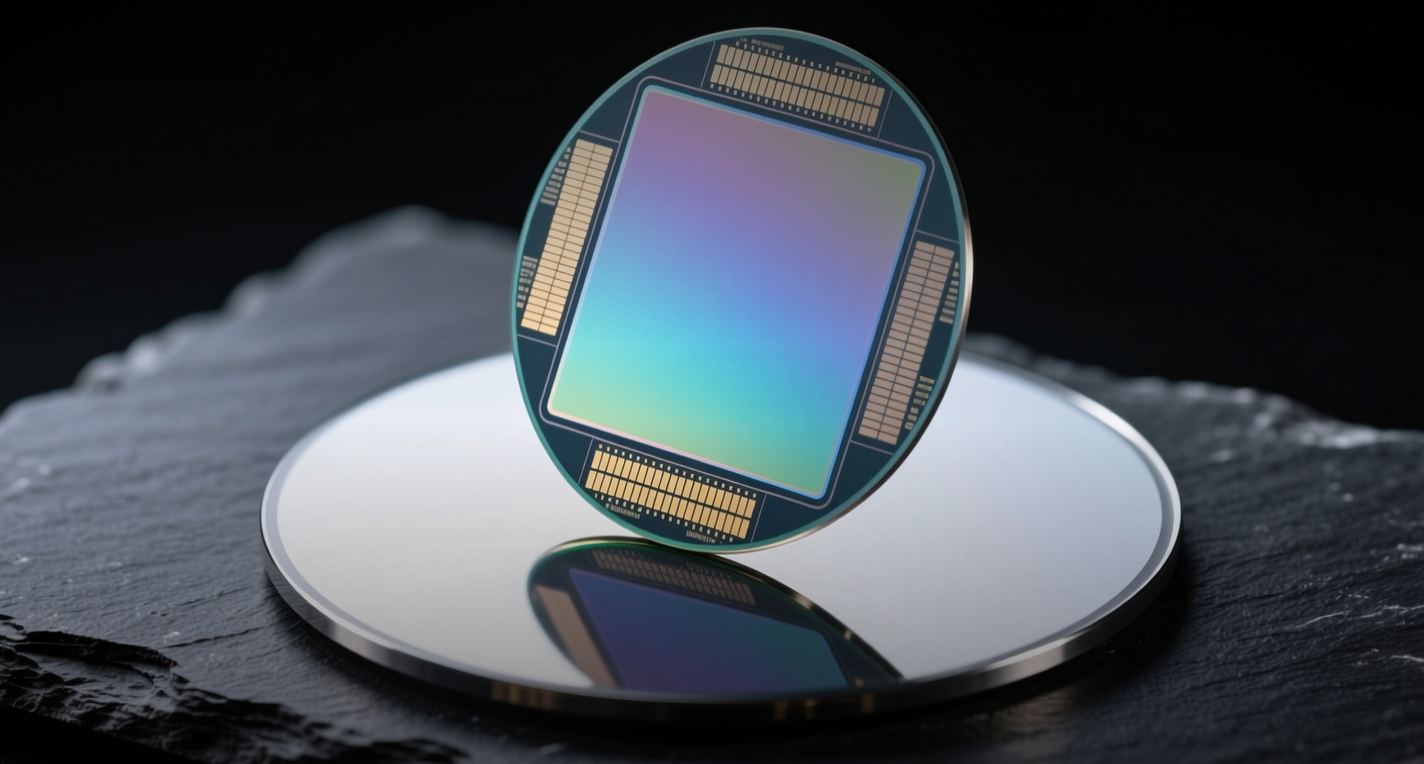
Lam Research plans to invest more than $3 billion over five years to expand its global R&D lab network, aiming to lift experiment capacity by more than 50 percent as AI demand compresses chip development timelines.
"In the AI era, the pace of innovation is relentless, requiring chips with new architectures, different materials, and complex features engineered with nanoscale precision," Tim Archer, president and chief executive officer of Lam Research, said. "We are investing with the intention of staying ahead of what our customers need."
The network spans the United States, Asia, and Europe, supporting more than one million experiments annually. In recent customer engagements, the integrated setup shortened process development by up to 2.5 times, Lam said. Specialized labs compress weeks of experimental work into days, while process development sites carry advances toward production readiness alongside manufacturing teams. Technology centers located near customers support rapid qualification and validation alongside their engineering teams.
Lam shares rose about 4 percent intraday Thursday, extending a 90.86 percent year-to-date gain, as the company guided 2026 wafer fabrication equipment spending to roughly $135 billion. The investment reflects confidence in sustained AI-driven demand for deposition and etch tools, the process steps that matter most for 3D NAND layer scaling and high-bandwidth memory.
The expansion comes as AI-focused spending by major technology companies fuels demand for advanced chips and the equipment used to make them. Lam supplies deposition, etch, and cleaning tools that build the microscopic layers and patterns forming circuits inside semiconductors. Nearly every advanced chip is built with Lam technology, the company says.
The multi-site buildout is designed to let tools, data, and expertise be shared across locations and time zones, so a discovery in one lab becomes knowledge every lab can use. Lam pairs specialized labs worldwide with technology centers near customer facilities, supporting rapid qualification and validation alongside customers' engineering teams.
Micron Technology, a long-standing Lam customer, welcomed the investment. "Our longstanding collaboration with Lam continues to drive innovation in leading-edge front-end and advanced packaging technologies," Scott DeBoer, executive vice president and chief technology and products officer at Micron, said.
John West, chief analyst for semiconductor equipment at Yole Group, said AI-related investment is lifting demand for deposition and etch intensity, and that sustaining momentum will require faster innovation and quicker scaling of new technologies into manufacturing.
Separately, Lam plans to add about 200 jobs in Singapore this year, with nearly 90 percent of the roles in engineering and technical work tied to high-bandwidth memory, 2.5D and 3D integration, silicon photonics, co-packaged optics, and panel-level packaging. The company has operated in Singapore for more than three decades and works with Nanyang Technological University, National University of Singapore, and Singapore Institute of Technology.
"Singapore's semiconductor ambitions are built on the strength of its people, and the demand for deep engineering talent has never been greater," Andrew Goh, corporate vice president and general manager for Southeast Asia at Lam Research, said.
Lam's R&D commitment comes as memory makers including Micron, SK Hynix, and SanDisk expand capacity for high-bandwidth memory and advanced packaging. SanDisk's investor day Thursday laid out a multi-year financial model targeting mid-to-high teens revenue growth through 2030, lifting equipment stocks including Applied Materials and Camtek. Lam's most recent quarter delivered EPS of $1.82 versus $1.68 expected on revenue of $6.72 billion, and the company expects its advanced packaging business to grow more than 40 percent in 2026.
Lam plans to begin expanding the lab network this year, with the goal of increasing innovation velocity.
This article is for informational purposes only and does not constitute investment advice.
