South Korea's KOSPI jumped 3.8% and Japan's Nikkei 225 opened 1% higher on Aug. 4, extending a rebound in Asian equities as semiconductor shares rallied on AI memory demand.
South Korea's KOSPI surged 3.8% and Japan's Nikkei 225 opened 1% higher on Aug. 4, tracking a record U.S. tech rally and fresh demand for AI memory chips.
"Geopolitical news is helping out with oil prices going down and easing pressure on yields," said Alexandre Baradez, chief market analyst at IG in Paris. "There is, however, a real lingering issue on bond yields, on leverage, on Fed policy: until there's clarity on these fronts, it's hard to say that the stock market is all clear."
The KOSPI later narrowed its gain to about 1.24% at 6,334.94 points, while the Nikkei 225 held a 0.40% advance at 64,009.44 points. SK Hynix rose 1.98% to 1,598,000 won and Samsung Electronics gained 1.04% to 242,000 won after the two memory makers, with SanDisk, released the first standard specification for High Bandwidth Flash, a next-generation memory technology for AI servers. Japanese tech names also climbed, with Kioxia up 3.58% to 50,920 yen and SoftBank Group adding 1.71% to 5,485 yen.
The gains followed a record-setting session on Wall Street, where the S&P 500 rose 1.48% to 7,600.50 and the Nasdaq Composite added 2.13%, with the Dow Jones Industrial Average climbing 693 points to a record close. Investors remain cautious on Middle East geopolitics after conflicting reports over potential U.S.-Iran nuclear talks, with oil prices sliding as Washington called off a threatened strike on Iran.
Memory Stocks Lead as HBF Spec Debuts
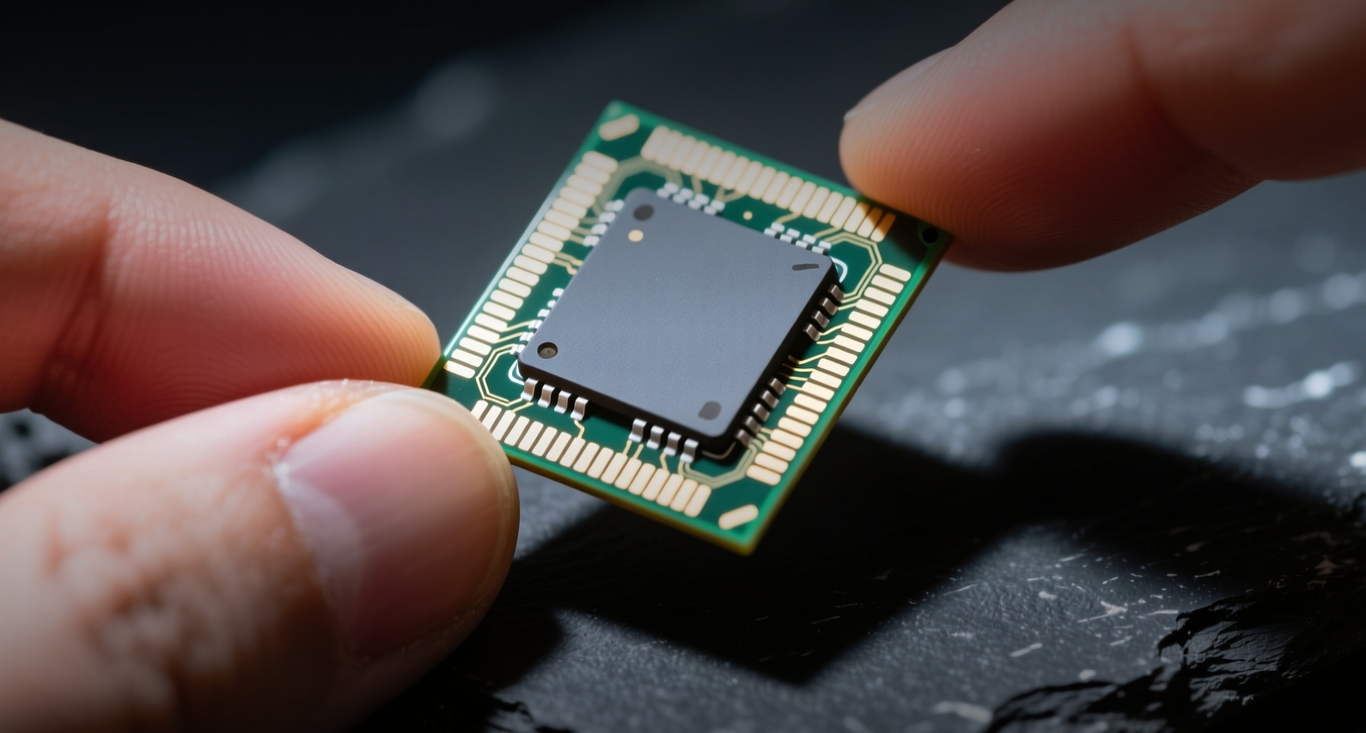
The advance was led by memory-chip makers after SK Hynix and SanDisk jointly released the first standard specification for High Bandwidth Flash, seen as a key direction for future AI memory architectures as demand for bandwidth from AI servers and high-performance computing rises. The collaboration boosted confidence in the advanced memory supply chain, lifting SK Hynix and Samsung Electronics in Seoul and Kioxia in Tokyo.
The yen strengthened after the U.S. and Japan confirmed coordinated intervention last week, with USD/JPY falling as much as 1.4% to 155.23 before paring losses at 156.92. U.S. 10-year Treasury yields eased 6 basis points to 4.68% as oil prices tumbled, with Brent crude dropping about 5% to near $84 a barrel after President Donald Trump said fresh U.S.-Iran talks would begin Monday.
The rebound in Asian equities comes after a volatile stretch for regional markets, with the KOSPI swinging between a 5.1% drop and a 17.9% surge in the prior two sessions as AI-driven chip stocks whipsawed. Traders now look to the U.S. July jobs report on Friday for guidance on the Federal Reserve's policy path, with the yen's trajectory and Middle East developments also in focus.
This article is for informational purposes only and does not constitute investment advice.