
Key Takeaways:
- KOSPI crashed 4.5% on Monday, breaking below its 100-day moving average
- SK Hynix's call-to-put ratio hit 27x, triggering forced deleveraging
- Goldman Sachs estimates $4.7 billion in market maker rebalancing per 5% index move
Key Takeaways:
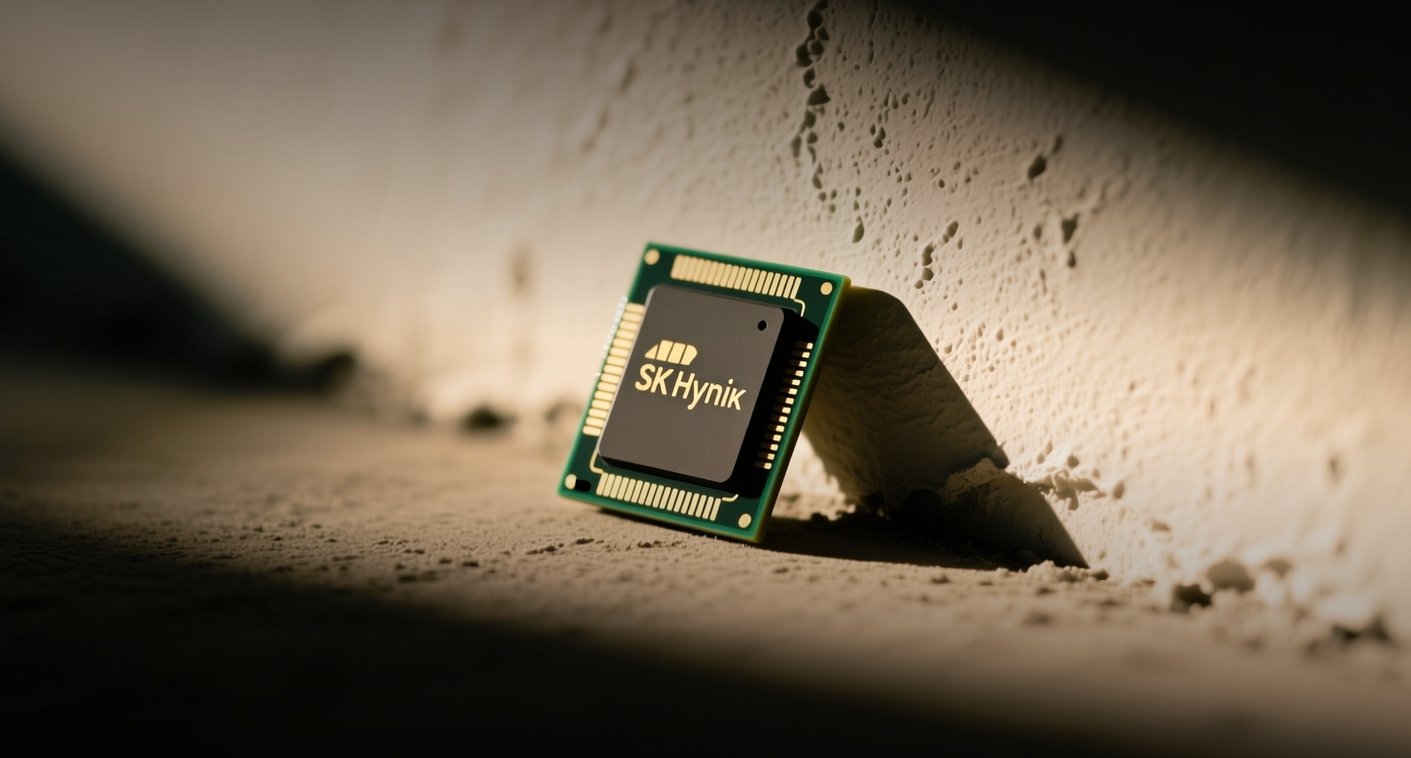
South Korea's KOSPI suffered its worst single-day drop in months as extreme options positioning in AI bellwethers triggered a mechanical deleveraging that erased 4.5% from the index.
The KOSPI tumbled 4.5% to approach 6,250 on Monday, breaking below its 100-day moving average as forced unwinding of leveraged AI bets amplified the selloff.
"This is a liquidity-driven position reset, not a structural reversal of the AI investment thesis," Goldman Sachs said in a note, estimating that every 5% move in the index triggers about $4.7 billion in market maker rebalancing flows, equivalent to roughly 13% of daily turnover.
The KOSPI's decline was led by semiconductor heavyweights SK Hynix and Samsung Electronics, where options imbalances reached extreme levels. SK Hynix's call-to-put ratio hit 27 times before the reversal, according to JPMorgan, making it the most crowded AI trade in Asia. The stock fell to its lowest since mid-May, though it remains above both its 100-day and 200-day moving averages. The 2x leveraged SK Hynix ETF has retreated to late April levels, requiring a roughly 250% gain to recover for investors who bought at last month's peak.
The South Korean selloff serves as a leading indicator for global AI-exposed equities, where concentrated positioning and derivative leverage have magnified both rallies and drawdowns. With KOSPI implied volatility still pricing daily swings of nearly 6%, the mechanical deleveraging may not be complete until options positions are fully unwound and market maker hedging flows stabilize.
The KOSPI's breakdown below its 100-day moving average marks a technical deterioration for an index that had been tracing a parabolic ascent since early 2025. The Relative Strength Index has entered deeply oversold territory, though historical patterns suggest parabolic rallies rarely find a floor quickly — the 200-day moving average, which converges with the long-term uptrend, now represents the critical support level.
Options Imbalances Turn Accelerator Into Brake
The mechanics of the selloff trace directly to the options market. During the rally, investors piled into call options at a pace that pushed implied volatility higher alongside spot prices — an unusual configuration that made protective puts prohibitively expensive. Many holders chose to forgo hedging entirely, leaving positions exposed. When the downturn began, those naked long positions were sold into a market where market makers were simultaneously delta-hedging their own books, creating a feedback loop of forced selling.
Goldman's model shows that for SK Hynix and Samsung Electronics specifically, the rebalancing flows tied to options positions could exceed 20% of each stock's average daily trading volume. The concentrated nature of the KOSPI — where tech names account for a disproportionate share of index weight — means the deleveraging feeds directly into the headline index.
Global Ripple Effects
The KOSPI's rout unfolded as Wall Street showed tentative signs of stabilization. The S&P 500 rose 0.4% and the Nasdaq added 0.7%, with Nvidia recovering 1.8% and AMD climbing 3.4% after announcing an expanded partnership with Microsoft. But the broader cross-asset picture remained tense. The yield on the 10-year Treasury rose to 4.58% from 4.55% on Friday, extending a climb that began when it stood at 3.97% before the Iran conflict escalated. Brent crude traded at $88.21 a barrel, with the Strait of Hormuz seeing vessel traffic drop nearly 50% as the war with Iran disrupts shipping lanes.
For global investors holding crowded AI positions, the KOSPI's collapse offers a stress test of how quickly leverage can reverse when options markets are stretched to extremes. The question now is whether other markets follow South Korea's lead or whether the position reset proves contained to the most concentrated names.
This article is for informational purposes only and does not constitute investment advice.
