

JPMorgan Chase is within striking distance of becoming the first bank in history to reach a $1 trillion market capitalization.
JPMorgan Chase is within striking distance of becoming the first bank in history to reach a $1 trillion market capitalization.
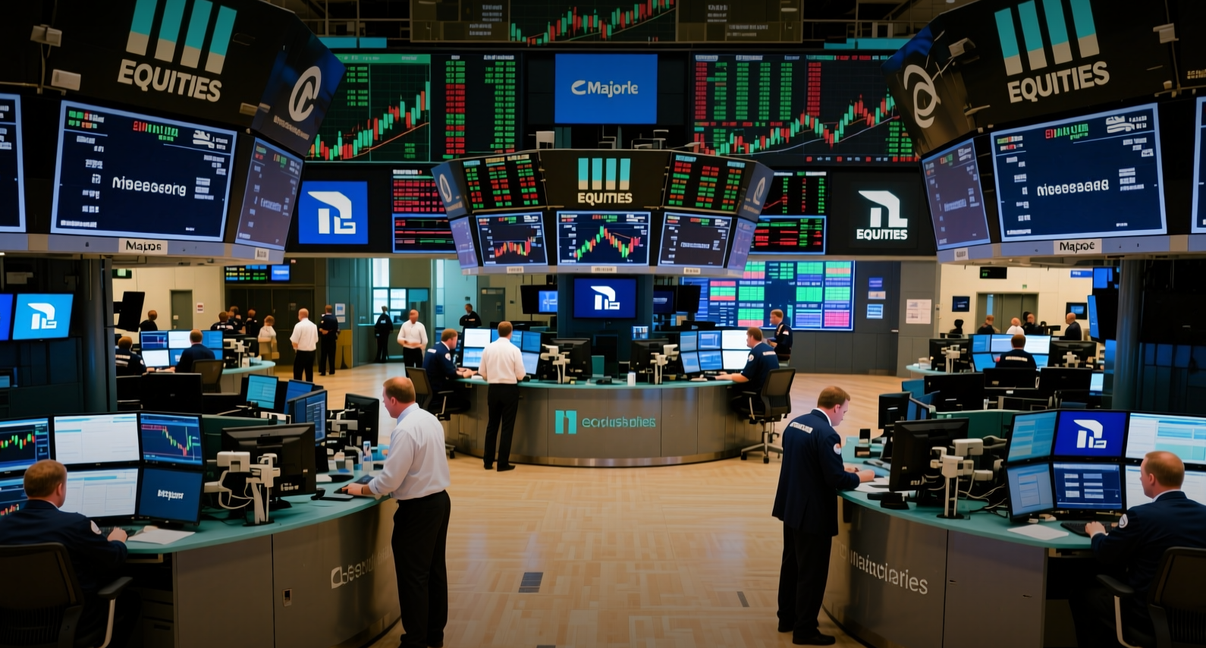
JPMorgan Chase is closing in on a $1 trillion market cap, a first for any bank, as record trading revenue and XRP Ledger tokenization activity fuel investor confidence in the lender's growth trajectory.
"JPMorgan should become the first bank to reach a $1 trillion market capitalization," said Mike Mayo, analyst at Wells Fargo, who raised his price target to $390 from $375, implying more than 7 percent upside from the stock's Aug. 14 close.
The bank's market value stood at roughly $965 billion as of that date, meaning a gain of about 3.5 percent would push it past the milestone. Shares have climbed 21 percent over the past three months after the bank reported record second-quarter net income of $21.1 billion, up 41 percent from a year earlier. Equities trading revenue jumped 86 percent to $6 billion, helped by a surge in dealmaking and the SpaceX initial public offering in June.
Crossing $1 trillion would mark a defining moment for the banking sector, confirming JPMorgan's strategy of investing through downturns in technology, branches and acquisitions under CEO Jamie Dimon. Mayo projects the bank could reach $2 trillion in seven to eight years if earnings growth outpaces valuation re-rating, though tighter regulation and higher capital requirements remain key risks.
Tokenization on XRP Ledger adds a blockchain dimension
Beyond traditional banking metrics, JPMorgan's real-world activity on the XRP Ledger for institutional tokenization has drawn attention to the bank's blockchain strategy. The lender has been testing tokenized assets on the ledger, part of a broader push into digital asset infrastructure that positions the bank at the intersection of traditional finance and blockchain adoption.
The bank's total assets stand at $5.02 trillion with $2.69 trillion in deposits globally, giving it the scale to absorb the costs of these technology bets. JPMorgan announced a new $50 billion share repurchase program in June, alongside a 10 percent quarterly dividend increase to $1.65 per share, following a pass in the Federal Reserve's annual stress test.
Analyst consensus and valuation concerns
Wall Street broadly agrees with the direction. UBS analyst Erika Najarian raised her price target to $400 from $384, while Deutsche Bank's Matt O'Connor upgraded the stock to Buy from Hold with a target of $375, calling JPMorgan "arguably a cheaper way to play the AI and IPO theme than the brokers." Fifteen of 26 analysts covering the stock rate it a buy or strong buy.
The stock trades at about 15 times trailing earnings, well above its five-year median of 11.35, suggesting the market has already priced in much of the good news. The Zacks average price target of $369.91 implies only 1.9 percent upside from the last close of $363.11, leaving limited room for near-term gains.
Risks remain. CEO Jamie Dimon has warned that geopolitical tensions, inflation and fiscal deficits pose threats to market stability, and record-high margin debt could trigger forced selling if stock prices decline. Tighter rules or a windfall tax on large banks would cut directly into the profits the $1 trillion valuation depends on. Trading revenue, which powered the second quarter, can fade quickly when market volatility drops.
The $1 trillion mark could arrive within days on a 3.5 percent move. The longer-term question is whether JPMorgan can grow earnings fast enough to justify $2 trillion without depending on a richer valuation.
This article is for informational purposes only and does not constitute investment advice.
