
Iran's offshore crude stockpile has fallen to about 29 million barrels and could run out by mid-October, tightening global supply and keeping Brent near $97.
Iran's offshore crude stockpile has fallen to about 29 million barrels and could run out by mid-October, tightening global supply and keeping Brent near $97.
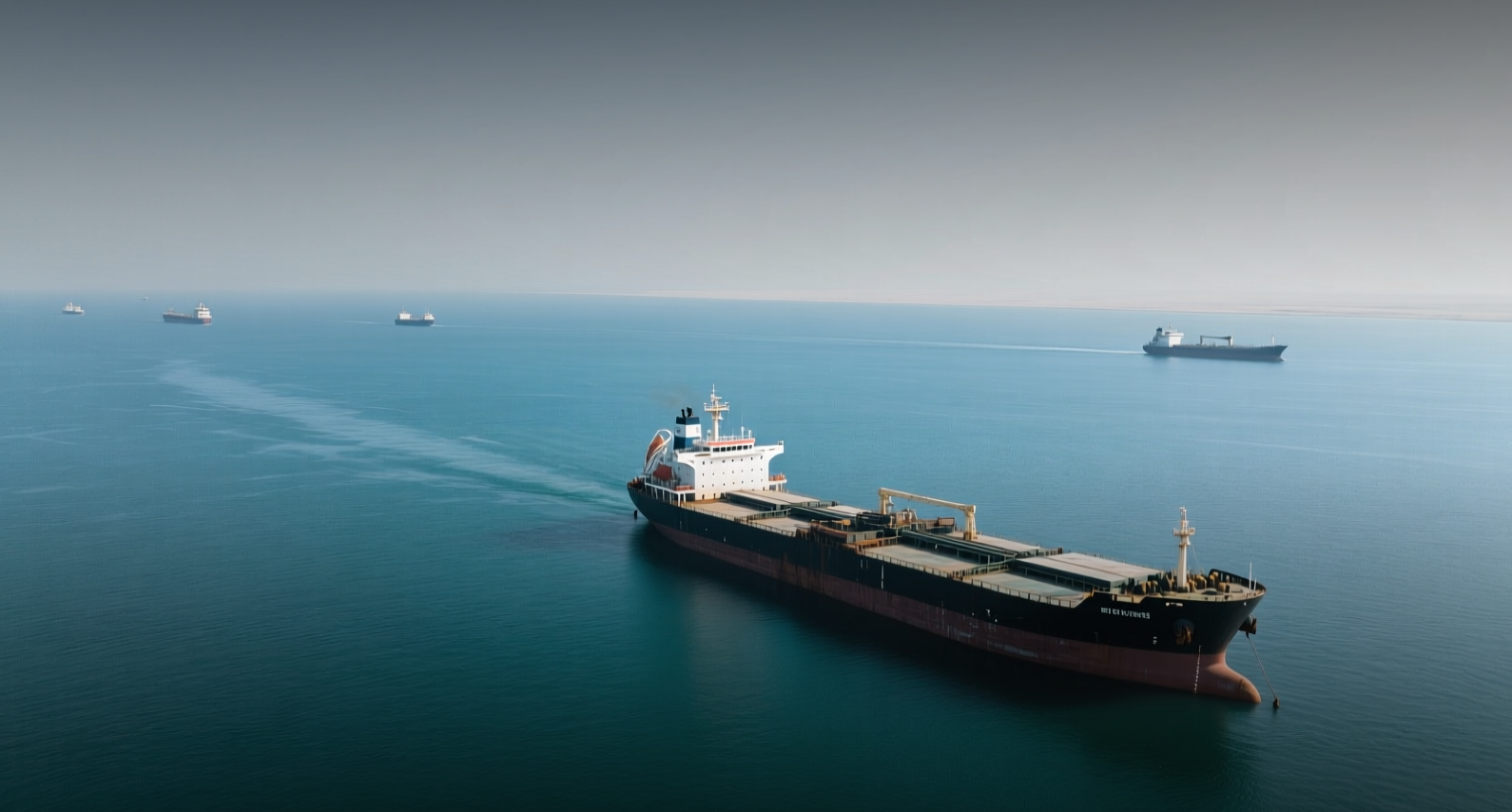
Iran's offshore crude trove has shrunk to about 29 million barrels from 90 million since the U.S. Navy reinstated its blockade in mid-July, a stockpile Kpler projects will run dry by mid-October.
"The process of selling oil and delivering it to customers was carried out thousands of kilometers away from the Persian Gulf and the Sea of Oman," Iranian Oil Minister Mohsen Paknejad said Friday, describing the overseas lifeline Tehran has been drawing on since the blockade returned.
Iran loaded 255,000 barrels a day onto vessels inside the Gulf in August, 85 percent below the February-April average, Kpler data shows, and those barrels remain trapped behind the blockade line. Brent crude traded around $97 a barrel Monday. Deliveries of about a million barrels a day, mostly to China, could exhaust the floating store by mid-October, with payments for earlier cargoes drying up by mid-December.
Roughly a third of Iran's state budget is funded by oil revenue, making the squeeze a direct test of Washington's bet that economic pain will force concessions. Gulf officials and analysts warn the tightening vise could instead provoke more Iranian retaliation — on Saturday the U.S. struck three Iranian oil tankers after Iran launched ballistic missiles at two Navy warships, including an aircraft carrier.
No Iranian crude has crossed the blockade since the U.S. Navy reinstated it in mid-July, according to ship tracker Kpler. The blockade is also forcing Iran to cut production: stockpiles have not risen much, suggesting output has been pared back toward what the country needs at home, said Homayoun Falakshahi, head of crude-oil analysis at Kpler. That matches the scenario analysts predicted during the initial blockade this spring, that Iran would have to trim output to keep backed-up oil from hitting the "tank tops" of available storage. Overland routes offer little relief — Iran could move no more than 40,000 barrels a day by truck, a sliver of prewar exports of close to 2 million barrels a day, Falakshahi said.
Strait traffic collapses as tankers trade strikes
Only four commodity vessels passed through the Strait of Hormuz on Thursday, down from nine the prior day and well below the 10-day average of about 15, preliminary Kpler data cited by Reuters showed. Before the war began on Feb. 28, around 125 large commercial vessels transited the strait daily. The waterway carries about a fifth of the world's crude and LNG, and monitored flows of oil leaving the region have largely held between 4 million and 6 million barrels a day during the conflict. "Not much is currently being agreed between the US and Iran," Rystad Energy chief economist Claudio Galimberti said at an energy summit in Singapore. "We therefore expect flows to remain very low until November."
U.S. forces permanently disabled the M/T Downy off Kharg Island and the M/T Stark 1 near Jask, and destroyed a third tanker, the M/T Kylo, in the Gulf of Oman after directing its crew to abandon ship, U.S. Central Command said. "If you shoot at two of our ships, we will impose an even higher economic cost — taking out three of yours," Adm. Brad Cooper, the CENTCOM commander, said. Iran's Revolutionary Guard said it struck three oil tankers in the strait and three U.S.-affiliated vessels in response.
Economic pain deepens as Tehran digs in
The export squeeze is deepening a crisis in a country where official inflation runs above 80 percent year over year. The International Monetary Fund forecasts a 5.4 percent economic contraction this year, the worst since the 1980s. Falling exports deprive Tehran of the hard currency it needs to support the rial, which has lost almost 15 percent of its value against the dollar since President Donald Trump announced his economic squeeze campaign in August, said Hamad Hussain, an economist at Capital Economics. Some Chinese buyers are turning to Saudi, Iraqi and Emirati crude, Gulf energy officials said, and Iraq has offered discounts of nearly $30 a barrel on some grades. The petrochemical sector, Iran's second-largest source of foreign currency, has seen loadings fall about two-thirds from early 2026 by August, Kpler estimates. Official trade through the U.A.E. has largely stopped after the country said last month it would suspend financial and economic transactions with Iran, though some trade continues through shadow companies.
Whether the squeeze forces concessions remains an open question. "Now, much will depend on the degree of economic pain that the Iranian regime is willing to bear to achieve its military and geopolitical objectives," Hussain said. "The U.S. campaign will have a significant effect on the average Iranian household. But in terms of Iran capitulating at the negotiating table? I have a lot of doubts," said Ellie Geranmayeh, an Iran expert at the European Council on Foreign Relations. "The evidence we have suggests the Iranian regime is likely to resist." Saudi officials say Iran is also providing more weapons, personnel and intelligence support to its Houthi allies in Yemen, threatening another shipping chokepoint.
This article is for informational purposes only and does not constitute investment advice.
