
Iran and Oman agreed on a 7-mile temporary Hormuz corridor, but Tehran insists the strait stays closed until Washington meets its conditions.
Iran and Oman agreed on a 7-mile temporary Hormuz corridor, but Tehran insists the strait stays closed until Washington meets its conditions.
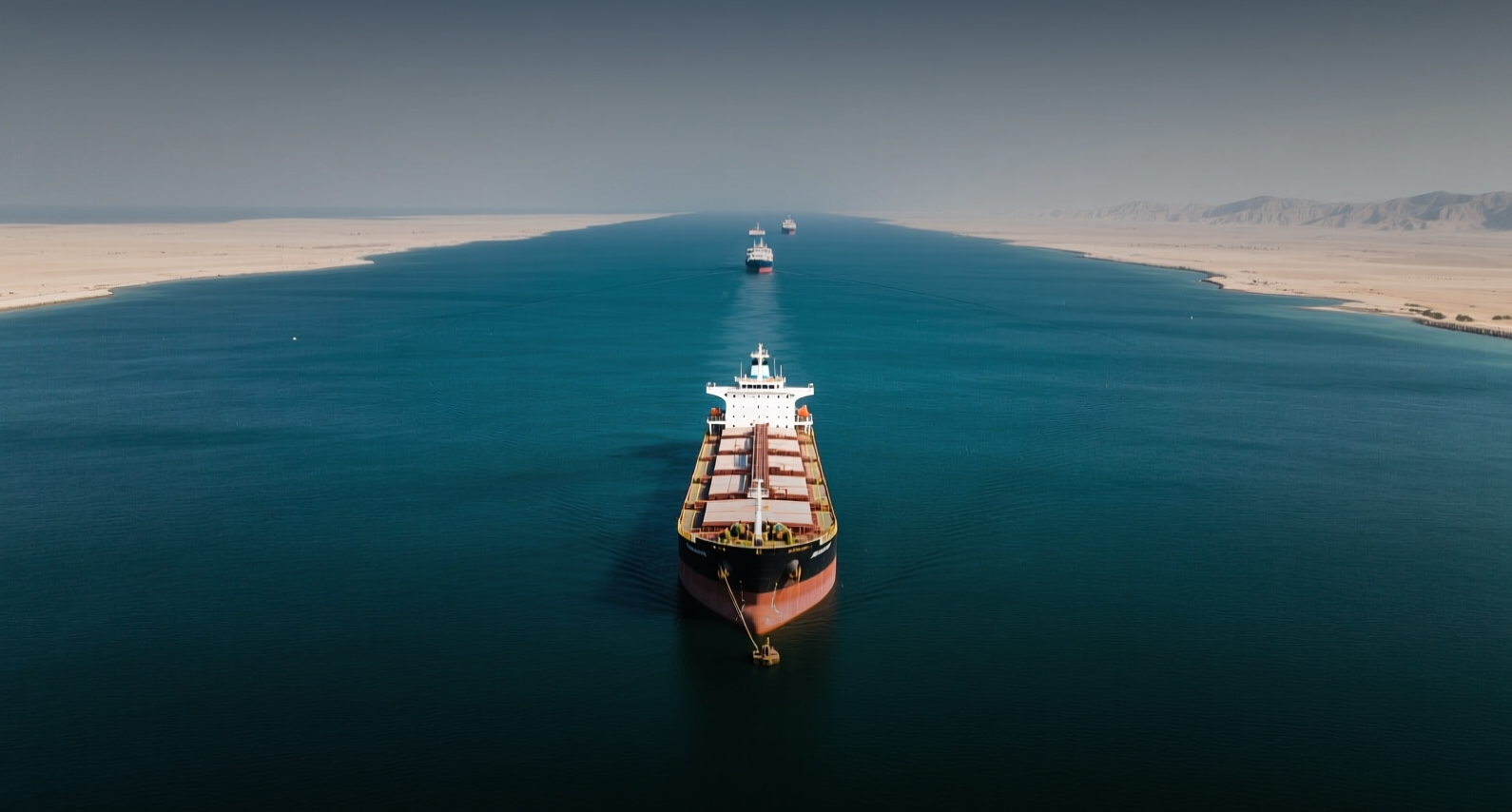
Iran and Oman reached a deal on a 7-mile temporary transit corridor through the Strait of Hormuz, but Tehran said the waterway will remain closed until the US fulfills its commitments under the lapsed June ceasefire agreement.
"The agreed-upon transit route with Oman is a temporary route," Kazem Gharibabadi, Iran's deputy foreign minister, said on state television. "The Strait of Hormuz is closed, and we have complete control over it."
The corridor, which will partially pass through Iranian territorial waters on entry and exit, was finalized after roughly a month of negotiations between Tehran and Muscat. The two countries will hold further talks over the next 30 to 60 days to establish a permanent route and management framework, including mine clearance and information-sharing mechanisms. Iran's Islamic Revolutionary Guard Corps spokesperson separately confirmed that the strait belongs to Iran and Oman, and that both sides reached a mutually accepted agreement.
The strait carries roughly 20 percent of global oil supply — about 130 ships transited daily before the war began in late February. Brent crude, which traded near $66 a barrel before the conflict, has surged past $100 multiple times and peaked near $120 in March, showing the market's sensitivity to any disruption in the waterway.
Gharibabadi said the agreement should not be interpreted as reopening the strait and denied claims that ships had already begun using the new route. He said Iran views the waterway as a national security issue and does not trust the United States, arguing that Washington must fully implement its obligations under the Islamabad Memorandum of Understanding before diplomacy can resume.
"The reopening of the Strait of Hormuz will only take place in exchange for an end to the war on all fronts, the lifting of the blockade, and a resolution of Yemen's status," he said.
Omani Foreign Minister Sayyid Badr bin Hamad al-Busaidi expressed optimism that the strait, which was free and open for navigation before the war, would be reopened soon, describing talks with his Iranian counterpart as constructive. The joint statement from Tehran and Muscat includes plans for a joint mine-clearance project and a framework for traffic management, information sharing, and navigational and security services.
The deal comes as Washington escalates economic pressure on Tehran. US Treasury Secretary Scott Bessent this week outlined new sanctions against 60 entities accused of facilitating Iranian oil sales, part of what President Donald Trump called "the most crushing economic operation ever" against Iran. Trump has also threatened to bomb Oman, a US ally, if it "gets in the way" of a peace deal.
The last time the US imposed a comparable sanctions package on Iran was in 2018, when the Trump administration reimposed nuclear-related sanctions after withdrawing from the JCPOA. Iranian oil exports fell by roughly 1.5 million barrels per day within a year, according to the International Energy Agency.
Iran's rial has hit a record low on the open market as the sanctions bite, and the country's economy is under severe strain after nearly seven months of war. Pakistan's army chief Asim Munir and Interior Minister Mohsin Naqvi met with Iranian officials in Tehran as part of Islamabad's mediation efforts, with Naqvi writing on X that "significant progress was made" toward ending the conflict.
Oil prices have already begun to price in the possibility of a reopening. Brent crude dropped to a more than two-week low on Tuesday as traders weighed the Iran-Oman talks against the ongoing tanker attack near the strait's entrance, where an unidentified projectile disabled a vessel close to Oman's Ash Shishah.
Trump on Tuesday claimed that "every square inch" of the strait has been completely de-mined and that the US Space Force is monitoring the waterway for new explosives. Gharibabadi dismissed the claim, saying it was "only aimed at calming the markets," and warned that US mine-detection vessels would become "very good targets" if they entered the area.
The key question for energy markets is whether the temporary corridor can be activated without US approval. An exclusive Iran-Oman arrangement would formalize Tehran's control over the waterway, running contrary to Washington's core demand that Iran relinquish control as a condition of ending the war.
"If a solution is mediated without US intervention and in fact allows Oman and Iran to manage passage through Hormuz, which lies entirely within the two countries' territorial waters, it would show how impotent the United States is and has been," said Laleh Khalili, a professor of Gulf studies at the University of Exeter.
With negotiations set to continue over the next 30 to 60 days, the window for a broader peace deal remains narrow. If the US refuses to accept Iran's conditions, the strait could remain effectively closed, keeping oil prices elevated and global inflation pressures intact. If Washington engages, the corridor could be activated quickly, potentially sending crude prices sharply lower.
This article is for informational purposes only and does not constitute investment advice.
