


Key Takeaways: A $10,000 investment in Intel a year ago is now worth nearly $50,000 after the Nvidia-backed chipmaker delivered a 372% return.
Key Takeaways: A $10,000 investment in Intel a year ago is now worth nearly $50,000 after the Nvidia-backed chipmaker delivered a 372% return.
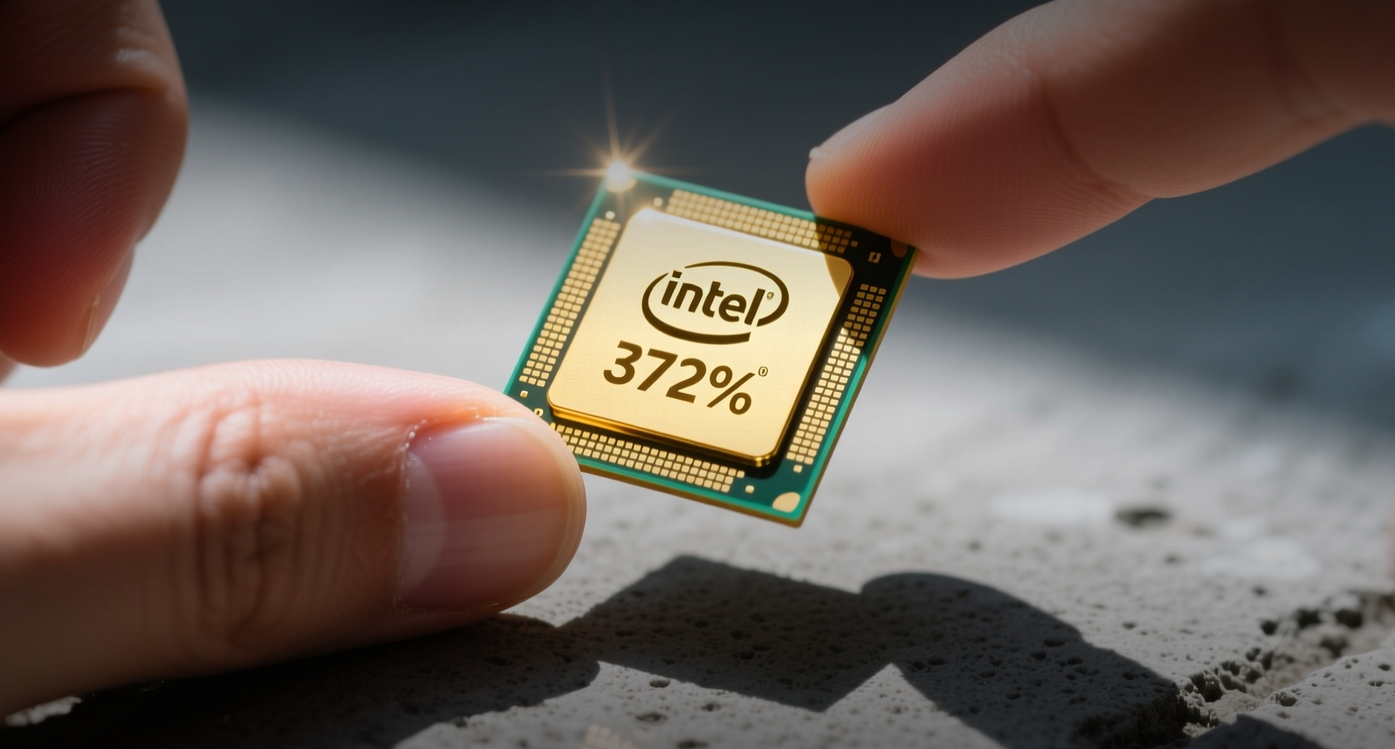
Intel shares closed at $97 on Aug. 11, up 372% from $20.65 a year earlier, after Nvidia's $5 billion investment and surging AI demand transformed the chipmaker from laggard to sector leader.
"As a capital-intensive business that went a long way to wrecking its own balance sheet and prospects by focusing on financial engineering rather than physical engineering, courtesy of $82 billion of share buybacks in the 2010s, it makes perfect sense for Intel to raise money, especially after a five-fold increase in the stock price since last August," Russ Mould, investment director at AJ Bell, said.
The rally follows Nvidia's September 2025 agreement to invest $5 billion in Intel for roughly a 4% stake, completed in December after regulatory approval. Nvidia purchased more than 214 million shares at $23.28 each through a private placement. Intel's Q2 2026 revenue rose 25% year over year to $16.1 billion, its fastest growth in more than 15 years, with the Data Center and AI segment up 59%.
Intel raised its 2026 capital expenditure outlook to more than $20 billion and announced a $15 billion stock offering on Aug. 10 to fund manufacturing expansion, advanced packaging, and foundry operations. The company has committed to high-volume production of chips using its 14A process in 2028, with Tesla confirmed as a 14A customer.
Under the partnership, Intel will manufacture custom x86 processors for Nvidia's AI infrastructure platforms while integrating Nvidia graphics technology into future Intel PC chips and system-on-chips. SoftBank Group added a separate $2 billion commitment, reinforcing institutional conviction in Intel's foundry roadmap.
The scale of Intel's foundry ambition is substantial. Taiwan Semiconductor Manufacturing carries a market capitalization north of $2 trillion and is accelerating 3nm output to 180,000 wafers per month. Intel needs cash for clean-room build-out, extreme ultraviolet lithography equipment, and advanced packaging capacity — and equity is a cheaper funding source than debt when Intel shares have rallied over 400% off their summer 2025 lows.
The recovery comes as spending on AI infrastructure continues to accelerate across the technology sector. Cloud providers, enterprises, and governments are investing heavily in data centers and AI computing systems, creating demand not only for accelerators and GPUs but also for the server processors that support those workloads. While Nvidia remains the dominant force in AI hardware, its investment in Intel has increased investor confidence that the chipmaker can capture a larger share of the industry's growth through manufacturing services and data-center products.
Intel's stock fell about 5% to $96.97 on Aug. 10 after the company announced a $15 billion underwritten public offering of common stock, reflecting standard shareholder-dilution concerns around a large equity raise. The move stood out because the rest of the large-cap chip complex held steady — AMD shares were down 1% to $479.88, while Nvidia at $223.24 and Broadcom at $427.80 were essentially unchanged. The iShares Semiconductor ETF was flat at $543.67, confirming traders treated the Intel selloff as an isolated capital-structure event.
Bloomberg News reported that Intel plans to increase the size of the share sale to about $20 billion and could price the offering at $95 a share or higher, a discount of about 2.6% to the stock's Monday close of $97.52. Investor demand has exceeded $100 billion, according to the report. JPMorgan Securities, Goldman Sachs, Morgan Stanley, and Citigroup Global Markets are acting as joint book-running managers, with underwriters receiving a 30-day option to purchase an additional $2.25 billion in shares.
Earlier weakness in the stock was also linked to a broader semiconductor sell-off, concerns about returns on AI infrastructure spending, delays in achieving profitable 18A yields, and intensifying competition in the data-center market. Intel also announced a €5 billion investment last month to upgrade and expand chip manufacturing in Ireland, a project representing more than 25% of its planned 2026 capital spending.
Wall Street's consensus price target of $115.17 sits well above Intel's current trading level, though analyst coverage tilts to Hold with 31 analysts on Hold, 14 on Buy, and 3 on Sell. The company guided Q3 2026 revenue to a range of $15.8 billion to $16.8 billion. Intel's options market looks orderly, with the full-chain put-call ratio at 0.47. Investors will watch for pricing terms of the offering, typically landing within 24 hours of announcement, and for continued foundry customer momentum — particularly confirmation of the Apple relationship or additional 14A design wins.
This article is for informational purposes only and does not constitute investment advice.
