
Hyundai Motor is pouring $26 billion into U.S. manufacturing through 2028, betting tariffs and localization will cement its position as the country's fastest-growing automaker.
Hyundai Motor is pouring $26 billion into U.S. manufacturing through 2028, betting tariffs and localization will cement its position as the country's fastest-growing automaker.
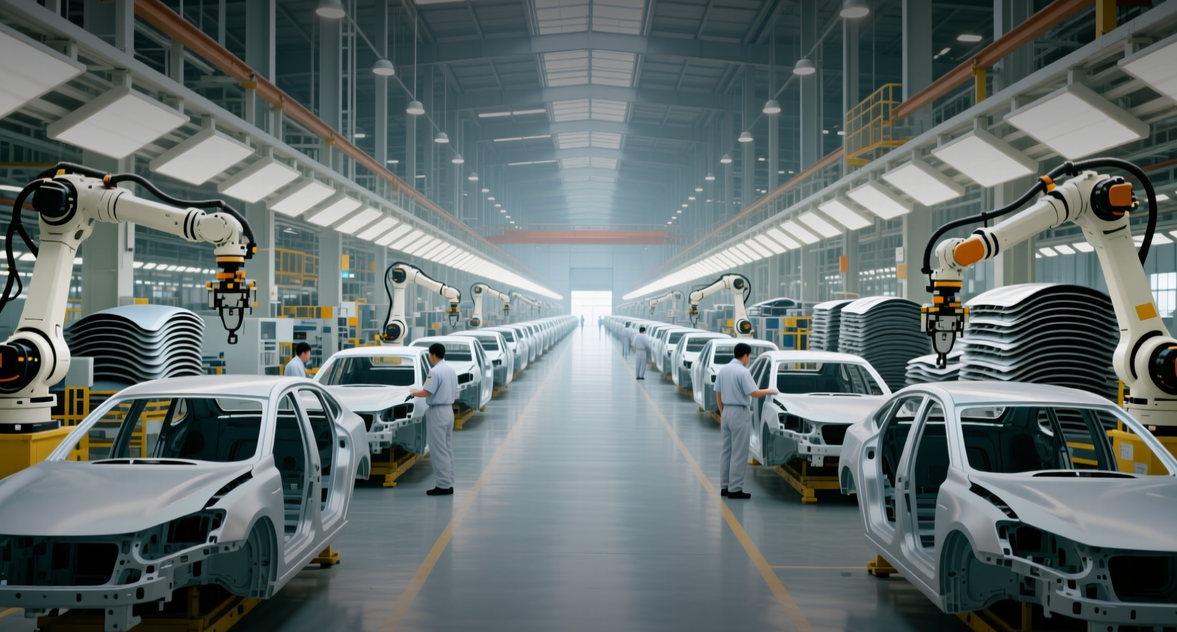
Hyundai Motor Co. plans to invest $26 billion in U.S. operations through 2028, aiming to produce at least 80 percent of the vehicles it sells domestically by 2030 as tariffs accelerate its localization push.
"Tariffs are helping accelerate our localization plan. That's very, very simple," José Muñoz, chief executive officer of Hyundai Motor, said in an interview with CNBC. "The good thing is that we had already started before tariffs were announced."
The South Korean automaker has grown its U.S. market share from 8.4 percent in 2020 to 11.8 percent through the first half of this year, the largest gain of any major automaker, according to Mobility Global. Sales have climbed 50 percent over that period, making Hyundai Motor Group — which includes Kia and luxury brand Genesis — the fourth best-selling automaker in the country. Tesla, at an estimated 2.1 percentage point gain, is the only company close.
The $26 billion plan includes ramping up the $7.6 billion Metaplant in Georgia from 500,000 units to as many as 800,000 by 2028, which would make it the largest vehicle assembly plant in the U.S. by capacity, surpassing Tesla's Fremont, California, facility. Hyundai shares on the Korea exchange have risen nearly 250 percent since 2020.
President Donald Trump's 15 percent tariff on autos from South Korea has pushed Hyundai to accelerate plans it had already set in motion. The company produced roughly 40 percent of the vehicles it sells in the U.S. domestically in 2024; it now targets at least 80 percent by the end of the decade.
The Georgia plant, which currently builds the electric Ioniq 5 and Ioniq 9 as well as the Kia Sportage hybrid, is central to that effort. Muñoz said the company is weighing whether to lift annual capacity to between 700,000 and 800,000 units by 2028, a move that would eclipse Tesla's Fremont plant at about 650,000 units and make the Metaplant America's busiest auto factory.
The investment is the largest in Hyundai's U.S. history and anchors a "Bold 2030 Vision" plan to lift global sales to 5.55 million vehicles, up roughly 35 percent from last year, with a 6 percent targeted global market share for Hyundai and Genesis. The group plans more than 100 vehicle launches and refreshes by 2030, including 58 in North America, alongside a significant increase in electrified offerings such as extended-range hybrids.
Hyundai entered the U.S. in 1986, followed by Kia in 1993, competing on price against Japanese rivals such as Toyota Motor. Executives say repeated overhauls of quality, design and dealer showrooms have transformed the brands into value plays that offer more than consumers expect at each price point.
"Both Kia and Hyundai are really good at being able to offer more in the vehicle than the consumer expects, and that they expect at that price point," said Stephanie Brinley, associate director of Mobility Global's AutoIntelligence. "It's not about being a 'cheap car.' It's just being able to offer a little bit more than expected."
The group's range now spans Kia and Hyundai entry models starting in the $20,000s to Genesis luxury vehicles topping $100,000. Genesis, which launched in the U.S. a decade ago, has become the fastest-selling luxury brand to reach 1 million global sales, according to the company. Kia, which has grown U.S. sales roughly 45 percent since 2020, targets 1.02 million U.S. vehicles by 2030, helped by its entry into pickup trucks and body-on-frame SUVs.
The stakes extend beyond Hyundai. As the second most profitable automaker globally by operating income, the group's U.S. expansion shows confidence in domestic manufacturing at a time when trade policy is reshaping supply chains across the industry. Muñoz said the company is also assessing opportunities in body-on-frame vehicles, which could require additional U.S. capacity.
This article is for informational purposes only and does not constitute investment advice.
