
Huawei's Qiankun autonomous driving platform now spans 25+ brands and 50+ models, pushing the technology below 100,000 yuan and forcing early partners to fight for differentiation.
Huawei's Qiankun autonomous driving platform now spans 25+ brands and 50+ models, pushing the technology below 100,000 yuan and forcing early partners to fight for differentiation.
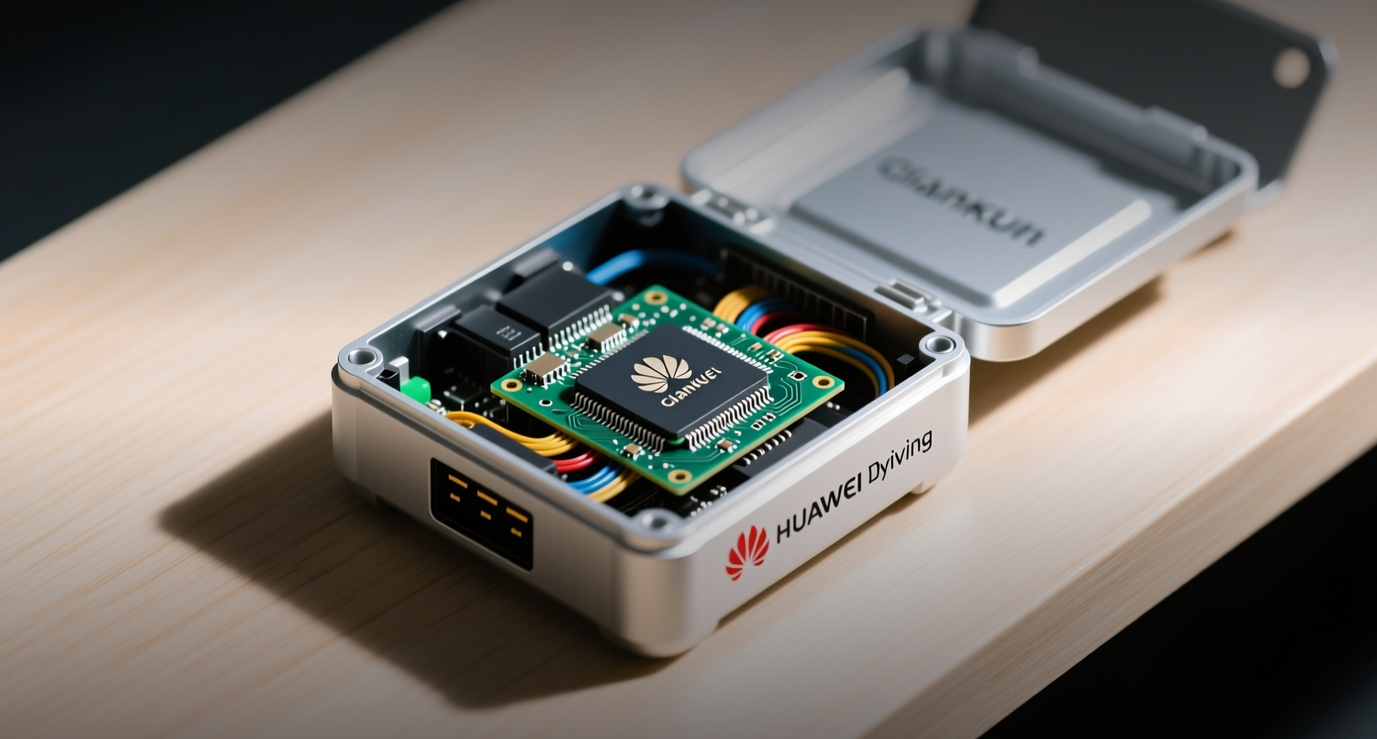
Huawei's Qiankun autonomous driving platform now spans 25+ brands and 50+ models, pushing the technology below 100,000 yuan and forcing early partners to fight for differentiation.
Huawei's Qiankun autonomous driving platform now spans 25+ brands and 50+ models, pushing the technology below 100,000 yuan and forcing early partners to rethink their edge. The rapid expansion has turned the "Huawei" label from a rare badge into a common feature, and automakers that once relied on it to justify premium pricing are scrambling to explain why consumers should still choose them.
Yong Jun, vice president of Avatr Technology, said at an August 8 media briefing that he hopes Huawei becomes a public platform on which Avatr builds differentiation. His added remark that the cooperation model "is not necessarily a required element" triggered market debate, though Avatr later clarified the comment referred to its exclusive customization model, not a rejection of the overall partnership.
The expansion is accelerating. Dongfeng Fengxing's Xinghai V6, launched August 6, starts at 89,900 yuan and markets itself as a "10万-level" vehicle with Huawei Qiankun ADS 5 SE. Above SE sit Pro, Max, and Ultra tiers spanning the 200,000 to 450,000+ yuan price bands. Huawei disclosed in July that Qiankun has partnered with over 25 brands across more than 50 models.
The platform's scale is substantial. Qiankun ADS logged 10.47 billion km of cumulative assisted driving through April 30, 2026, with 1.43 million monthly active users and a 94.8 percent adoption rate. Huawei targets equipping 80+ vehicle models by end of 2026, with cumulative installations approaching 3 million units. For partners like Avatr — which holds a 10 percent stake in Yinwang, the Huawei Qiankun entity — the question is whether the "Huawei" halo can still justify premium pricing when the same technology sits in a sub-100,000 yuan vehicle.
The Differentiation Problem
Avatr's dilemma is structural. As an early adopter, it built its 300,000-yuan brand identity on a combination that was rare: Huawei's high-level autonomous driving and smart cockpit, Changan's vehicle engineering, and CATL's battery technology. That combination is no longer exclusive. The same Qiankun technology now appears across brands including BYD, Dongfeng, FAW, Changan, GAC, and BAIC, with technology tiers standardized into SE, Pro, Max, and Ultra packages.
The "Huawei content" varies by cooperation model. In the component model, automakers purchase individual systems. In the full-stack model, Huawei's Qiankun team integrates multiple intelligent capabilities into the vehicle. Avatr's HI PLUS model extends this to user insight, product definition, development, and integrated marketing. Harmony Intelligent Mobility goes further, with Huawei's consumer business also involved in brand management, marketing, retail, and service.
But on the consumer front, these distinctions collapse into a single phrase: "equipped with Huawei." Marketing naturally pushes the shared label, while the differences in sensors, computing power, feature boundaries, and vehicle calibration require a spec sheet and a long test drive to explain.
The Cooperation Calculus
For new brands, the Huawei label is the fastest cold-start mechanism. Qijing, a joint venture between GAC and Huawei, confirmed on August 13 that its "big principle" of cooperating with Huawei Qiankun "will not change." Voyah CEO Lu Fang said on August 10 that Huawei Qiankun sits in the first tier of high-level autonomous driving implementation capability, calling mature urban autonomous driving a key threshold for mid-to-high-end vehicles.
Huawei's involvement goes deep. A team of hundreds from Huawei Qiankun is stationed in Guangzhou, working alongside Qijing's engineers. Huawei has also imported its IPD product development and IPMS marketing processes into projects, making every participant responsible for the vehicle's results, not just their component.
This depth creates a self-reinforcing loop. The first vehicle is developed around Qiankun's interfaces, review processes, and launch cadence; the next vehicle follows the same path because it is the safest option. The more sales depend on the "Huawei" label, the more internal resources flow toward the same route.
For traditional automakers, the alternative is building their own product management system, hardware-software coordination, and channel feedback loops — an organizational capability that takes multiple real vehicle cycles to validate. Under sales pressure, few have that time.
The real dividing line is not how much "Huawei" appears in a vehicle, but where the Yinwang team stops in the product chain, whether Huawei's consumer business enters the brand and sales front, and which results the automaker owns. An executive at a deeply partnered automaker told Wall Street CN that even with deep Huawei cooperation, brands must maintain their own user center — a dedicated, independent channel that feeds customer feedback back into technology and engineering. Only by keeping that loop in-house does the shared Qiankun technology base become the foundation for the next vehicle.
Avatr's immediate task is not proving it can switch away from Huawei. It is making its design, chassis, vehicle integration, and user operations continue to support its premium positioning. If those capabilities can be reused across models, the sales and awareness generated by Qiankun will accumulate as Avatr's own brand equity.
The competitive stakes are measurable. Huawei's Qiankun ADS vehicles travel an average of 7.87 million km before a serious collision — 4.37 times the Chinese national average of 1.80 million km. The safety data, combined with the platform's scale, gives Huawei a powerful argument for regulatory approval of true L3 operation on Chinese public roads. If that approval comes, the gap between Huawei-equipped vehicles and those without will widen further.
For listed companies, the implications are direct. Changan Auto (000625.SZ), which signed a new strategic agreement with Huawei on August 11 covering AI products, foundation models, digital infrastructure, and computing power, is deepening its bet on Huawei's technology stack. Seres, which acquired 919 AITO trademarks and 44 design patents from Huawei for 2.5 billion yuan in 2024, continues to operate within the Harmony Intelligent Mobility system. BAIC BluePark and GAC are similarly positioned. The question for investors is whether these partnerships translate into sustained sales growth and brand premium — or whether the "Huawei" label becomes a commodity that no single brand can own.
This article is for informational purposes only and does not constitute investment advice.
