

**Hewlett Packard Enterprise's record $5.9 billion AI systems backlog shows enterprises are moving AI workloads from public cloud to their own infrastructure.
**Hewlett Packard Enterprise's record $5.9 billion AI systems backlog shows enterprises are moving AI workloads from public cloud to their own infrastructure.
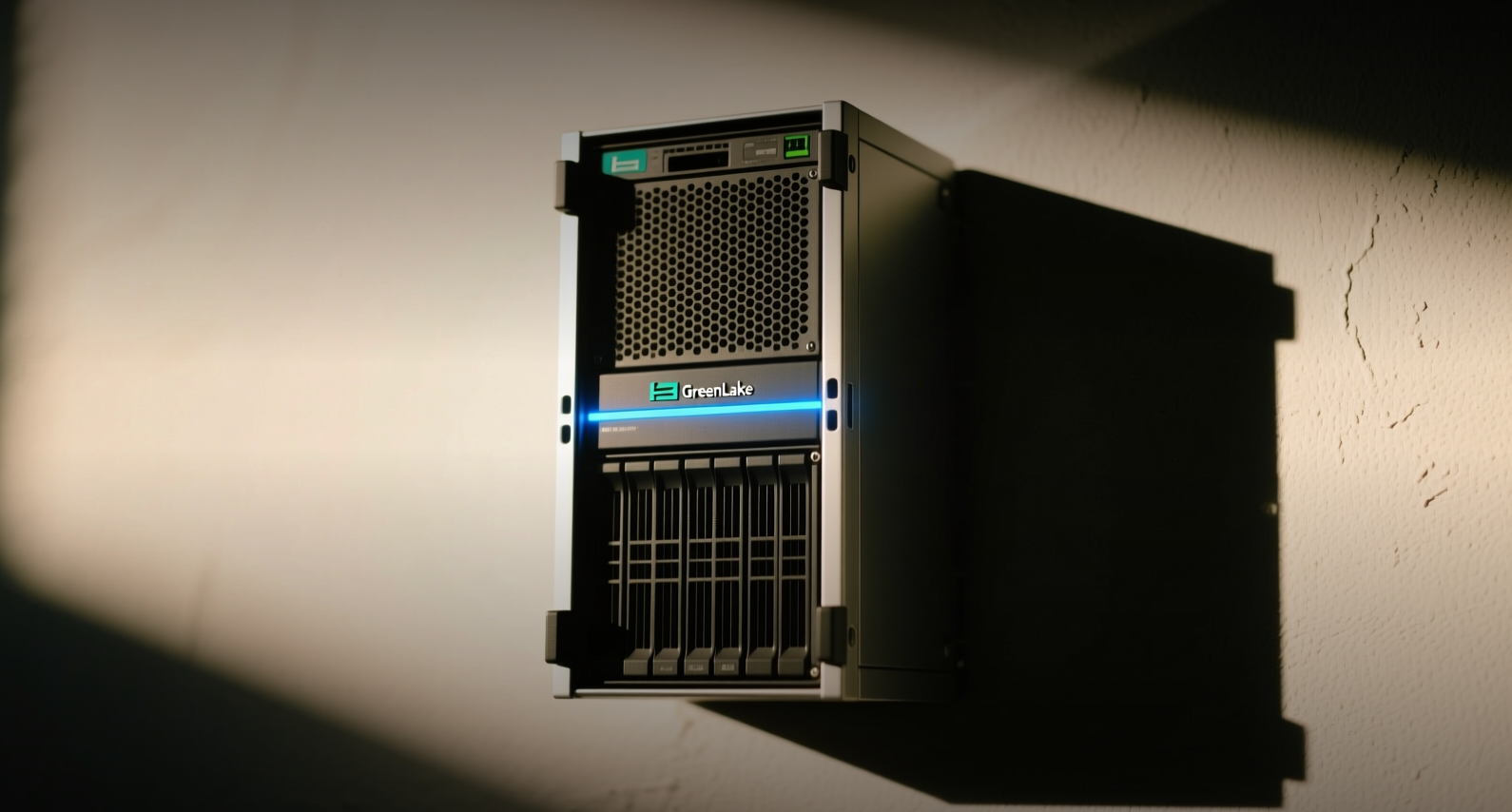
Hewlett Packard Enterprise's record $5.9 billion AI systems backlog shows enterprises are moving AI workloads from public cloud to their own infrastructure.
Hewlett Packard Enterprise's Private Cloud AI business is gaining traction as enterprises deploy artificial intelligence on their own infrastructure rather than relying solely on public cloud providers, the company's second-quarter fiscal 2026 results show.
"Customers are increasingly adopting Private Cloud AI alongside investments in compute infrastructure and unstructured data storage, reflecting a growing preference for secure, on-premises AI environments," HPE management said in its earnings release.
The company's Cloud & AI segment generated $7.7 billion in revenue, up 23 percent from a year earlier. HPE reported a record AI systems backlog of $5.9 billion, including $1.8 billion in new AI systems orders. About 60 percent of the backlog came from sovereign nations and enterprise clients, according to a Seeking Alpha report. The GreenLake platform now manages more than 6.7 million systems, up from 5.3 million a year earlier, serving roughly 50,000 customers.
The backlog provides meaningful visibility into future deployments at a time when Microsoft Chief Executive Officer Satya Nadella has warned that enterprises effectively pay for intelligence twice when using public cloud AI — once through token fees and again through the proprietary data they must expose. That argument is resonating with regulated industries and sovereign governments seeking to keep sensitive data within their own tenant boundaries.
HPE's performance mirrors a broader industry shift. Dell Technologies reported over $24 billion in AI orders last quarter with a $51 billion backlog, while management noted customers are seeking integrated solutions they can deploy on infrastructure they control. Cisco, through its Splunk acquisition and NVIDIA partnership, has also begun competing more aggressively in the AI networking and integrated AI Pods segment.
The enterprise AI infrastructure market is evolving beyond simple GPU server procurement. Companies are demanding pre-integrated stacks of servers, storage, and networking that can be deployed on-premises with the same operational simplicity as public cloud. HPE's acquisition of Juniper Networks last year positions it to deliver an integrated on-premise stack for organizations building their own AI capabilities.
Agentic AI Creates New Demand for Private Infrastructure
The next wave of enterprise AI spending may accelerate this trend. Gaurav Tewari, founder of Omega Venture Partners, argues that AI agents are shifting from generating content to coordinating work across enterprise systems. A single manufacturing procurement request can touch four or five systems before it resolves, requiring orchestration that keeps context, permissions, and audit trails intact.
Gartner estimates that more than 40 percent of agentic AI projects will be canceled by the end of 2027 due to escalating costs or unclear business value. But for those that scale, BCG research found AI-powered workflows could accelerate business processes by 30 percent to 50 percent and cut low-value work time by 25 percent to 40 percent. McKinsey reported that while 88 percent of organizations regularly use AI in at least one business function, only 23 percent are scaling an agentic AI system anywhere in their enterprise — suggesting significant room for infrastructure investment.
HPE shares have gained 90.8 percent year to date, though they have slightly underperformed the broader computer systems industry. The $5.9 billion backlog, combined with the expanding GreenLake installed base of 6.7 million systems, gives HPE a large enterprise audience to cross-sell Private Cloud AI solutions. The key question is whether the company can convert backlog into revenue at margins that justify its current valuation, particularly as Dell and Cisco intensify competition for the same enterprise AI budgets.
This article is for informational purposes only and does not constitute investment advice.
