
Key Takeaways: Washington counts more than 8 million barrels a day crossing Hormuz; trackers see 2 million to 6 million, and Asia's fuel imports are paying the price.
Key Takeaways: Washington counts more than 8 million barrels a day crossing Hormuz; trackers see 2 million to 6 million, and Asia's fuel imports are paying the price.
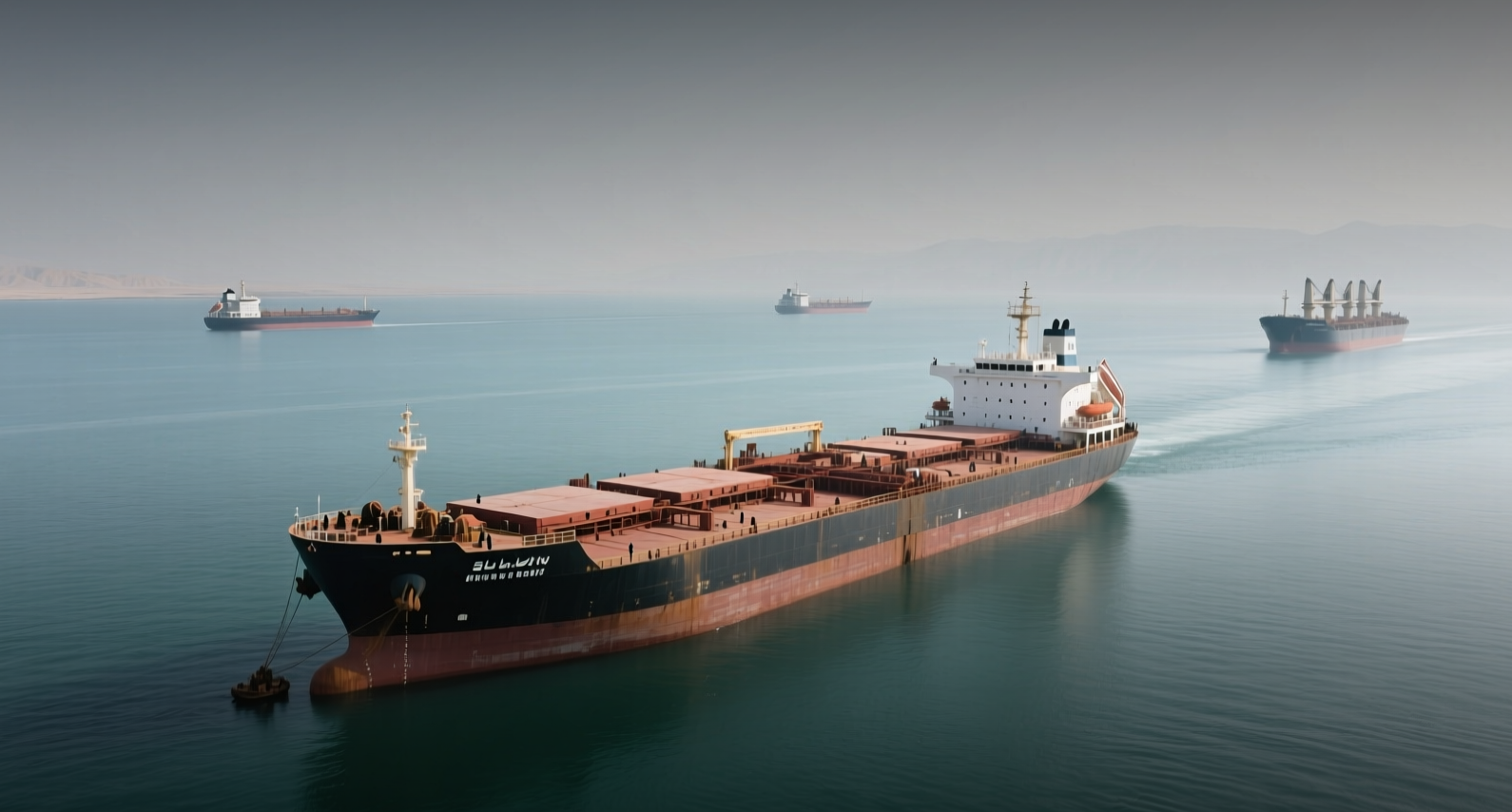
Washington counts more than 8 million barrels a day crossing Hormuz; trackers see 2 million to 6 million, a gap that shows up in Asia's 21 percent drop in refined fuel imports.
"What's remarkable is how similar tanker trackers' numbers are. You'd expect someone to have figured out a way to validate the White House numbers if there was a way," said Rory Johnston, founder of Commodity Context, an oil-market research firm. "As of yet, I haven't seen anyone do it."
Brent crude futures sit near $90 a barrel, well off wartime highs, while Dubai crude has fallen to about $97 from $160 in late March. The gap between physical cargoes and futures, once as wide as $36 a barrel, has narrowed to less than $6, according to Argus Media.
The discrepancy sets expectations for traders and for judging who is winning the economic war of attrition between Washington and Tehran. If trackers are right, supply is tighter than the administration claims and prices have further to climb; if the U.S. count is accurate, the market may be overpricing risk.
Energy Secretary Chris Wright said last week the U.S. military helped move more than 15 million barrels of crude and oil products out of the waterway in a single day, and put the seven-day average above 8 million barrels a day. Commercial trackers disagree. Kpler estimates exports through Hormuz ran at about 2.3 million barrels a day so far in August, down from 4.9 million in July. Huax puts the current range at 2 million to 5 million barrels a day, while Vortexa's 28-day moving average sits near 6 million.
The U.K. Maritime Trade Operations, citing U.S. Navy data, said the U.S. facilitated 74 transits from Thursday through Saturday, about 25 a day, without specifying how many were laden oil tankers. LSEG data on loadings inside the Persian Gulf — oil that must be put on tankers before it can cross the strait — also fails to corroborate the U.S. claims: about 4.4 million barrels a day in July and 1.9 million so far in August. Iraq loaded 1.1 million barrels a day this month, less than a third of prewar levels, while Kuwait loaded 0.5 million, one-fifth of its prewar rate.
The more consequential signal is what is failing to reach Asian refineries. Light and middle distillate imports across Asia fell to about 5.59 million barrels a day in August from a pre-conflict average of 7.08 million, a 21 percent decline that has persisted for two consecutive months. Refinery throughput cuts reached roughly 2.7 million barrels a day in March, and collective Asian diesel, jet fuel, and gasoline exports ran nearly 3 million barrels a day below pre-conflict averages into May.
Singapore gasoil crack spreads, a measure of refining margins, remain about 226 percent above pre-conflict levels at $71.29 a barrel as of Aug. 21, after peaking at a record $85.63 on March 30. Gasoline margins are up 159 percent. The sustained elevation points to a structural shortage rather than a passing shock, because Asian refineries are configured to process Middle Eastern medium-gravity crudes; substituting lighter grades cuts distillate yields.
The pain is unevenly distributed. The Philippines has seen distillate arrivals fall about 29 percent, Indonesia about 19 percent to a 13-month low, while Australia, the world's largest diesel importer, has held volumes near flat at 863,000 barrels a day by paying elevated spot prices. India's surging refined product exports have provided partial relief but have not bridged the gap.
Genuine normalisation depends on restoring medium-gravity crude flows, lifting fuel export restrictions in China, Thailand, and South Korea, and compressing crack spreads back toward historical averages. Most base-case scenarios place a partial recovery no earlier than late Q4 2026, with developing-economy importers absorbing disproportionate supply reductions into early 2027. Iran's threat to fine or detain 46 ships and to target pipeline bypass routes through the Gulf of Oman and Red Sea adds downside risk to that timeline.
This article is for informational purposes only and does not constitute investment advice.
