

Hong Kong-listed semiconductor stocks fell broadly on Monday, with SMIC dropping 8 percent, as investors repriced AI capital spending after Alibaba's HK$80 billion placement.
Hong Kong-listed semiconductor stocks fell broadly on Monday, with SMIC dropping 8 percent, as investors repriced AI capital spending after Alibaba's HK$80 billion placement.
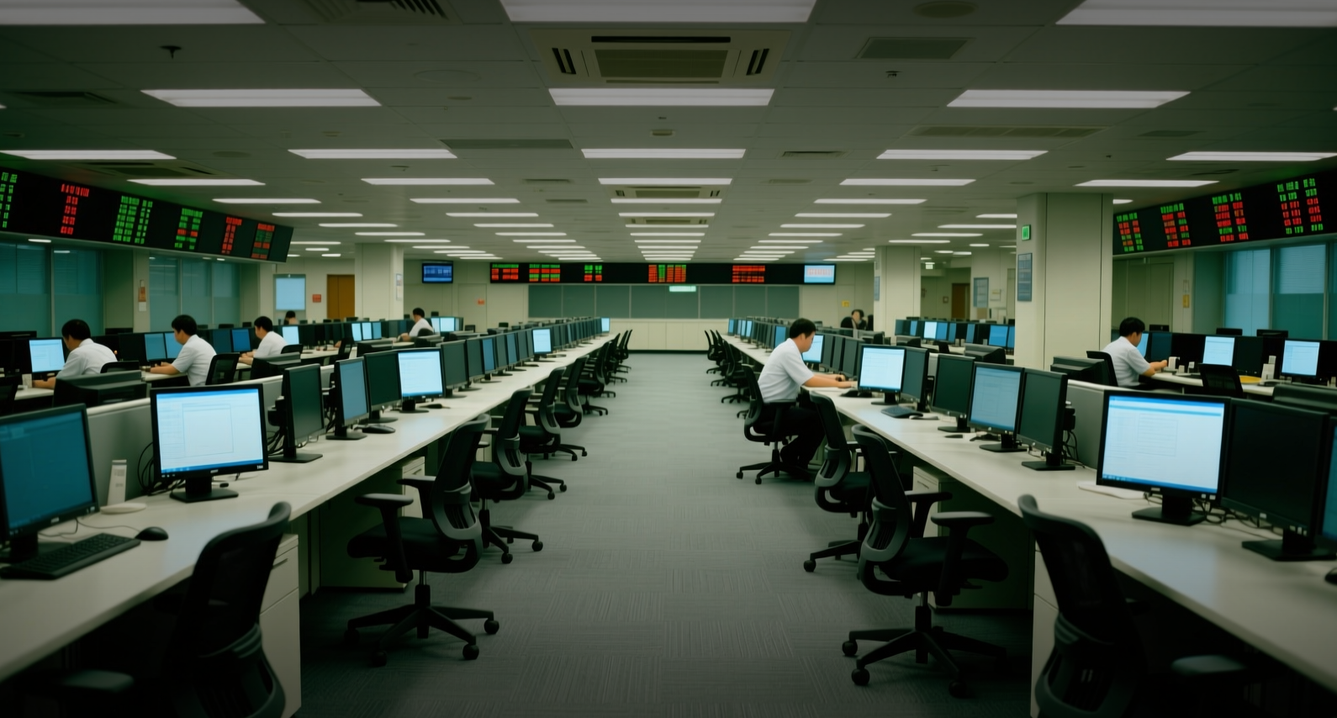
Hong Kong-listed semiconductor stocks fell broadly on Monday, with SMIC dropping 8 percent, as investors repriced AI capital spending after Alibaba's HK$80 billion placement.
The Hang Seng Tech Index fell 3.61 percent Monday, with SMIC (中芯国际, 0981.HK) dropping 8 percent in a broad Hong Kong chip-stock selloff.
The decline tracked a repricing of AI capital spending after Alibaba Group (阿里巴巴, 9988.HK) unveiled an HK$80 billion placement to expand full-stack AI infrastructure, raising dilution concerns even as a Goldman Sachs report lifted China's 2030 semiconductor capital-expenditure target to $82 billion.
GigaDevice (兆易创新) and Hua Hong Semiconductor (华虹宏力) each fell more than 5 percent, while large-model names Zhipu and MINIMAX-W plunged more than 10 percent and Iluvatar CoreX dropped more than 9 percent. The Hang Seng Tech slide mirrored a regional tech rout: South Korea's KOSPI closed down 3.12 percent with Samsung Electronics plunging 8.7 percent, and Japan's Nikkei 225 fell 0.74 percent as Kioxia tumbled 6.24 percent.
The selloff leaves Hong Kong chip valuations exposed to Nvidia's earnings due after Wednesday's close, the next test of AI demand, while traders weigh whether the Alibaba-led repricing marks a rotation out of crowded AI trades. Mainland benchmarks also fell, with the Shanghai Composite down 0.59 percent and the ChiNext Index off 3.21 percent.
The move coincided with three factors: high global bond yields, the approaching U.S. PCE data, and profit-taking after near-term crowding in AI trades, traders said. U.S. stock-index futures pointed lower, with Nasdaq 100 futures down 0.65 percent, as hedge fund Citadel disclosed it had cut semiconductor exposure by more than 80 percent through more than 100 block trades involving over $4 billion, mainly in core AI names including Micron, Nvidia, Broadcom, TSMC, CoreWeave and Nebius.
The market recognizes the long-term AI direction but is beginning to question near-term capital spending, financing dilution and the path to earnings realization, a dynamic that hit both Hong Kong and mainland chip names. The Shenzhen Component Index fell 2.13 percent. Goldman Sachs noted China's semiconductor quantity self-sufficiency rate has risen to 70 percent and initiated coverage on ChangXin Memory with a Buy rating, though short-term sentiment remains suppressed by global risk appetite.
The selloff extended a slide that began Friday, when Alibaba's U.S. shares fell 8.58 percent after the placement was announced, and continued in after-hours trading with a further 4.16 percent decline. Rising Japanese long-term bond yields, yen volatility and cooling global risk appetite jointly pressured Japanese stocks, especially export, semiconductor and AI-related heavyweights that had gained the most, while Hong Kong's selloff was concentrated in large-model, chip and internet names. The regional weakness came as investors awaited Nvidia's quarterly results, with Jefferies expecting July-quarter revenue of $95 billion and Morgan Stanley more cautious at $91.2 billion.
This article is for informational purposes only and does not constitute investment advice.
