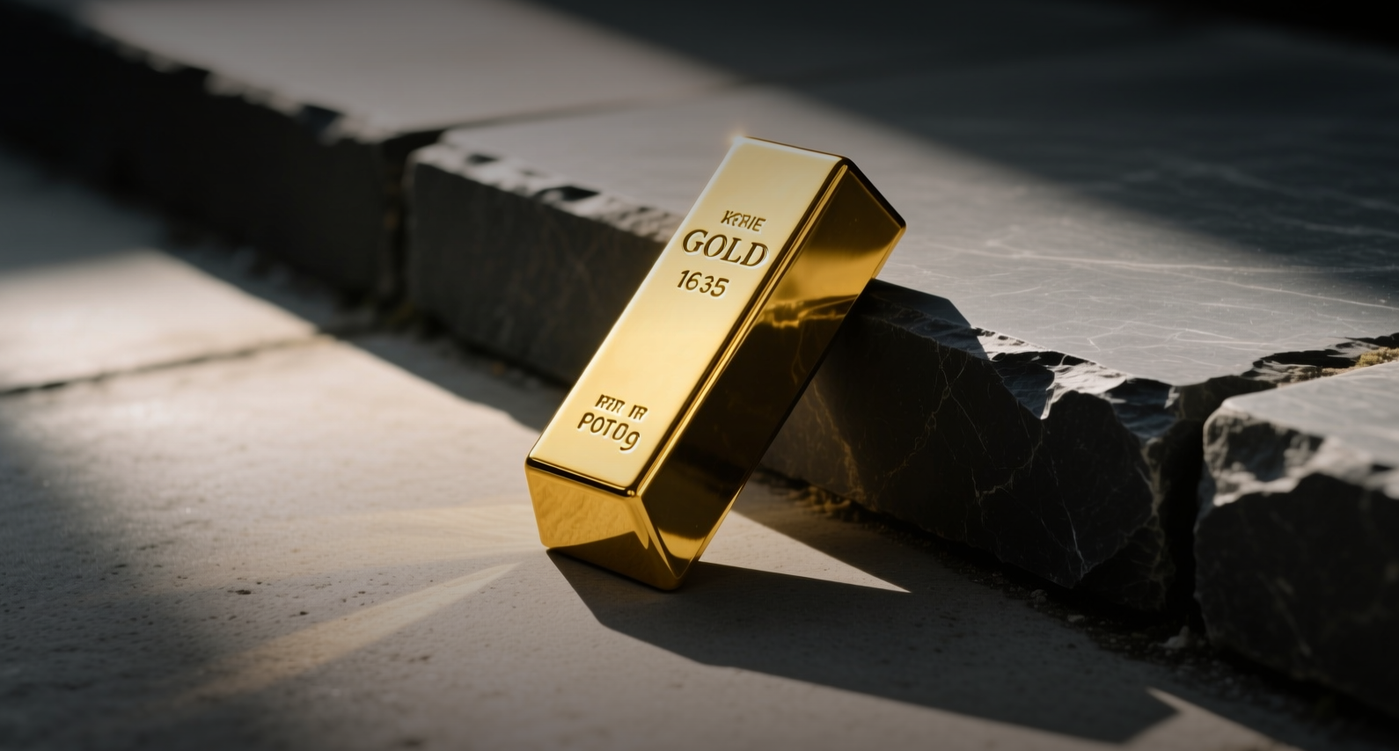
Gold's 25-year bull market makes it a core defensive asset as the 60/40 portfolio loses hedging power, Morgan Stanley's Wilson said.
"We've been a very big advocate of gold, not so much as a yielding instrument, but as a defensive asset," Mike Wilson, chief US equity strategist and CIO at Morgan Stanley, said in a Bloomberg TV interview.
Morgan Stanley holds a $5,200 per ounce gold target for the second half of 2026, though commodity strategists Amy Gower and Martijn Rats warned on June 22 that ETF inflows must rebound for the price to reach that level. The bank projects Fed rate cuts in January and March 2027.
Gold's sensitivity to monetary policy has overtaken its safe-haven status as the key price driver, with the Iran conflict's energy supply shock reducing hopes for lower US interest rates. The Fed's hawkish June tone raised expectations of higher-for-longer rates, increasing the opportunity cost of holding non-yielding assets.
2022's 60/40 Breakdown Reshapes Portfolio Logic
Wilson pointed to 2022 as the inflection point, when stocks and bonds declined together for the first time in many investors' lifetimes, leaving no hedge. Even though the equity decline was less severe than in 2008 or 2001-2002, the 60/40 portfolio suffered similar losses, making investors hesitant to re-enter the market.
"Chasing stocks is as damaging as selling stocks at the bottom in my view," Wilson said. "That's why we like dollar-cost averaging, that's why we still like diversified portfolios."
Wilson described 2026 as featuring a major commodity rotation, starting with gold and silver stocks after the Federal Reserve began its reserve management program at the end of last year, followed by rare earths, metal stocks, energy stocks, and semiconductors. He noted all these assets share commodity-like characteristics, suggesting investors are seeking non-equity exposure to offset equity risk.
$5,200 Target Hinges on ETF Flows
Gower reiterated her call on May 6 for gold to end the year around $5,200 per ounce, citing renewed momentum. She said gold's sensitivity to monetary policy has taken over as the key price driver, overshadowing its safe-haven status and reducing its effectiveness as a hedge against geopolitical and inflation risks.
"Gold prices reflect not just the impact of a particular event but, more importantly, the policy response that follows," Gower said.
The longer the Iran conflict continues, the greater the risks for gold, Gower warned, as markets might anticipate prolonged rate holds or even hikes, potentially constraining demand from ETFs, central banks, and consumers. Gold spot traded near $4,400 per ounce in mid-August, with silver at $65.14, according to market data.
This article is for informational purposes only and does not constitute investment advice.