

Goldman Sachs projects 5,288 SpaceX AI missions by 2031, each carrying satellites that could require millions of Nvidia accelerators — and the memory to power them.
Goldman Sachs projects 5,288 SpaceX AI missions by 2031, each carrying satellites that could require millions of Nvidia accelerators — and the memory to power them.
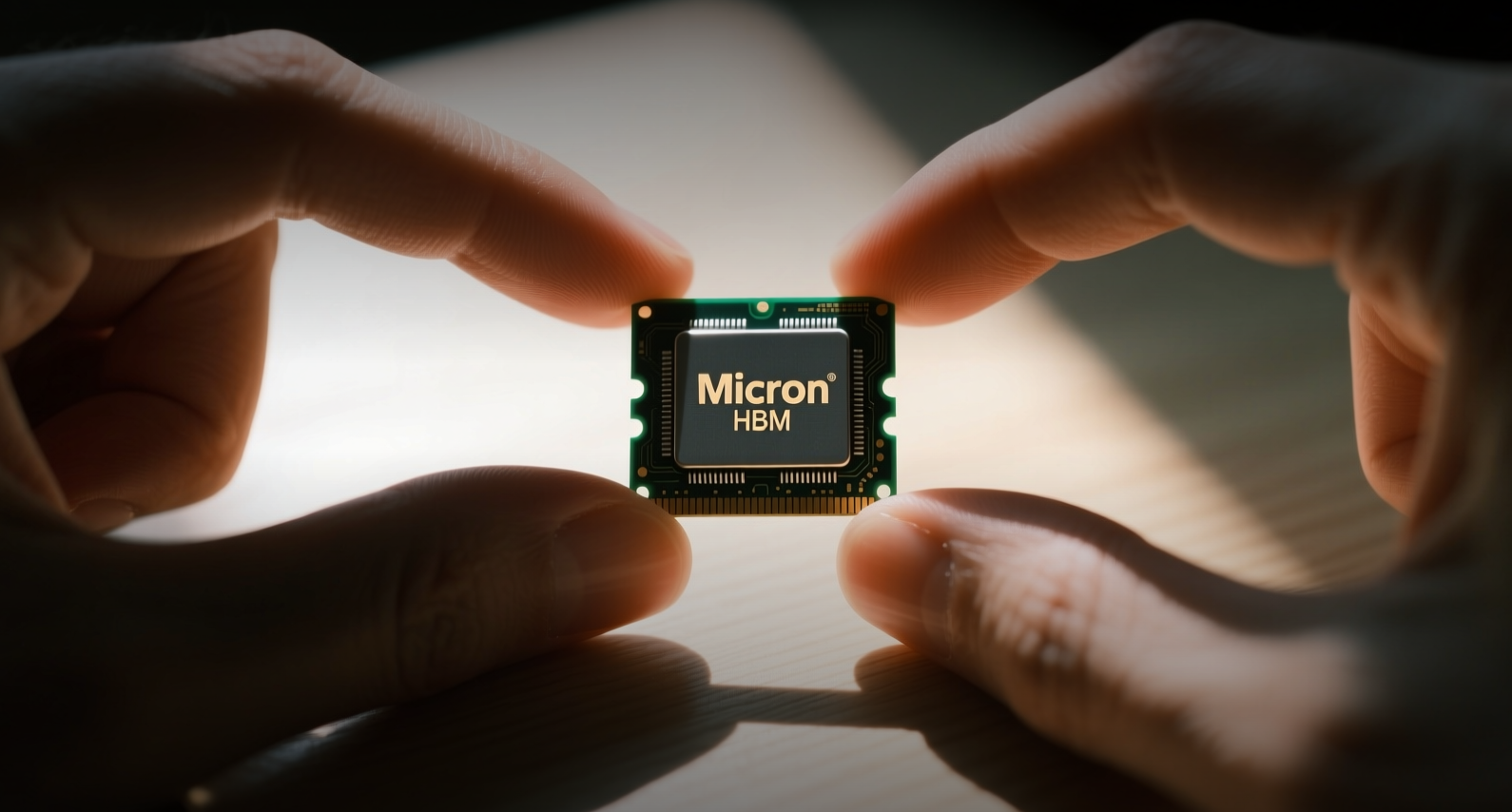
Goldman Sachs' forecast for SpaceX's Starship program envisions 5,288 dedicated AI missions by 2031, each carrying 30 to 50 AI satellites that could require millions of Nvidia accelerators — and the high-bandwidth memory to power them.
"Memory, not GPUs, is the critical bottleneck in AI infrastructure," Toshiya Hari, semiconductor analyst at Goldman Sachs, said in the research note.
Each satellite would house roughly one GB300-equivalent AI rack, with Nvidia's Blackwell architecture requiring eight HBM stacks per accelerator. Some analysts extrapolating the assumptions estimate the cumulative installed base could exceed 200 million accelerators by 2031 if every projected mission ultimately flies.
Even a fraction of that deployment would demand memory production on a scale the industry has never attempted. Micron Technology, one of only three companies capable of manufacturing leading-edge HBM alongside SK hynix and Samsung, has already locked in long-term supply agreements extending well into future production cycles.
The Memory Bottleneck Behind the GPU Narrative
The AI discussion often centers on Nvidia's graphics processing units, but those accelerators cannot function without enormous quantities of HBM — a specialized type of DRAM stacked vertically to deliver extreme bandwidth while conserving physical space. Each Nvidia Blackwell accelerator requires eight HBM stacks, meaning a single AI rack containing dozens of accelerators needs hundreds of stacks before accounting for conventional DRAM and NAND flash storage throughout the system.
Goldman Sachs' scenario implies that orbital AI data centers could eventually consume every advanced wafer Taiwan Semiconductor Manufacturing Co. could produce. Even if that estimate proves exaggerated, it illustrates the scale of demand being discussed behind closed doors at the world's largest chip foundries.
Micron has already disclosed long-term HBM supply agreements that extend well into future production cycles, reflecting how constrained supply remains relative to projected demand. The company, along with SK hynix and Samsung, controls the entire addressable market for leading-edge HBM — a triopoly that gives each supplier outsized pricing power as AI infrastructure spending accelerates.
The Contradiction Buried in the Forecast
Goldman Sachs' projections assume orbital AI data centers could cost roughly $15 billion to $20 billion per gigawatt, well below the $28 billion to $32 billion per gigawatt typical of terrestrial AI facilities. However, that cost advantage depends on a future SpaceX-Tesla Terafab manufacturing effort producing custom AI chips internally rather than continuing to rely primarily on Nvidia hardware.
In other words, the model initially assumes enormous Nvidia deployment, while the long-term economics become more attractive only if Nvidia eventually becomes less central. Early missions during 2027 and 2028 would almost certainly be demonstration projects before any meaningful scaling occurs, and Starship must achieve routine launch reliability while regulators approve thousands of launches.
What This Means for Investors
For Micron investors, the precise mission count matters less than the direction of travel. Even if Starship completes only a fraction of those launches, AI infrastructure demand appears poised to outgrow memory supply for years. Every advanced accelerator needs HBM, and every AI rack requires even more conventional memory around it.
Micron shares have benefited from the broader AI memory narrative, with the company trading at roughly 10 times forward earnings estimates — a discount to Nvidia's multiple but a premium to traditional DRAM peers. The Goldman Sachs endorsement adds a high-growth premium to the thesis, though investors should weigh the execution risk: Starship must achieve routine launch reliability, regulators must approve thousands of launches, and orbital data centers must prove technically and economically viable.
Whether those chips sit inside terrestrial hyperscale data centers or eventually orbit Earth, Micron remains one of the few companies positioned to supply a resource the entire AI industry cannot function without.
This article is for informational purposes only and does not constitute investment advice.
