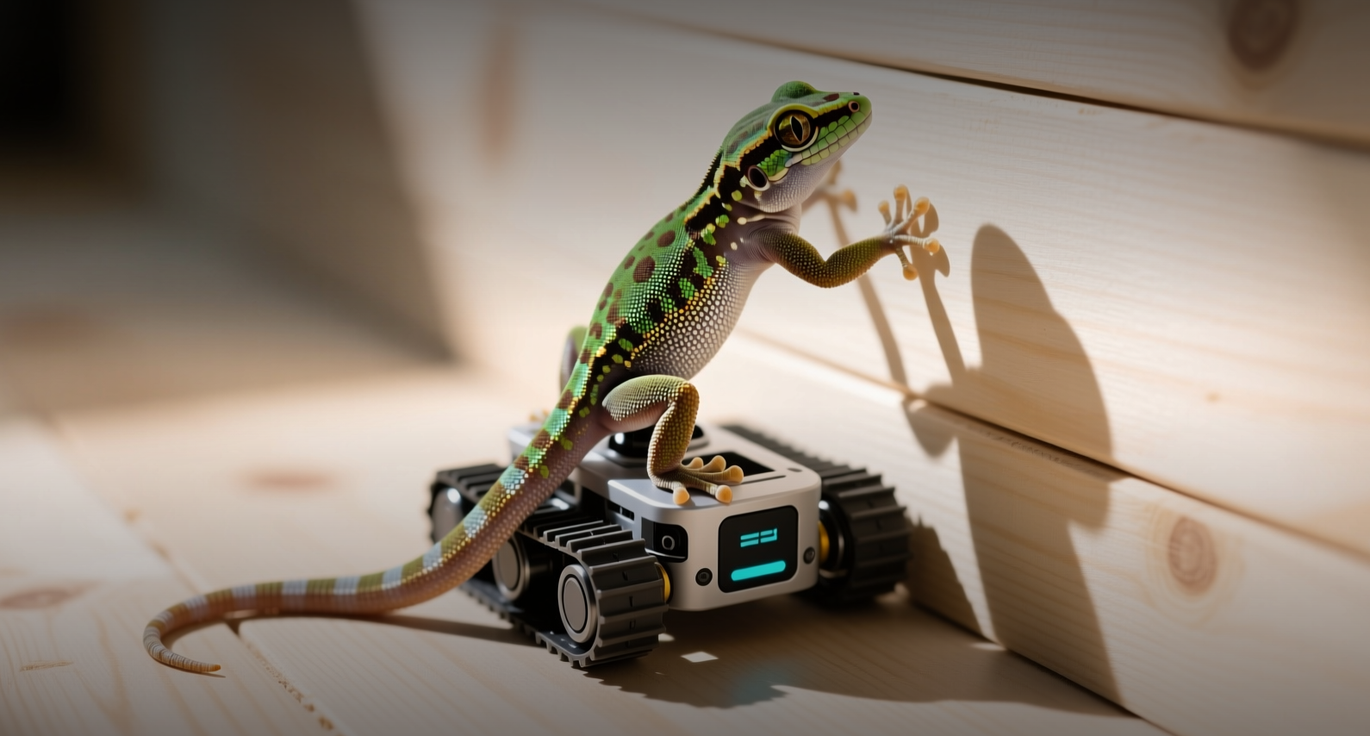
The US is spending billions to reindustrialize defense manufacturing with AI, and Pittsburgh has become a proving ground.
The US-China AI arms race is shifting from software to hardware, with Pittsburgh robotics startups securing hundreds of millions in defense contracts to automate military manufacturing and maintenance. The urgency reflects a growing recognition that American industrial capacity has eroded after decades of offshoring, leaving critical supply chains vulnerable.
"AI is becoming critical to America's defense capabilities, from autonomous inspections to predictive maintenance," Jake Loosararian, co-founder and chief executive officer of Gecko Robotics, said on Fox Business.
Gecko Robotics, a Pittsburgh-based unicorn valued at more than $1 billion, secured a five-year contract worth as much as $71 million from the US Navy to assess and maintain military assets using autonomous robots. The company plans to open a 10,000-square-foot manufacturing facility in Sewickley, Pennsylvania, within weeks. The contract is part of a broader wave of investment: the Defense and Innovation Summit in Carlisle, Pennsylvania, generated $10 billion in national investment announcements, with Pittsburgh companies capturing a significant share.
The spending spree reflects a recognition that US manufacturing infrastructure has atrophied after decades of offshoring, leaving the military dependent on aging equipment and foreign supply chains. For investors, the question is which companies can scale fast enough to meet demand — and whether Chinese AI labs producing competitive models at half the cost will erode the US technological edge before reindustrialization takes hold.
Pittsburgh's Defense Tech Boom
Beyond Gecko, a cluster of Pittsburgh-area companies announced major contracts and investments at the summit. Energy storage manufacturer EOS entered a multi-million partnership with the Department of War to build battery storage for America's Golden Dome missile defense system. Software defense firm Govini, now operating as Air, announced a 10-year, $450 million expansion of its Pittsburgh office. Swiss testing company Acutronic Group pledged $14 million to $30 million for a new facility that would be the largest in the world built for aerospace and defense stress-testing, adding about 100 jobs.
Carnegie Mellon University committed $50 million from its National Robotics Engineering Center to launch the Autonomous Systems Manufacturing Platform, a shared facility that lets drone companies scale production without building capabilities from scratch. Two drone suppliers already working with the Department of War, ViDARR and Envision Technology, will be the first to use the platform. Separately, a $10 million classified facility at Hazelwood Green's Mill 19 will let local tech companies work with the government on sensitive defense projects.
The Chinese Competitive Threat
The urgency of the reindustrialization push is amplified by rapid advances from Chinese AI labs. Beijing-based Moonshot AI last week unveiled Kimi K3, a model it claims outperforms nearly every US system except OpenAI's GPT-5.6 Sol and Anthropic's Claude Fable 5. Moonshot is pricing Kimi K3 at $15 per million output tokens, half the cost of GPT-5.6 Sol at $30 and less than a third of Fable 5 at $50. Days later, Alibaba previewed Qwen3.8, describing it as "second only to Fable 5."
Six of the top 10 AI tools on OpenRouter's leaderboard are now Chinese, and US startups are already turning to cheaper Chinese models as domestic inference costs surge. Both Moonshot and Alibaba plan to release their models as open weight, allowing developers to modify and deploy them freely — a contrast to the closed approach of OpenAI, Anthropic and Google.
The competitive pressure extends to cybersecurity. Reports show Kimi K3 identified and fixed vulnerabilities that OpenAI's Codex and Anthropic's Fable would not touch due to safety guardrails, raising questions about whether US restrictions on model access are creating a security gap rather than closing one.
Investment Implications
For investors, the defense AI theme presents a dual narrative. On one side, companies like Gecko Robotics, EOS and Govini are direct beneficiaries of a multi-year government spending cycle that shows no signs of slowing. Pennsylvania alone has about 9,000 defense-related companies employing some 90,000 people, according to Senator David McCormick. On the other, the rise of capable, cheaper Chinese AI models threatens the valuation assumptions underpinning US AI leaders. OpenAI and Anthropic are both preparing for potential trillion-dollar IPOs, valuations that depend on continued global dominance. If Chinese labs can match US performance at half the cost, those assumptions may need revision.
Gecko Robotics' Navy contract and the broader Pittsburgh investment wave suggest the US is serious about rebuilding defense manufacturing capacity. But the timeline for reindustrialization — measured in years — may not match the pace of Chinese AI advances, measured in months.
This article is for informational purposes only and does not constitute investment advice.