

Key Takeaways:
- FPF Defense secures co-led investment from RSE Ventures and Ondas Inc.
- The Hammerhead interceptor costs low tens of thousands of dollars per shot
- SmartFlak system targets the 9-to-20-kilometer air-defense engagement gap
Key Takeaways:
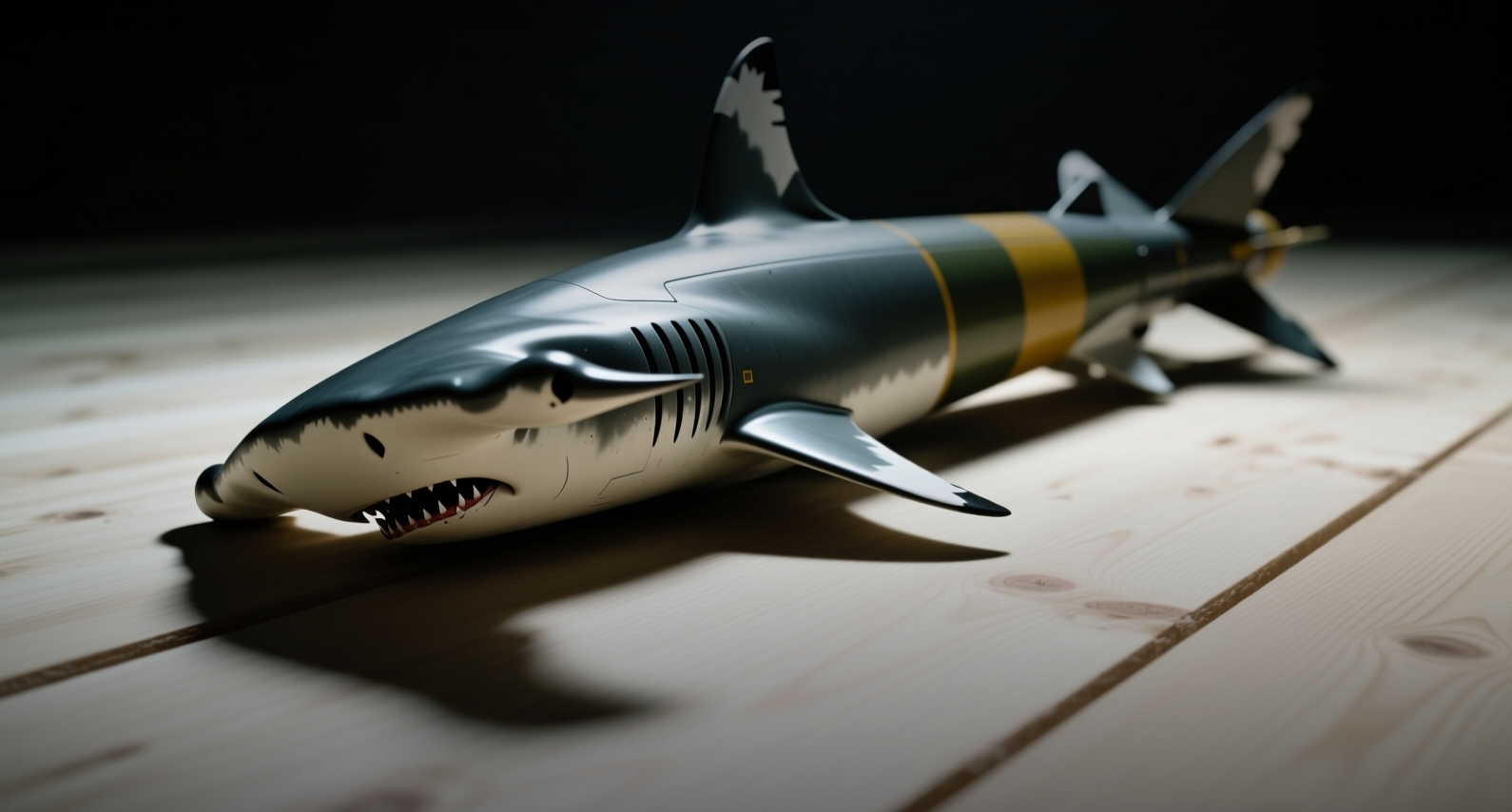
A former acting defense secretary is building a $20,000 drone interceptor to solve the military's most expensive battlefield problem.
The US military's cost-asymmetry problem in drone warfare — where a $50,000 Shahed attack drone can force the launch of a multimillion-dollar missile — is drawing private capital into a new class of cheap, autonomous interceptors.
"FPF is how I keep doing that job — making sure no American is ever lost to a threat we had the power to stop," Christopher C. Miller, CEO of FPF Defense and former Acting Secretary of Defense, said.
The investment, co-led by RSE Ventures and Ondas Inc. (NASDAQ:ONDS), will fund FPF's SmartFlak system and its Hammerhead kinetic interceptor, engineered to destroy Shahed-class one-way attack drones at a cost in the low tens of thousands of dollars per shot — a fraction of the legacy missile systems currently used for the same mission.
If successful, the technology could reshape how the Pentagon allocates its air-defense budget, shifting from a model of exquisite, high-cost interceptors toward mass-produced, expendable systems designed for the volume-on-volume realities of modern battlefields in Ukraine and the Middle East.
The Hammerhead interceptor targets the 9-to-20-kilometer engagement gap, a range where cheap, mass-launched drones have inflicted disproportionate damage because existing air-defense systems are either too expensive to use or too short-ranged to reach. A Shahed or Geran-class drone costs an adversary roughly $50,000 to build, while the legacy missile interceptors fired to stop it can cost millions of dollars apiece, according to FPF Defense.
FPF Defense was built by operators who have lived this problem firsthand. Miller spent 27 years as a US Army Green Beret, leading Special Forces teams into Afghanistan after the Sept. 11 attacks and later commanding a battalion from 5th Special Forces Group in Iraq, before serving as Director of the National Counterterrorism Center and Acting Secretary of Defense. His command-and-policy pedigree is matched by a deep technical bench: Dr. Jeff Maas, a former DARPA program manager, serves as Chief Technology Officer, while Grant Fox, who brings experience from the US Navy and the Defense Innovation Unit, serves as Chief Operating Officer. Lieutenant Colonel (Ret.) Christian Sessoms, a career Army Special Forces officer, is the Chief Revenue Officer.
The company is advised by General (Ret.) Austin Scott Miller, former Commander of Joint Special Operations Command and the final Commander of US Forces in Afghanistan, as well as Lieutenant General (Ret.) Robert "Whaler" Walsh, a career Marine aviator who helped lead the Marine Corps' force-transformation efforts.
Building a Defense-Tech Hub in West Palm Beach
As part of the investment, FPF Defense is relocating its headquarters to West Palm Beach, joining Ondas, which has already established its headquarters there as the first of several defense-technology companies expected to anchor the growing cluster in South Florida. RSE Ventures, founded by Stephen Ross and Matt Higgins, has been building a defense and industrialization portfolio alongside Performance Drone Works, the veteran-led combat robotics manufacturer specializing in Group 1-3 unmanned aerial systems.
"The cheapest weapons on the battlefield are getting past the most sophisticated defenses we field," Miller said. "I spent 27 years in uniform and served as Acting Secretary of Defense with one job above all others: protect this country and the people who defend it."
Higgins, who served as Chief Operating Officer of the Lower Manhattan Development Corporation after the Sept. 11 attacks, said the vulnerability of US skies to cheap weaponized drones represents a national security gap that demands a scalable solution. "We cannot defend our homeland from our back foot, nor can we win if defending against a threat costs 10 times more than launching it," he said.
FPF Defense will deploy the investment to accelerate development and production of the Hammerhead interceptor and SmartFlak integrated launch system, establish US-based manufacturing with an NDAA-compliant domestic supply chain, expand engineering headcount across autonomy, systems integration, and propulsion, and build out its West Palm Beach headquarters.
Ondas CEO Eric Brock said the company upholds high standards for its partners. "FPF cleared that bar immediately with a proven team, a cost advantage, and a mission-critical capability that the nation requires at scale," he said.
This article is for informational purposes only and does not constitute investment advice.
