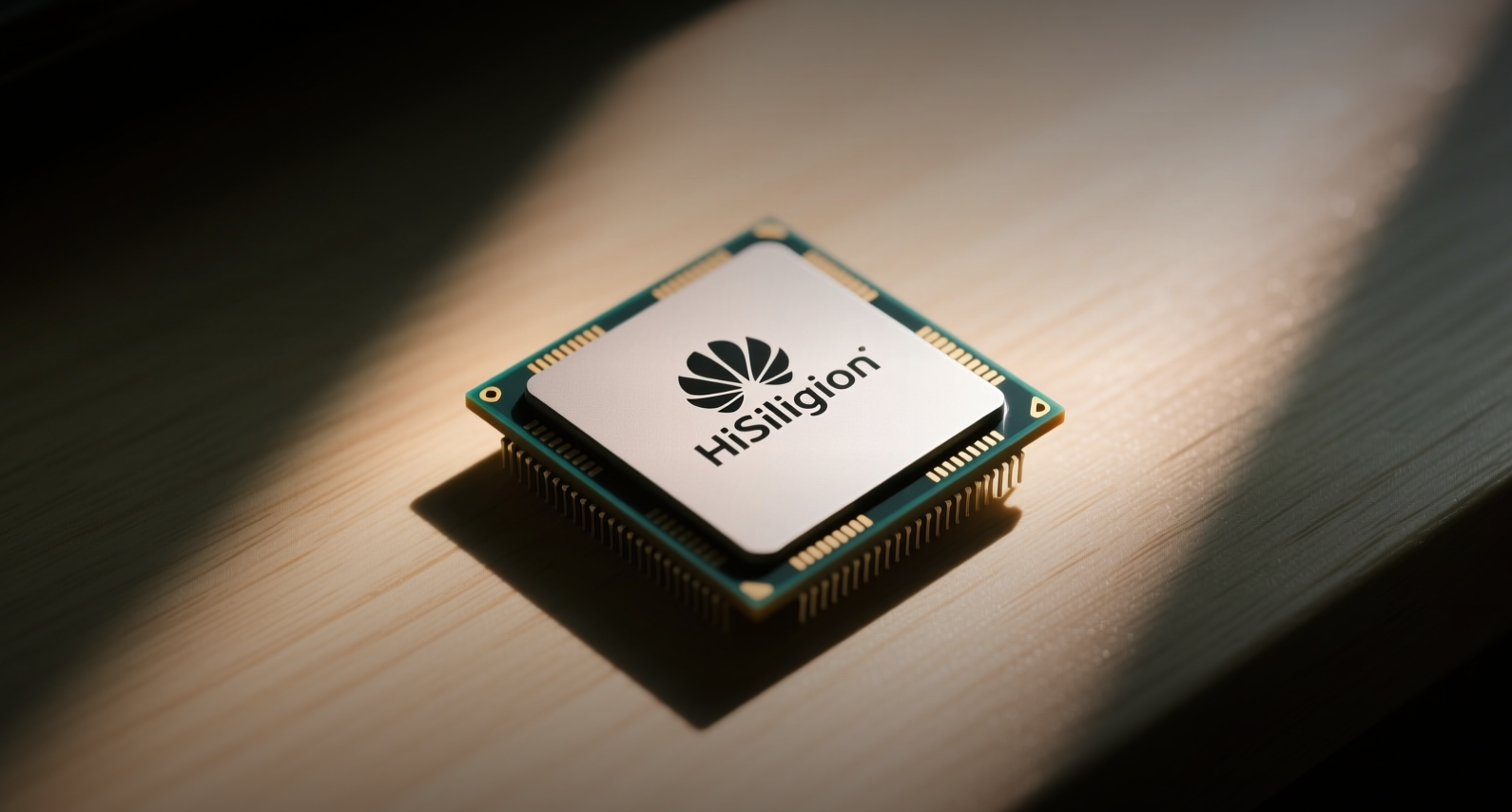
The FCC voted to bar devices containing chips designed by Huawei and other Chinese firms, extending a national security ban from finished products to the semiconductor level.
The Federal Communications Commission voted Tuesday to prohibit US equipment authorization for any device containing logic-bearing chips designed by Huawei, ZTE, or five other Chinese firms, closing a component-level loophole that the agency estimates creates $50 million in annual compliance costs.
"This decision fully closes the component parts loophole that has allowed devices with covered-list processors to reach American consumers," FCC Chairman Brendan Carr said in the July 22 Open Commission Meeting. "The national security benefits exceed $100 million per year."
The order extends the Covered List — which includes Huawei, ZTE, Hikvision, Dahua, Hytera, DJI, and Autel — to prohibit any device whose processor or chipset was designed by those entities, regardless of who assembled the finished product. Passive components such as resistors and capacitors are excluded. The FCC estimates compliance costs at $50 million annually against national security benefits valued at more than $100 million per year, according to the agency's cost-benefit analysis. A companion Further Notice of Proposed Rulemaking would require device applicants to submit a complete bill of materials — the first mandatory supply-chain transparency mechanism for US consumer electronics.
The ban reaches well beyond Huawei-branded products. HiSilicon, Huawei's wholly owned semiconductor unit, has supplied processors to third-party surveillance camera manufacturers including Hikvision and Dahua — both Covered List entities — before US export controls took effect. Companies sourcing chips from HiSilicon or other Covered List subsidiaries face months of redesign, testing, and qualification to find alternatives. Online marketplaces must now display a device's FCC ID at the point of sale, subjecting e-commerce platforms to potential enforcement action under Section 302 of the Communications Act — a legal theory not yet tested in court.
Huawei's Chip Design Unit Now Banned Inside Other Brands' Devices
The FCC's action targets what the agency called the "component part loophole" in its Covered List rules. Previously, a router branded as a US product or a security camera sold under a European label could receive FCC authorization even if its core processor was designed by HiSilicon. The new rules prohibit authorization for any device incorporating "logic-bearing hardware components" produced by a Covered List entity — programmable elements that can execute software or firmware.
The commission added all foreign-manufactured drones to the Covered List in December 2025, banned new Chinese-made consumer routers in March 2026, and expanded the ban to pre-2022 legacy models in June 2026. Tuesday's order moves the prohibition from the assembled-device level to the chipset level — the deepest expansion yet.
Chinese Law Creates Structural Risk Beyond Corporate Assurances
DJI, which controls approximately 70% of the global consumer drone market, was added to the Covered List in December 2025 and is explicitly named in Tuesday's component-level ban. The company has disputed the designation, commissioning an independent security assessment in May 2026 that it said "confirms what DJI has consistently maintained: our products are secure." A US court upheld the Department of Defense's national security designation of DJI in September 2025; DJI filed its appeal the following month.
The structural reason US regulators cannot rely on corporate assurances stems from Chinese law. Article 7 of China's National Intelligence Law, enacted in June 2017, states that all organizations and citizens "shall support, assist, and cooperate with national intelligence efforts in accordance with law." Article 14 allows intelligence agencies to demand assistance. Companion legislation — the Data Security Law of 2021 and Cybersecurity Law of 2017 — imposes data localization and government-access provisions. These obligations apply regardless of where DJI assembles its drones or what its privacy policy states, according to a Department of Homeland Security advisory.
Existing DJI drones authorized before December 22, 2025 remain legal to own and fly in the US — only new product sales are blocked. Commercial operators in sensitive contexts, including energy infrastructure and law enforcement, face increasing pressure to migrate to US-manufactured alternatives such as Skydio.
Beijing has previously characterized Covered List restrictions as protectionist measures violating World Trade Organization rules. The FCC maintains the restrictions are grounded in independently verified national security determinations, including evidence gathered through the intelligence community.
This article is for informational purposes only and does not constitute investment advice.