
Key Takeaways: The strongest El Niño in a generation is reshaping global trade, from record Panama Canal auction fees to suspended anchovy fisheries and copper supply disruptions.
Key Takeaways: The strongest El Niño in a generation is reshaping global trade, from record Panama Canal auction fees to suspended anchovy fisheries and copper supply disruptions.
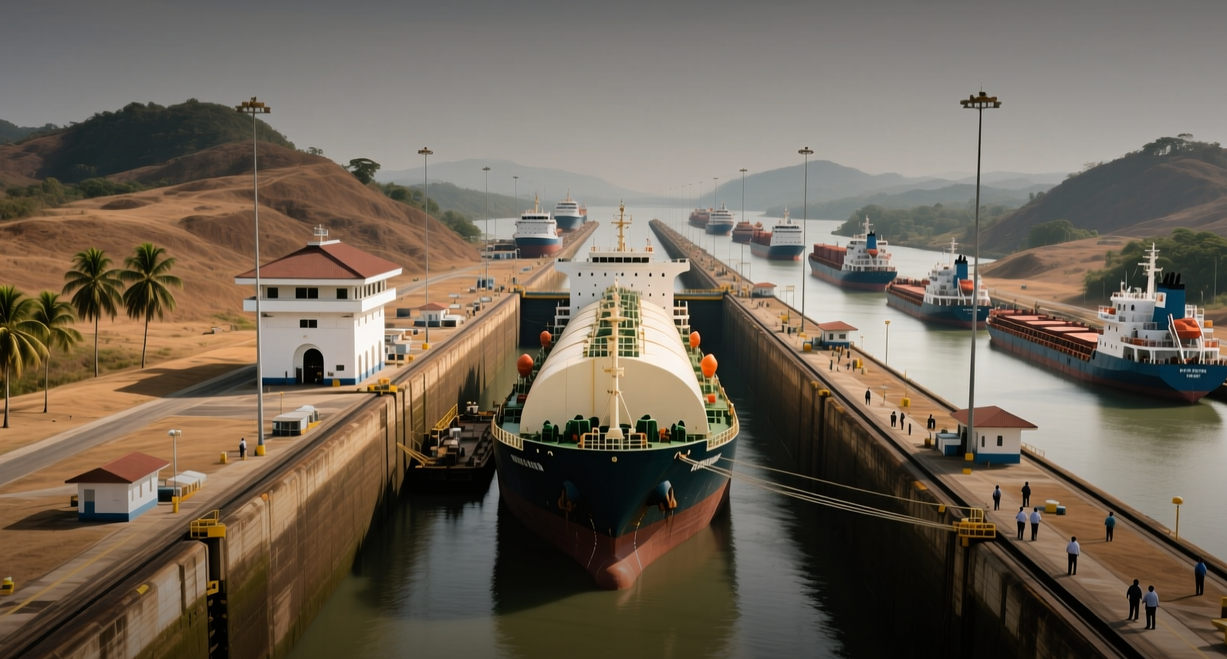
The strongest El Niño in a generation is disrupting global supply chains, driving Panama Canal auction fees to a record $5.3 million and suspending Peru's anchovy catch.
"There's a quite clear signal that this is going to be a potentially generationally strong event, and that means it will have economic consequences that are accordingly quite severe," said Christopher Callahan, a climate scientist at Indiana University.
South Korean shipper SK Gas paid $5.3 million for priority passage of its LPG tanker G. Spirit through the Panama Canal on September 1, breaking the previous record of $4.6 million set earlier in August. The canal authority will cut daily transits from 36 to 34 on September 3, then to 32 later in the month, as El Niño-driven drought depletes the freshwater lakes that operate its locks. Rainfall in Panama between May and August ran 34 percent below the historical average, and wait times for vessels without reservations have stretched to 17 days.
The canal handles roughly five percent of global maritime trade, and the combination of restricted capacity and heightened demand from the Iran war has created a bidding environment where shippers are paying premiums that were unthinkable months ago. With El Niño expected to persist into 2027 — forecast to be the hottest year on record — economists project lower growth and higher inflation across Asia's emerging economies.
Peru's suspension of its anchovy catch has driven fish meal to record prices, benefiting alternative protein producers such as French insect-protein company Innovafeed. "In the last two months we have secured more demand than in the past two years," said Clément Ray, the company's chief executive.
Chilean copper producer Antofagasta cut its production forecast after a freak July storm deposited 5 million cubic meters of snow into its Los Pelambres mine, causing a stoppage. The lost supply squeezes an already tight copper market, with prices setting records on surging demand from electrification and data-center build-outs. In the last El Niño episode from 2023 to 2024, drought sapped hydropower output in Zambia, hitting copper producers there.
India's monsoon is running 13 percent behind the average level for this time of year, threatening the region's rice harvest. "Rice in southern and southeast Asia is the big one," said Andrew Watkins, a climate scientist at Monash University. In 2023, with El Niño denting the harvest, India suspended some rice exports, contributing to a run-up in global prices.
Bloomberg Economics estimates consumer prices increase nearly 2 percentage points in Indonesia and the Philippines after an El Niño-influenced drought. S&P Global Ratings economists said preparatory measures, from larger grain reserves to investments in water management, should shield exposed Asian economies — even if "El Niño's wrath is unavoidable."
The last "super" El Niño to hit the region, in 1997-1998, coincided with the Asian financial crisis, with Indonesia worst hit by drought and financial implosion. While Asia has built stronger economic buffers since then, the pace of climate change has accelerated, with an alarming increase in the frequency of natural disasters.
El Niño picks winners as well as losers. A strong event tends to reduce Atlantic hurricanes, potentially benefiting insurers, and could bail out Europe if a mild winter reduces demand for imported LNG, analysts at Rystad Energy said. Norwegian salmon producer Mowi, hit in 2016 when warm water in Chilean fjords caused algal blooms that asphyxiated millions of fish, has sought to stay ahead by using lights to lure salmon to cooler, deeper waters.
Panama has hired the U.S. Army Corps of Engineers to upgrade the waterway, which yielded $4 billion in tolls in 2025, and earmarked $2 billion to divert as many as four rivers into the canal. "We are dealing with a climate crisis when we are at peak capacity, and we have to find new sources of water," said Ricaurte Vásquez Morales, the Panama Canal Authority administrator.
This article is for informational purposes only and does not constitute investment advice.
