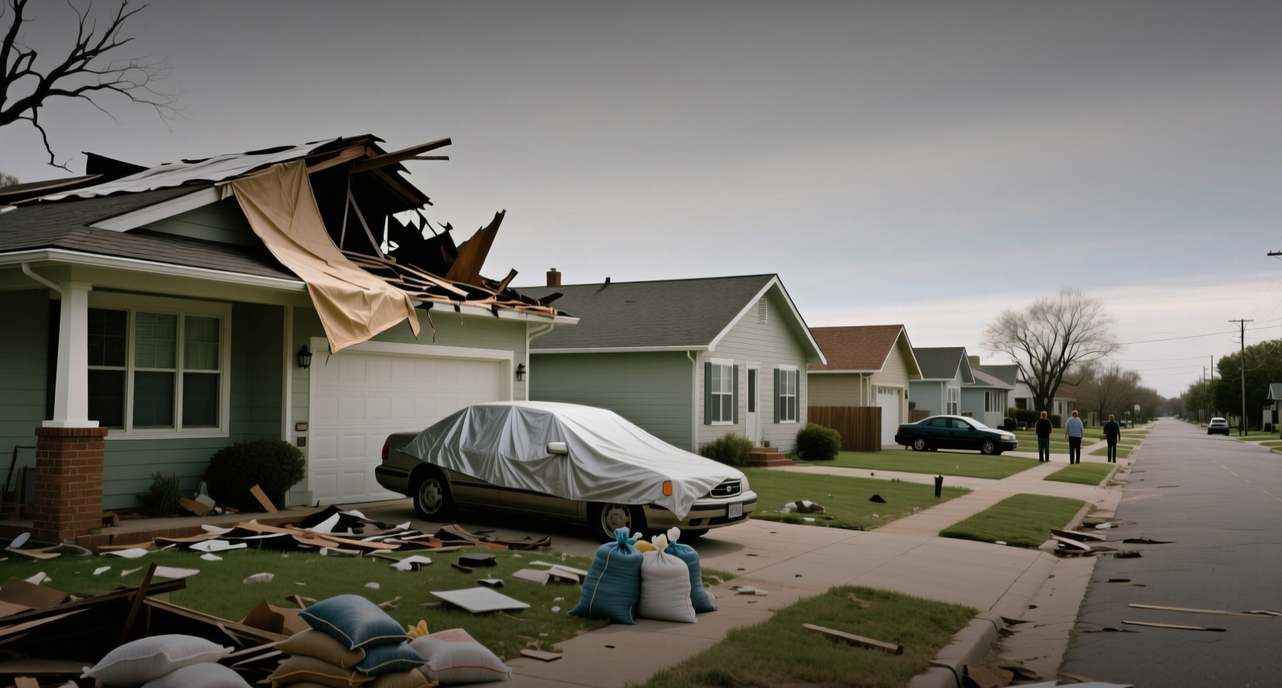
Victims of federally declared disasters can now deduct uninsured personal casualty losses above a $500 threshold without the usual 10 percent of adjusted gross income offset, after Congress approved extending relief to disasters beginning before Jan. 1, 2027.
The Senate passed a House-backed bill before its August recess that extends tax relief originally granted to victims of disasters that occurred from 2020 through mid-2025. The legislation, which President Trump is expected to sign within weeks, lets individuals claim uninsured personal losses in excess of $500 as "qualified disaster losses," a break available to taxpayers who take the standard deduction and those who itemize on Schedule A.
"Individuals can deduct personal casualty losses that are not reimbursed by insurance to the extent those uninsured losses are attributable to federally declared disasters which affect a wide area," said Joy Taylor, editor of The Kiplinger Tax Letter and a CPA and tax attorney. The loss equals the smaller of the damaged property's adjusted basis or its decline in value, less any insurance proceeds received or expected.
The relief covers a range of events, including hurricanes, tornadoes and wildfires. A taxpayer whose car was totaled by a tornado without insurance, for example, can claim the damage on Form 1040. The $500 threshold replaces the general rule that personal casualty losses are deductible only to the extent they exceed 10 percent of adjusted gross income, a change that materially raises the value of the deduction for affected filers.
Choosing the More Favorable Tax Year
Disaster victims may claim the loss in the year the disaster occurred or the immediately preceding year, whichever delivers the greater tax benefit. A homeowner whose property was damaged in a 2026 federally declared disaster can deduct the loss on either the 2026 or 2025 return.
For those who already filed their 2025 return, an amended return via Form 1040-X is required. The filing deadline for a 2025 amended return is six months after the normal due date for the year in which the loss occurred, meaning 2026 disaster losses must be claimed on an amended 2025 return by Oct. 15, 2027.
IRS Safe Harbors and Replacing Lost Returns
Computing the loss on a home or personal belongings can be difficult, so the IRS provides safe harbors in Publication 547 and Revenue Procedure 2018-08. One method lets a homeowner with casualty losses of $20,000 or less take the lesser of two repair estimates to determine the decrease in the home's value; another uses a table to compute the replacement cost of personal belongings destroyed in the disaster.
Taxpayers who lost prior-year returns in a fire or other disaster can obtain a tax transcript — a summary of key tax information — through their IRS individual online account, by calling the automated transcript line at 800-908-9946, or by mailing Form 4506-T. A full paper copy of a return can be requested via Form 4506, though that takes considerably longer. The IRS maintains a dedicated disaster line at 866-562-5227 and publishes FAQs for disaster victims on its website.
The extension matters because it preserves a deduction that would otherwise lapse for millions of households in storm- and fire-prone regions. With the 10 percent AGI floor waived, a family with $60,000 in adjusted gross income and $8,000 in uninsured losses could claim roughly $7,500 more in deductions than under the general rule. Taxpayers should verify the latest official guidance from the IRS before filing, as rules and deadlines can change.
This article is for informational purposes only and does not constitute investment advice.