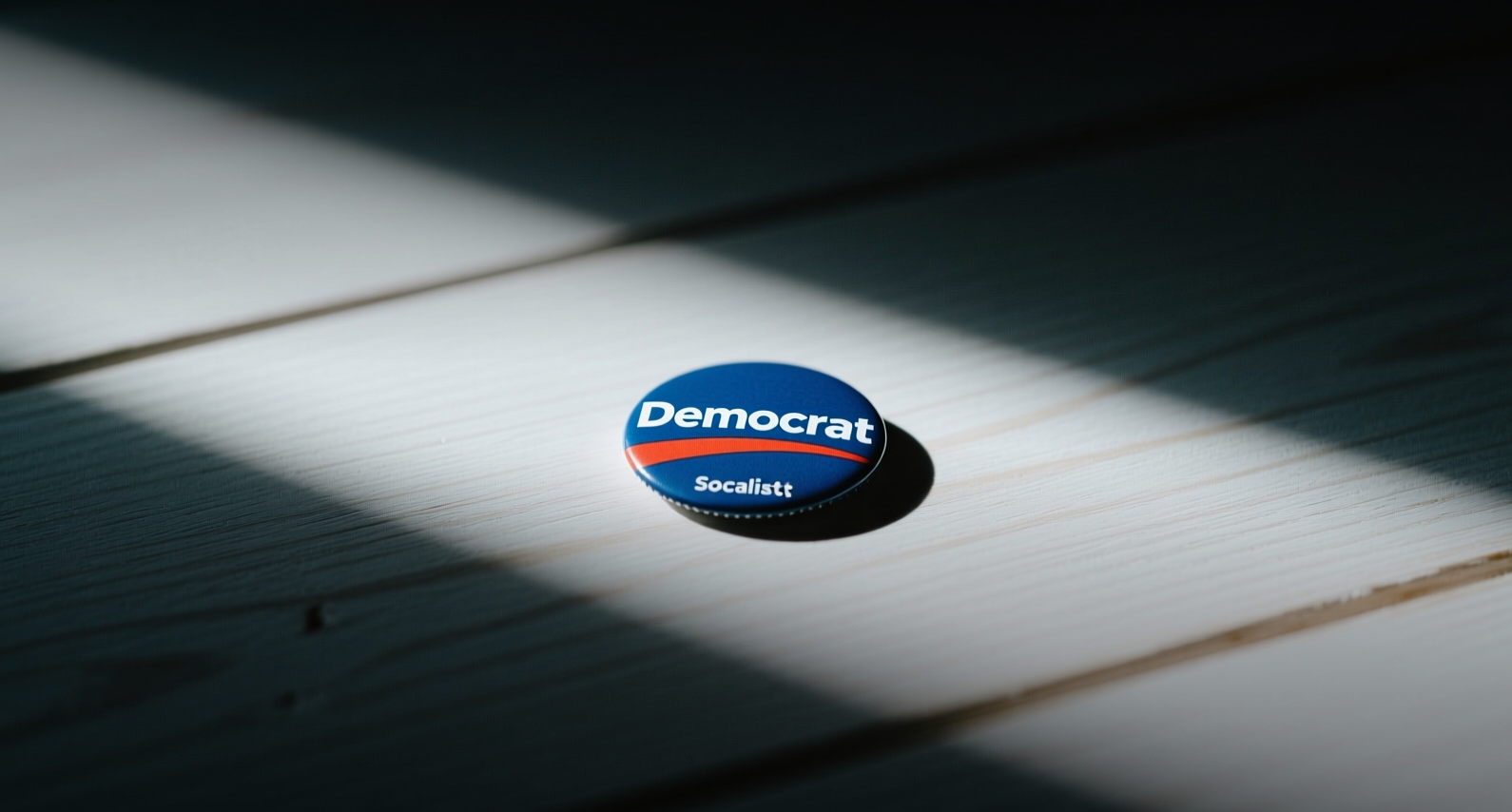
Democratic voters are pushing the party toward democratic socialism even as 54 percent of Americans say they would never back such a nominee.
The Democratic Party's leftward shift is accelerating into the 2026 midterms, with democratic socialist candidates winning primaries in Michigan, Colorado and New York even as 54 percent of registered voters say they would not consider a socialist presidential nominee.
"A democratic socialist-leaning Democratic nominee might well repeat the fiasco of George McGovern's candidacy in 1972, in which the Democratic nominee was branded as too far left and lost in a landslide," William Galston, senior fellow at the Brookings Institution, wrote in the Wall Street Journal.
The Washington Post-Ipsos survey found 54 percent of independents and 20 percent of Democrats would refuse to back such a candidate, while a CBS/YouGov poll showed 58 percent of Democrats view socialism favorably versus 35 percent of the electorate overall. That gap, Galston argued, could lead Democrats to nominate a candidate well outside the national mainstream.
The stakes extend to 2028, when South Carolina's Black-majority electorate is set to vote early in the nominating calendar. Black Democrats are consistently more moderate than white Democrats, and progressive candidates have underperformed in Black-heavy districts even when winning statewide — a pattern that could hand Republicans a general-election opening.
The summer's primary results have exposed the divide. Abdul El-Sayed won Michigan's Senate primary but lost Detroit, home to the state's largest concentration of Black voters, where centrist Representative Haley Stevens took 63 percent of the Black vote in an Emerson College poll. In New York City, Mayor Zohran Mamdani won the general election but lost Black-heavy precincts in South Brooklyn, Queens and the Bronx to former Governor Andrew Cuomo in the primary. Wisconsin's Francesca Hong, a democratic socialist, lost the governor's race to Milwaukee County Executive David Crowley, whose victory was propelled by the state's largest county.
The DSA Platform Is the Problem
The Democratic Socialists of America's platform extends well beyond Medicare for All and higher corporate taxes, which enjoy majority support. It calls for government ownership of food, education, energy, medicine and transportation; abolishing police and prisons; defunding the Department of War and closing overseas bases; legalizing migration and granting amnesty; and replacing the president and Supreme Court with bodies subordinate to Congress. Republicans have seized on those positions, with Speaker Mike Johnson describing the election as a choice between constitutional government and a radical agenda.
The Black-voter gap is measurable. A Pew Research Center survey found 40 percent of white Democrats view democratic socialist politicians positively, versus 21 percent of Black Democrats. Keneshia Grant, an associate professor of political science at Howard University, said older Black voters focus on who can actually win a general election, and that democratic socialists must demonstrate electability to broaden their appeal. The last time a progressive outsider stalled on this terrain was 2020, when Bernie Sanders's momentum collapsed after Joe Biden's decisive South Carolina victory.
Republicans Hold the Money and Map Advantage
Republicans enter the fall with a cash advantage of more than $300 million over Democrats, according to Axios, with Johnson raising $135 million this cycle and directing hundreds of thousands toward vulnerable incumbents. Redistricting has also shifted the battlefield: the Cook Political Report now rates the median House district R+3, two points more Republican than before, meaning Democrats must win 57 of 77 competitive districts to secure a narrow majority. Trump's MAGA Inc. super PAC and Elon Musk's America PAC plan heavy turnout operations for a low-participation midterm.
The political environment still favors Democrats on fundamentals. Sixty-three percent of Americans, including 53 percent of Republicans, say the GOP has not focused enough on the cost of living, and prices are rising faster than during Joe Biden's final year. The war with Iran has pushed up gasoline, fertilizer and diesel costs. But Galston warned that Democratic leaders should take no comfort: voters want new leadership and are in no mood for timid incrementalism, leaving the door open for a radical faction to take charge of the 2028 nomination regardless of general-election consequences.
This article is for informational purposes only and does not constitute investment advice.