A fourth consecutive session of gains carried three-month copper on the London Metal Exchange to an all-time high of $14,779 a tonne on Tuesday, before the contract eased to about $14,630 by Wednesday morning in London. The metal has added close to 18% this year, and COMEX copper in the US trades near $6.75 a pound, pulled higher by the same forces.
The rally rests on a physical squeeze rather than financial speculation. The 2026 benchmark treatment and refining charge — the fee miners pay smelters to turn concentrate into finished metal — settled at zero dollars a tonne, the lowest annual benchmark on record, down from $21.25 in 2025 and $80 in 2024, according to Fastmarkets. Spot rates fell further, to roughly negative $127 a tonne by midyear, meaning smelters are effectively paying miners for the right to process their ore.
"It's really hard to fix a number between miners and smelters, with both having strong arguments," one Shanghai trader involved in this year's negotiations told Fastmarkets, adding that miners currently hold the upper hand.
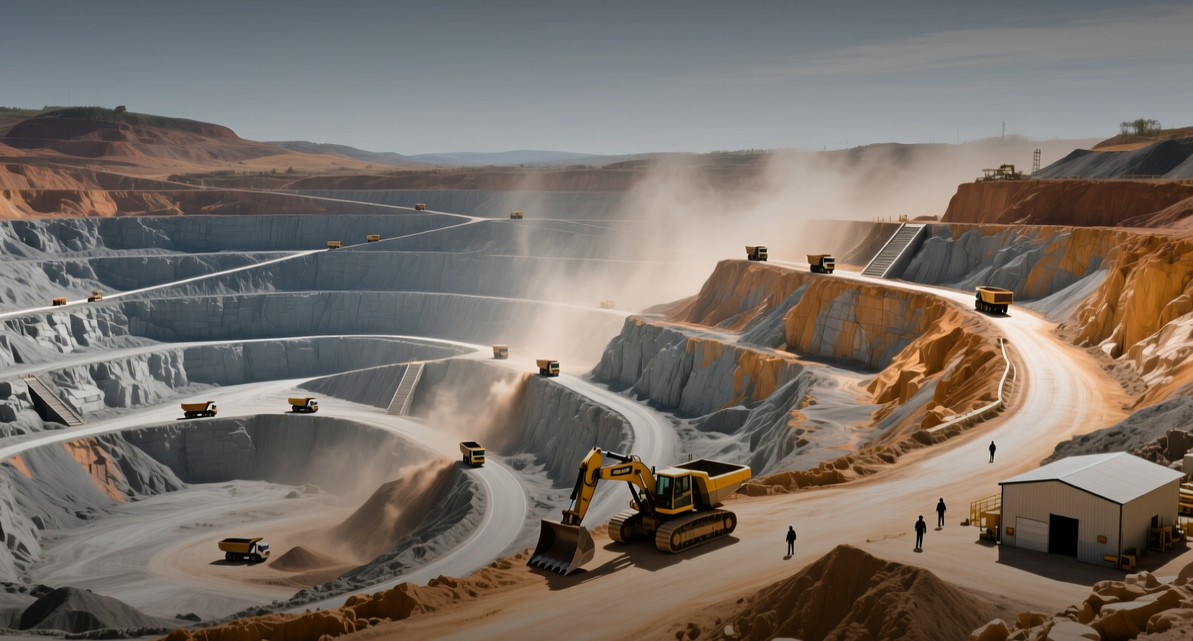
Mine supply, not processing capacity, is the constraint. Chile posted its weakest second-quarter output in at least 19 years. Antofagasta's first-half production fell 9.5%. Congo's Kamoa-Kakula and Indonesia's Freeport operations both saw disruptions, and Panama's Cobre Panama mine remains shut amid a legal fight with the government.
Tariffs pull 700,000 tonnes into COMEX
Washington is adding a second distortion. The prospect of a US tariff on refined copper imports has pulled metal into the country ahead of any actual policy, tightening availability everywhere else. COMEX inventories have climbed to a record near 700,000 tonnes, while LME and Shanghai warehouses combined hold barely 300,000 tonnes between them.
That split matters because it drains the rest of the world while layering a fresh premium on top of an already tight concentrate market. A listed copper producer's chief executive said the long-term rationale for higher prices is solid, while naming three bear cases: an AI trade blow-up, Trump eschewing tariffs, or peace descending over the Persian Gulf.
The AI leg of the demand story is the one most exposed to a repricing. Data centers, EV production and grid buildouts tied to the energy transition keep adding load to a metal whose global mine output has grown at a fraction of its 1990s pace. Analysts point to that gap when they describe a multi-year rather than cyclical supply shortfall, which is why buyers are locking up supply before treatment charges normalize.
Eight million tonnes of new smelting capacity by the 2040s
None of the tightness is slowing new construction. Countries increasingly treat smelting capacity as a strategic asset rather than a margin business. Indonesia alone has drawn more than $9 billion in copper smelter investment over the past few years, chasing the downstream playbook that turned it into a nickel-processing power. Globally, projects on the table could add more than 8 million tonnes of new smelting capacity by the early 2040s, most of it in Asia.
China smelts roughly half the world's copper and has driven more than 90% of global smelting capacity growth since 2005, tightening its grip on processing even as it squeezes its own margins. Beijing built that capacity assuming mine supply would keep pace. It hasn't, and the gap is now the defining fact of the market.
For producers, the arithmetic is straightforward: record prices flow into revenue and margins, and into mining equities, while the same prices raise input costs for grid, construction and EV manufacturers. Copper at $14,779 a tonne is about 18% above where it started 2026 and roughly 60% above the $9,234 a tonne it averaged through the 2010s. The next demand signal is China's monthly industrial output and PMI release, with the September print due in the first week of October.
This article is for informational purposes only and does not constitute investment advice.